
X
 [searchandfilter id="40551"]
[searchandfilter id="40551"]
[searchandfilter id="40551"] 
January 13, 2009



How ironic that we must even ask our national policy makers to make the nutritional health and well-being of their people the U.S. Department of Agriculture’s first priority. But due to the sheer weight of the marketplace and poor government policies, local and regional food systems of the early 20th century yielded to highly concentrated, chemically intensive systems of the post-World War II era. Now disparagingly known as the industrial food system, its voice was always the first to be heard in the corridors of power; its phone calls always the first to be returned by the Secretary of Agriculture.
Expand your understanding of food systems as a Civil Eats member. Enjoy unlimited access to our groundbreaking reporting, engage with experts, and connect with a community of changemakers.
Already a member?
Login
But a fair wind is blowing, the market is shifting, the people are speaking, and some would even say that the leaders are listening. The pendulum is swinging in the direction of sustainable, local and regional food systems. Certainly for those with time, money, and good information, a healthy food supply is now at hand. No, the scales of justice are still not balanced. There’s plenty of “good food” for the affluent, but not enough affordable and healthy food for those with limited wealth or access to quality food retail outlets. But at least those who speak up loudly for sustainably produced food are beginning to speak up for justice as well. The voice we are hearing more often than not is one that cries out for a food system that is both just and sustainable.
The mere structure of the U.S. Dept. of Agriculture, however, presents a lingering policy problem that thwarts those growing hordes of activists who see the promise of justice and sustainability being fulfilled at the community level. USDA is hopelessly fragmented into programs that assist farmers—mostly very large commodity farmers, as we know; programs (15 separate ones in all) that feed people such as food stamps; and programs that support conservation. If I walked into USDA headquarters in Washington, DC, and asked to see someone who could help me develop a local food system that respected our natural resources, rewarded farmers with a decent livelihood, and provided healthy food to all our residents, nobody would know where to send me. If I was super clever that day, possessed of infinite stamina, and extremely lucky, I might be able to piece together what I needed out of the various silos in the agricultural bureaucracy. But to my knowledge, no one has ever survived the attempt.
What must be done? Even though I have kept my phone lines open for President-elect Obama to solicit my advice, he has not called. So rather than wait around forever, let me share my thoughts here. First, the new Secretary of USDA (Tom Vilsack?) should create an Office of Community Food Systems directly under his control. The Office’s task should be to coordinate all the functions of USDA for the purpose of ensuring that diverse, healthy, sustainably produced and affordable food is available to all residents of any community in the United States. The Office should focus on developing the potential of every region of the U.S. to meet a major share of its own food needs.

Caring for the natural resource base—both in terms of protecting vital farmland and promoting sustainable farming practices—should be at the top of the list. That emphasis should be followed by developing, or redeveloping as the case may be, the region’s production, processing, and distribution infrastructure. In addition to food storage, transportation, and processing, the infrastructure should include retail outlets as well—both supermarkets and farmers’ markets—to ensure that everyone has access to affordable food. Skill-training for farmers, including the development of new farmers, is necessary and should also be a part of the Office’s mission.
To ensure that everyone’s food needs are met, regardless of their income, the Office should work with existing nutrition programs such as WIC, Child Nutrition (school lunch, etc.), and food stamps to not only make sure those funds are adequate, but to every extent possible, target their use in ways that will also help local producers and retailers. For instance, billions of dollars are spent every year by USDA for the WIC program and school meals. If a sizable share of those dollars were used to purchase locally produced food, it would create an incentive that may be large enough to drive other initiatives to redevelop a region’s food system.
The Clinton Administration, under the leadership of Agriculture Secretary Dan Glickman, created a Community Food Security Initiative. Though under-resourced and possessing little authority, it at least made the statement that USDA is capable of thinking about the simple but essential task of developing the capacity of communities to meet a greater share of their own food needs. It did not serve the American Corn Growers Association or the food stamp lobby, but attempted to integrate the vast resources of that sprawling agency in a way that would build that highly coveted American ideal, community self-reliance.
The time has come to try again, only bigger, better, and smarter. Mr. President-elect, thank you for listening.

Stories change how we see food — and how we act on it.
From farmworkers to policymakers, Civil Eats lifts up the people building a better food system.
Your gift this season will be doubled through NewsMatch, fueling independent journalism that’s hopeful, honest, and free for all.
Together, we can keep these stories alive — and keep the movement growing.
Give Today.

June 26, 2025
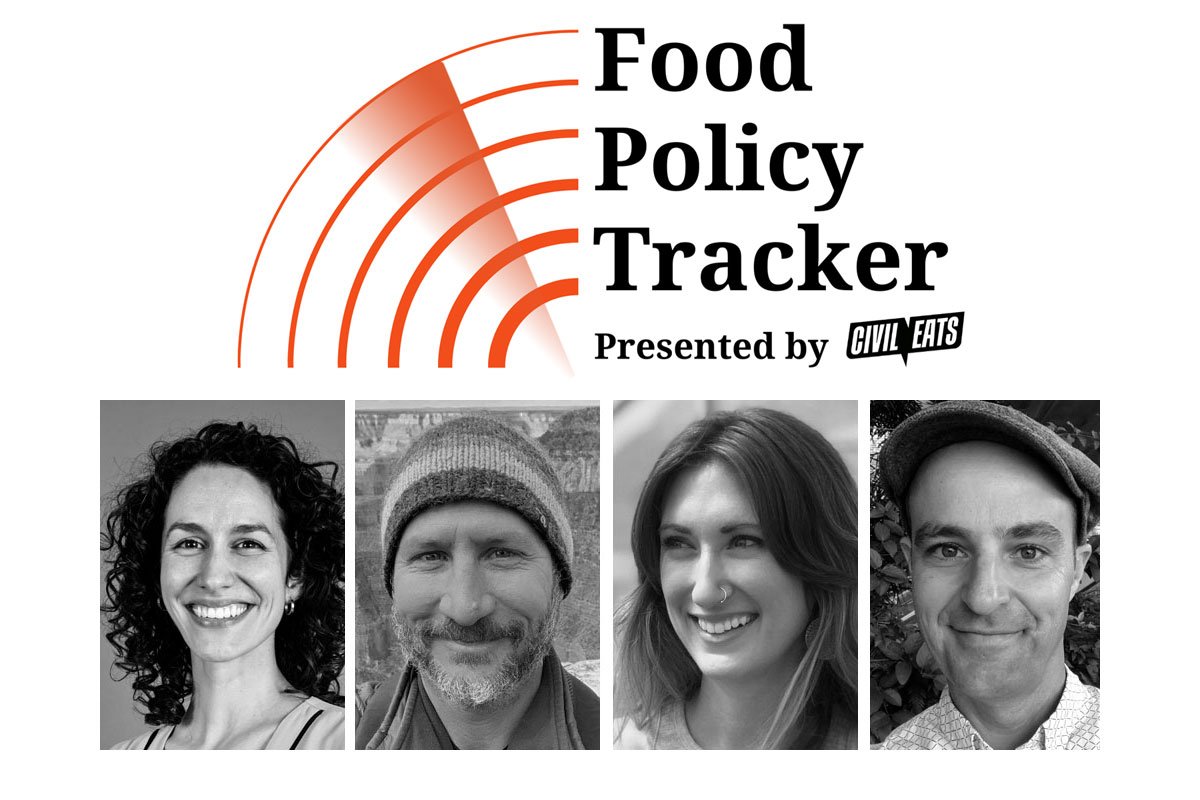
At our latest Civil Eats virtual salon, our team talked about the launch and evolution of the Tracker, a running report on federal actions that affect food and agriculture.
January 20, 2025
July 2, 2025



bodaweightloss