
X
 [searchandfilter id="40551"]
[searchandfilter id="40551"]
[searchandfilter id="40551"] 
June 8, 2011



The source of the deadly E. coli O104 outbreak remains a mystery. Officials in Germany are scrambling for answers–and because highly perishable produce is the prime suspect, they might never get them. Amidst the uncertainty, one thing seems clear: this could happen in the U.S.
Expand your understanding of food systems as a Civil Eats member. Enjoy unlimited access to our groundbreaking reporting, engage with experts, and connect with a community of changemakers.
Already a member?
Login
Food safety and infectious disease experts on both continents are cautioning lawmakers, consumers, and industry that a similar scenario could unfold anywhere.
“Could this happen here? You bet,” said Food Politics author and New York University professor Marion Nestle, on her Web site Food Politics Monday.
David Acheson, former associate commissioner of foods at the U.S. Food and Drug Administration, now a consultant to the food industry, agrees. He says the devastation in Europe “serves as a strong reminder to those of us in the United States that we are always one step away from a major food safety crisis.”
“As we look on from the outside at the outbreak in the European Union (EU), it is natural to wonder if this could happen in the United States,” Acheson wrote in a blog post for Leavitt Partners, a consulting firm founded by Mike Leavitt, who served as Secretary of Health and Human Services under the Bush administration. “I have very little doubt that it could, and so we should not lose this opportunity to learn more lessons about food safety.”

“The most important lesson is to focus on building systems that prevent such a situation occurring here in the U.S,” explains Acheson. He believes broad mitigation strategies to prevent all forms of E. coli from contaminating food products are the most critical.
“One one has to look for a multifaceted approach that includes controls throughout the supply chain from farms, during processing (of meat, fresh produce or other higher risk items like raw milk) and during handling of food at home,” he adds.
Both Acheson and Nestle stressed budgetary concerns as Food and Drug Administration (FDA) moves to implement the most ambitious update to the food regulatory system since the early 20th century.
“If ever there was a time to give the FDA more resources, now is it,” added Nestle in her post, which was also published on The Atlantic online. “The FDA now has the authority to impose standard food safety procedures on food producers and to require safety measures for the foods we import. But Congress wants to cut the agency’s budget, and badly.”
The House Appropriations Committee recently advanced an appropriations bill that would give the agency $87 million less food safety in Fiscal Year 2012 than FY 2011.
“In the current climate of reduced federal funding, it should be made very clear to Congress that our food safety system in the US cannot afford to be undermined through lack of resources,” said Acheson. “A request to Congress is not to cut funding, but rather to ensure efficient use of current and future much needed funding.”
A version of this story first appeared on Food Safety News

Stories change how we see food — and how we act on it.
From farmworkers to policymakers, Civil Eats lifts up the people building a better food system.
Your gift this season will be doubled through NewsMatch, fueling independent journalism that’s hopeful, honest, and free for all.
Together, we can keep these stories alive — and keep the movement growing.
Give Today.

June 26, 2025
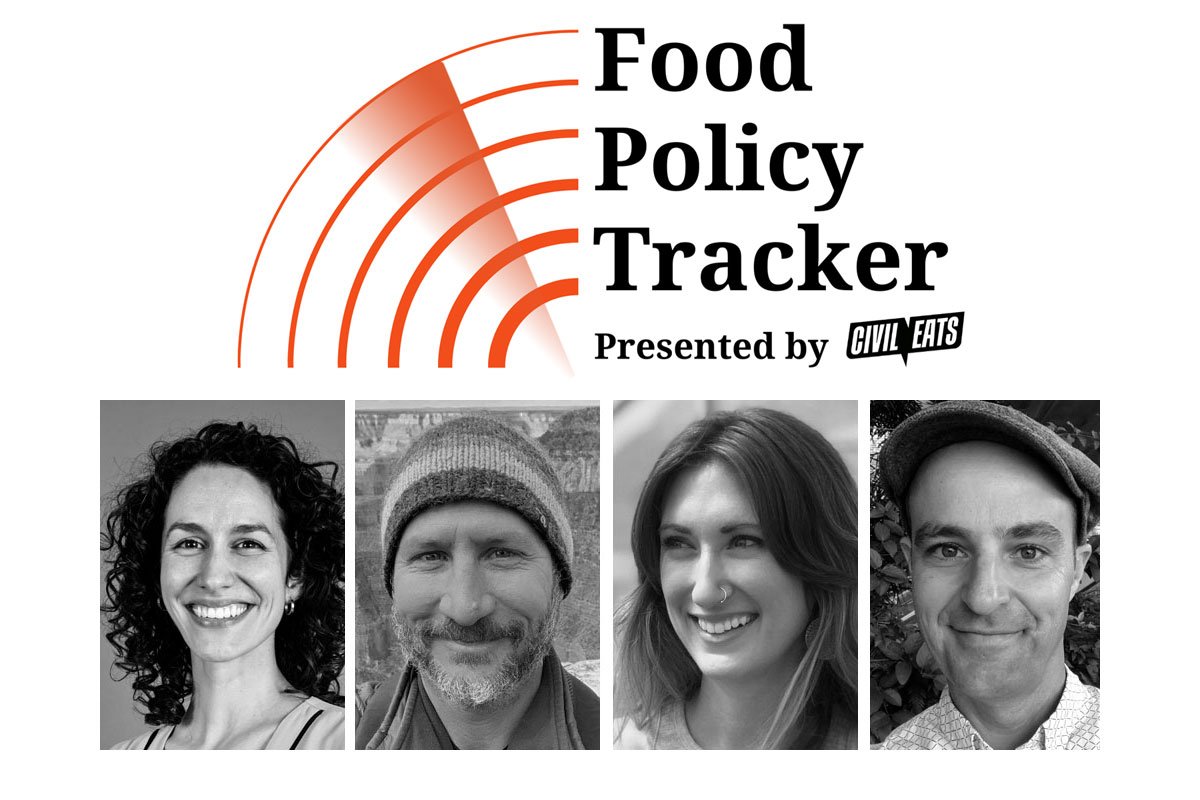
At our latest Civil Eats virtual salon, our team talked about the launch and evolution of the Tracker, a running report on federal actions that affect food and agriculture.
January 20, 2025
July 2, 2025



Like the story?
Join the conversation.
Warning: Undefined variable $aria_req in /srv/users/civileats/apps/civileats/public/wp-content/themes/CivilEats/comments.php on line 16
Warning: Undefined variable $aria_req in /srv/users/civileats/apps/civileats/public/wp-content/themes/CivilEats/comments.php on line 21