
X
 [searchandfilter id="40551"]
[searchandfilter id="40551"]
[searchandfilter id="40551"] 
January 3, 2012



The Food and Drug Administration (FDA) pulled a Scrooge move just before Christmas. The agency published an entry in the Federal Register declaring that it will end its attempt at mandatory restrictions on the use of antibiotics in animal agriculture. The agency isn’t advertising the shift, though: This news would have remained a secret if not for Maryn McKenna’s Superbug blog over at Wired. McKenna, who specializes in writing about antibiotics and their link to pathogens, caught the Federal Register notice.
Expand your understanding of food systems as a Civil Eats member. Enjoy unlimited access to our groundbreaking reporting, engage with experts, and connect with a community of changemakers.
Already a member?
Login
This is a sorry end to a process that began in 1977 (!), but McKenna created an excellent timeline that traces the history of the issue back to the 1950s. In 2009, the Obama administration breathed new life into a moribund process because the top two Obama appointees at the FDA, Commissioner Margaret Hamburg and her then-deputy Joshua Sharfstein, strongly supported restricting antibiotic use in agriculture.
But despite Hamburg and Sharfstein’s many supportive statements, the FDA has only produced a draft set of “voluntary” guidelines. And, with this latest announcement, it looks like that’s as far as they’re willing to go.
Inaction has consequences: According to the vast majority of microbiologists and public health experts, restrictions on agricultural uses are key to preserving the effectiveness of antibiotics as well as to preventing the spread of antibiotic-resistant bacteria like MRSA and salmonella Heidelberg (cause of last summer’s record-breaking ground turkey recall). And it’s no small dosage: Every year 29 million pounds of antibiotics are given to animals — often via their feed. That figure represents 80 percent of all antibiotics used in the U.S.
Consumer groups like the Union of Concerned Scientists and the Pew Charitable Trusts have been calling for an end to the practice for years. But it’s not just outsiders who are fed up with the agency’s work on this issue; the administration’s own watchdog group, the Government Accountability Office, recently gave the agency a failing grade in the subject.

In many ways, this issue parallels the ongoing battle over BPA, the endocrine-disrupting chemical used in food packaging, plastics, and register receipts. When finally pushed to ban the chemical, the FDA declared that “its hands were tied” by regulatory hurdles and jurisdictional questions. Yet soon after, the industry lobbying group American Chemical Council responded to consumer anger and petitioned the agency to go ahead and ban BPA. Only then did the FDA indicate it would follow through.
In other words, the FDA is admitting that as long as the industry opposes it, the agency can’t keep antibiotics out of our meat and dairy products (nor, for that matter, can it ensure that antibiotics will remain effective). It’s also admitting it has no real power over the industries it regulates. If the agency continues to favor industry’s concerns over the public health, it begs the question: Who exactly is looking out for us?
On the brighter side, several organizations, including the Natural Resources Defense Council, the Center for Science in the Public Interest, and Public Citizen have actually filed a lawsuit against the FDA demanding the agency restrict antibiotics in animals. This is promising, because courts have shown more interest in defending science than the federal agencies (see this example from last year regarding rBST/rBGH in milk).
So it may just fall to a federal judge to determine what’s truly good for the public interest. Of course, it would be nice if the agency actually tasked with that responsibility would step up to the plate. But I guess that’s just too much to ask.
Originally published on Grist

Stories change how we see food — and how we act on it.
From farmworkers to policymakers, Civil Eats lifts up the people building a better food system.
Your gift this season will be doubled through NewsMatch, fueling independent journalism that’s hopeful, honest, and free for all.
Together, we can keep these stories alive — and keep the movement growing.
Give Today.

June 26, 2025
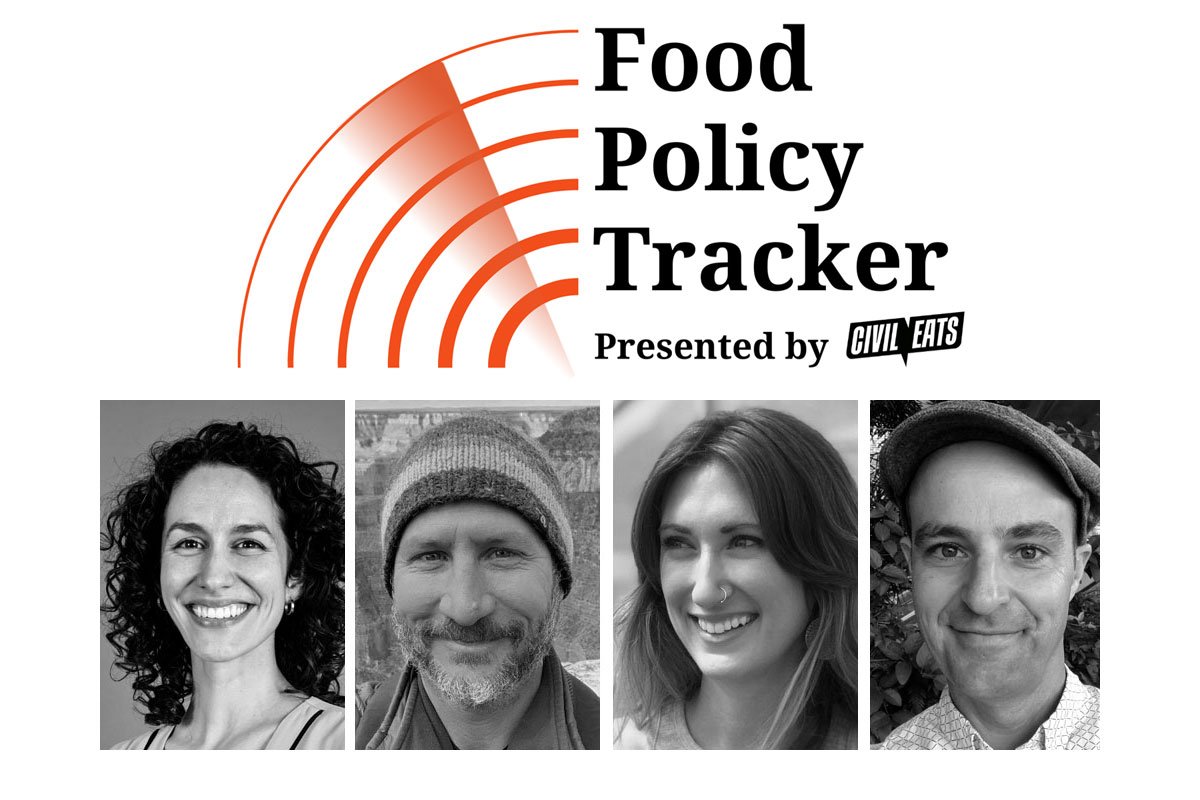
At our latest Civil Eats virtual salon, our team talked about the launch and evolution of the Tracker, a running report on federal actions that affect food and agriculture.
January 20, 2025
July 2, 2025


Like the story?
Join the conversation.
Warning: Undefined variable $aria_req in /srv/users/civileats/apps/civileats/public/wp-content/themes/CivilEats/comments.php on line 16
Warning: Undefined variable $aria_req in /srv/users/civileats/apps/civileats/public/wp-content/themes/CivilEats/comments.php on line 21