X
 [searchandfilter id="40551"]
[searchandfilter id="40551"]
[searchandfilter id="40551"] 
May 21, 2012




To buy local fruits, vegetables, and meat, we do not have to look much further than a nearby farmers market or community supported agriculture share. But to buy wheat flour, we have traditionally spent our dollars outside of the farmers market to find the product we use during all seasons. For a large part, the underlying reason lies in the industrialization of wheat production, which started in the 1880s with the advent of the steam roller mill. This large-scale mill turned out a cheap shelf-stable flour which essentially crippled regional grain markets. But as we begin to realize the detrimental economic and nutritional effects of the transformation of wheat to a commodity crop, regional grain economies are beginning to regrow across the country. Over the past five years, the necessary infrastructure has been put into place to process and sell grains at a smaller scale and keep profits within local communities.
Expand your understanding of food systems as a Civil Eats member. Enjoy unlimited access to our groundbreaking reporting, engage with experts, and connect with a community of changemakers.
Already a member?
Login
When we talk about grains, we are referring to starch-rich hard seeds which grow on cereal grasses. Common grains include wheat, maize, rice, barley, oats, rye, and more. The anatomy of a grain consists of three parts: endosperm (starch), bran (fiber and fatty acids), and germ (fatty acids, nutrients, and proteins).
When processed, industrially grains are stripped of their bran and germ, leaving only the endosperm. The resulting processed grain lacks fatty acids, which prevents rancidity and allows for long-term storage–but it also lacks the core nutritional value of fiber, proteins, and other vitamins/nutrients. Whole grains contain the same proportions of the bran, germ, and endosperm as the grain pre-processing; whether cracked, split, or ground, the grains maintain their nutritional value. The health benefits of a diet rich in whole grains has been documented to decrease blood pressure and the risk of cardiovascular disease and type 2 diabetes.
Sparked by these alarming public health implications combined with a hike in the price of grains on the global commodity market in 2008, regional grain economies have been developing. Some involved parties include farmers, millers, distributors, and bakers. Groundbreaking efforts to build these networks across the country include: Community Grains in the San Francisco Bay Area, Somerset Economic Development Corp. in central Maine, North Carolina Organic Bread Flour Project in Asheville, NC, and Northeast Organic Wheat in upstate New York. Many of these efforts focus on regional grain varietals, community education, regional economic growth, and job creation.

Join us for the next Kitchen Table Talks at Oliveto Restaurant in Oakland as we discuss the local grain economy in California from the economic, infrastructural, and public health perspectives.
Date: Sunday, June 17th
Time: 1:30 to 3:00 PM
Location: Oliveto Restaurant (5665 College Avenue, Oakland, CA)
Price: $10 at Brown Paper Tickets
Note: A limited amount of sliding scale tickets may be available at the door, dependent upon capacity.
Bob Klein has been a broadcast television producer, executive producer, national program consultant, and developer/syndicator. He’s currently co-owner of Oliveto Restaurant and founder of Community Grains.
Craig Pondsford is founder of Artisan Bakery, winner of the Specialty Breads category of France’s 1996 Coupe du Monde de la Boulangerie (an international, invitational, artisan baking competition held in Parish every three to four years). He recently opened Pondsford’s Place Bakery & Innovation Center in San Rafael, CA.
Doug Mosel, founder of the Mendocino Grain Project, grows a variety of grains and lentils in the Ukiah Valley. Whole grains and stone-milled flour are distributed locally through a CSA-style grain-share. Doug is a member of the Mendocino Organic Network and host of a monthly radio show, the “Agriculture and Ecology Hour.”


Stories change how we see food — and how we act on it.
From farmworkers to policymakers, Civil Eats lifts up the people building a better food system.
Your gift this season will be doubled through NewsMatch, fueling independent journalism that’s hopeful, honest, and free for all.
Together, we can keep these stories alive — and keep the movement growing.
Give Today.

June 26, 2025
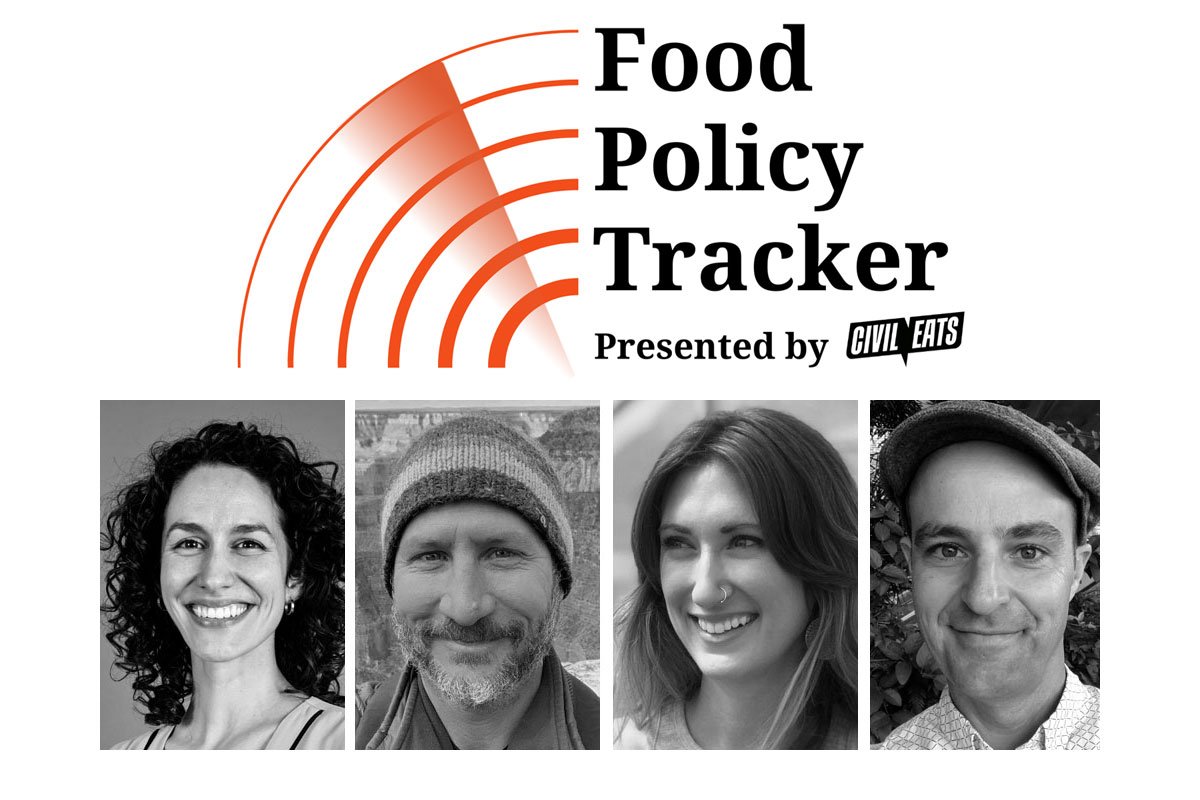
At our latest Civil Eats virtual salon, our team talked about the launch and evolution of the Tracker, a running report on federal actions that affect food and agriculture.
January 20, 2025
July 2, 2025


We cannot attend your meeting, but would like to hear from you about how it goes and whether your stakeholders are interested in connecting with others around the country.
Finally, we offer network facilitation around staple foods, provide technical assistance on building the processing facility and the farm partnerships, and strategies for promoting healthy staple food security and access region by region.
In addition to our work on Shagbark Seed & Mill, we are currently working with a new start up focused on nut production and processing in our region of Appalachia and with Oberlin College in northern Ohio to look at how grains and beans fit into their local food goals.
Get in touch with us at info@shagbarkmill.com