
X
 [searchandfilter id="40551"]
[searchandfilter id="40551"]
[searchandfilter id="40551"] 
March 13, 2013



In its continuing frenzy to silence potential critics, Coca-Cola issued a press release recently that announced the following:
Expand your understanding of food systems as a Civil Eats member. Enjoy unlimited access to our groundbreaking reporting, engage with experts, and connect with a community of changemakers.
Already a member?
Login
Helene D. Gayle, M.D., M.P.H., has been nominated to stand for election to the Company’s Board of Directors at its Annual Meeting of Shareowners in April.Dr. Gayle, 57, is President and CEO of CARE USA, a leading international humanitarian organization whose poverty fighting programs reached approximately 122 million people last year in 84 countries.
Why in the world would Dr. Gayle want to sit on the Coca-Cola Board of Directors when Coca-Cola’s export of non-nutritious, sugary drinks to the world’s poorest countries is causing a new set of chronic health problems for those living in poverty — including obesity, heart disease, diabetes and dental caries (cavities)? The U.S. is already dealing with the phenomenon of food insecure families suffering from obesity, thanks in good part to overconsumption of cheap soft drinks that are heavily marketed in our poorest communities.
Surely Dr. Gayle must have seen this startling statistic: For each additional sugary drink a child consumes per day, his or her risk of obesity increases by an astonishing 60 percent.* That applies to children living in poverty as well.
When it comes to understanding curious corporate partnerships, you need to follow the money. Not surprisingly, Coca-Cola is listed as a “key partner” on the CARE website. Here is CARE’s description of their corporate partners:
CARE’s corporate partners demonstrate their commitment to finding victories over poverty through their generous support of CARE. Through annual contributions of funds or services, CARE’s corporate partners help bring hope and opportunity to families and communities around the world. CARE is grateful for their support.
And also not surprising — a Coca-Cola executive sits on the CARE board — Alex Cummings, Executive Vice President and Chief Administrative Officer of the Coca-Cola Company.

From her bio on the CARE website, we learn more details about Dr. Gayle, a well-educated medical doctor and Master of Public Health, who runs this respected global anti-poverty organization:
She is a member of the Council on Foreign Relations, the American Public Health Association, the Institute of Medicine and the American Academy of Pediatrics. Dr. Gayle currently serves on the President’s Commission on White House Fellowships and the U.S. Department of State’s Foreign Affairs Policy Board.
Three of the organizations that Dr. Gayle cites above, the American Public Health Association, the Institute of Medicine and the American Academy of Pediatrics have spoken out forcefully about their concerns with the overconsumption of soft drinks and their contribution to obesity and related chronic disease. Yet, this doesn’t seem to have made an impact on Dr. Gayle.
Muhtar Kent, Chairman and CEO of The Coca-Cola Company says this about Dr. Gayle:
“Helene brings a global mindset and a deep understanding of health and humanitarian issues to our Company. Her expertise and insight will be invaluable as we continue to expand our global initiatives around sustainability and women.”
I suspect Mr. Kent wants Dr. Gayle on the Coca-Cola Board for a number of reasons. When companies like Coca-Cola donate money to high-profile non-profits like CARE and form cozy relationships with their leaders, they do so because they want their brands associated with something charitable. Coca-Cola’s association with CARE gives it positive press, particularly in emerging markets, and helps create a positive public perception about the brand, which can lead to increased sales.
Coca-Cola has other reasons for aligning itself with one of the world’s top anti-poverty organizations. Just this week, Coca-Cola was one of the world’s ten food giants named and criticized in Oxfam’s “Behind the Brand” report. Oxfam’s goal with “Behind the Brand” is “to provide people who buy and enjoy these products with the information they need to hold the Big Ten to account for what happens in their supply chains.” The ten corporations were graded on treatment of workers, farmers, women, land and water, around the world. They were also graded on their treatment of the climate, and overall transparency.
Coca-Cola was cited for particularly poor performance on land rights and support for farmers. On women, climate, transparency and water it was given a grade of “Some Progress” (which falls below grades of “Fair” and “Good.”) And Coca-Cola received a grade of “Fair” on workers. No doubt Coca-Cola hopes that having CARE’s Dr. Gayle on its Board of Directors helps burnish its reputation on sustainability and treatment of the world’s poorest citizens — while it aggressively introduces and markets Coca-Cola’s non-nutritious drinks into more and more impoverished countries and communities around the globe.
In Michael Moss’ New York Times Magazine article, “The Extraordinary Science of Addictive Junk Food”, he quotes a former Coca-Cola executive, Jeffrey Dunn, who feels remorse for the time he spent in Brazil, pushing increased consumption of Coke among the many Brazilians living in poverty. According to Dunn, the company’s strategy was to offer Coke in more affordable 6.7-ounce bottles, at 20 cents each. On one trip, as he walked through an impoverished community, he had an epiphany:
“A voice in my head says, ‘These people need a lot of things, but they don’t need a Coke.’ I almost threw up.”
Dr. Gayle, the last thing the impoverished people you work with need, is a Coke. By accepting Coca-Cola’s funding and serving on their Board of Directors, you are helping to healthwash Coke’s brands and expand sales of sugary, non-nutritious drinks to the very people you want to help. Please, do the right thing and withdrawal your nomination to serve on Coca-Cola’s Board. And please work to ensure that CARE no longer accepts funding from the Coca-Cola company. You and CARE are complicit in helping Coca-Cola market their unhealthy drinks to the very people who need them the least.

Stories change how we see food — and how we act on it.
From farmworkers to policymakers, Civil Eats lifts up the people building a better food system.
Your gift this season will be doubled through NewsMatch, fueling independent journalism that’s hopeful, honest, and free for all.
Together, we can keep these stories alive — and keep the movement growing.
Give Today.

June 26, 2025
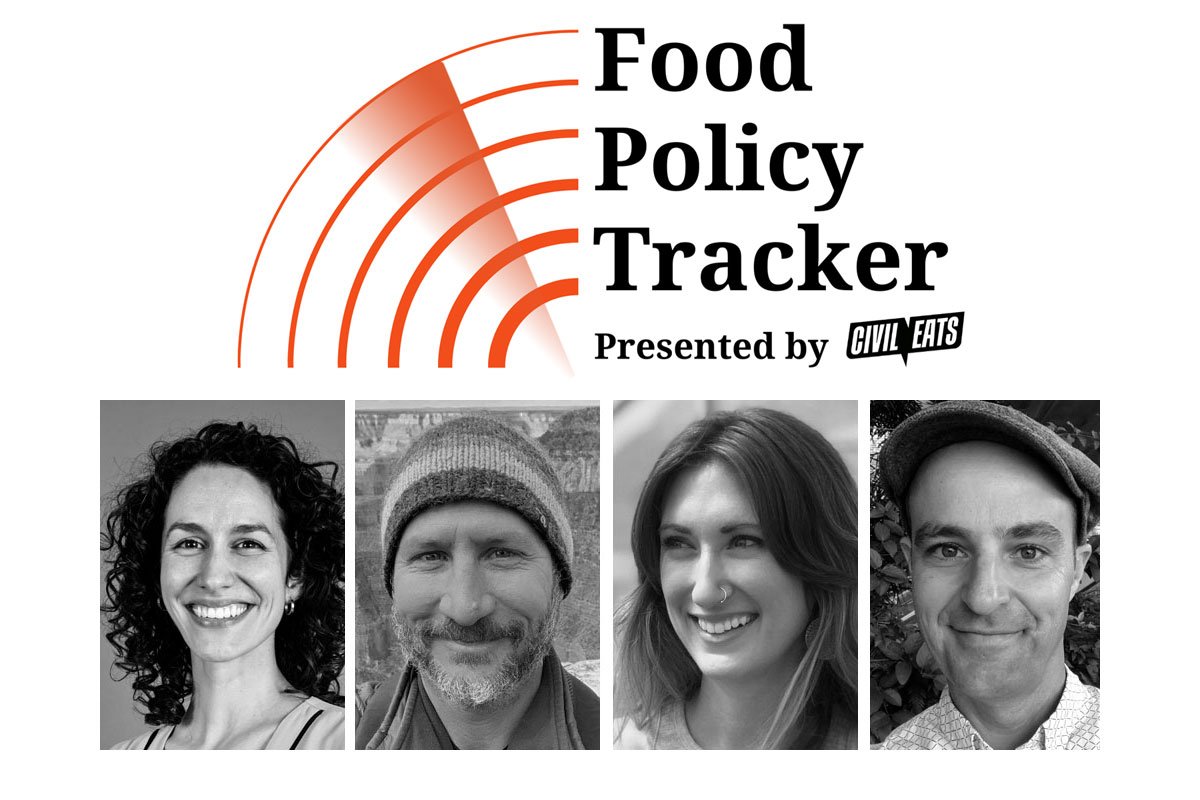
At our latest Civil Eats virtual salon, our team talked about the launch and evolution of the Tracker, a running report on federal actions that affect food and agriculture.
January 20, 2025
July 2, 2025




Like the story?
Join the conversation.
Warning: Undefined variable $aria_req in /srv/users/civileats/apps/civileats/public/wp-content/themes/CivilEats/comments.php on line 16
Warning: Undefined variable $aria_req in /srv/users/civileats/apps/civileats/public/wp-content/themes/CivilEats/comments.php on line 21