X
 [searchandfilter id="40551"]
[searchandfilter id="40551"]
[searchandfilter id="40551"] 
July 29, 2014



 Anna Larsen makes a lot of calls to fishermen and keeps a closer eye on the weather than most of us. If it rains unexpectedly or the wind picks up or if the fisherman she works with aren’t able to land the salmon, halibut, or whatever she’s offering the members of Siren SeaSA, her community-supported fishery (CSF), Larsen has to think fast. She keeps abreast of what’s being caught and makes sure that whatever does come in to Northern California’s Bodega Bay and Fort Bragg–be it rock cod, Dungeness crabs, or sand dabs–makes it to her shareholders within 24 hours.
Expand your understanding of food systems as a Civil Eats member. Enjoy unlimited access to our groundbreaking reporting, engage with experts, and connect with a community of changemakers.
Already a member?
Login
For the last three years, Larsen has been part of a larger effort to steadily expand the audience for local, seasonal seafood in the San Francisco Bay Area. And by reducing the length of the chain from hook to plate, she’s also helping small-scale fishermen earn a better living than they would make if they sold into the larger, commodity market.
In 2009, Larsen got word of a community-supported fishery (CSF) that launched in the area solely to serve Google employees. So she decided to parlay her experience working for a seafood wholesaler to start her own, similar operation.
At the time, CSFs were already a proven success in the Northeast. Groups like the Northwest Atlantic Marine Alliance and Local Catch were helping small marine communities buy directly from fishermen in their areas in a manner much like community supported agriculture (CSA) subscriptions of fruits and vegetables.
“I talked to fishermen and said, ‘Would you be interested in selling fish to me for a little bit more money? I’m going to be a pain to work with because the timing is going to be so tricky.’” Larsen recalls. “They said yes. So I got it going. A month later we were doing the first share.”
Today, there are three other CSFs in the Bay Area and a handful up and down the West Coast. As with a CSA, Siren SeaSA customers pay upfront and pick up their weekly or bi-weekly share of fish or shellfish in other members’ homes.
As Paul Greenberg write about in his new book, American Catch—and in this listicle he wrote here recently–a great deal of the fish we eat in the U.S. travels half-way around the world to get cut and processed before it makes it back to our plate. Larsen hopes to chip away at this resource-intensive system, one filet at a time.

And like small-scale meat processing, small-scale seafood requires infrastructure. Larsen says that finding the consistent means to process a small quantity of local fish wasn’t easy in the early days, when she started off dropping off fewer than 100 pounds of fish a week. Now Siren has around 500 subscribers in a handful of drop off locations (plus around 150 orders per week from the online local food market Good Eggs), which works out 600-700 pounds of seafood per week. It’s enough to make processing and distribution smoother, but, it’s still, Larsen admits, a drop in the bucket.
“Last year we channeled $150,000 straight to fishermen,” says Larsen. “I felt really good about that and then realized it was only .001% of the total spent in seafood in the Bay Area alone.”
With this desire to scale up in mind, Larsen is launching a value-added product line. “With seafood, value-added can mean as little as freezing and vacuum-packing a filet,” she says. And that’s exactly where Larsen is planning to start. After all, frozen seafood is a sustainable option if it’s done right.
Beginning this fall, Siren will begin selling, local salmon filets frozen on the day they are caught. “On the packaging we’re going to call out the boat that caught it, the date it was caught, and the location,” says Larsen.
Because she is raising a young son while running her business, Larsen says she hopes to reach those for whom multiple trips to buy groceries and pick up local food is not impossible.
“Before I had a child, I could pick up my CSA, pick up my meat share, go get eggs at that little place I liked down the road, etc. Now, I’m that convenience shopper I’d always heard about. But my food ethics haven’t gone anywhere–I still want to buy local and know where my food comes from,” she says. “And if I’m going to remember to should thaw something out for dinner, I don’t want it to be farm-raised tilapia from Vietnam.”
Larsen, has also been educating her members in seemingly small but meaningful ways for years. Case in point: Her emails to members are full of logistics, changes in plans, and seasonal updates. Unlike many business owners, Larsen lets them in on the process, and doesn’t shy away from sharing the challenges behind her work, in a way that actually involves them in what it means to procure local fish. (Full disclosure: The author is a long-time member). By creating a product that brings this kind of transparency to the grocery store, she hopes to widen the conversation seafood as part of a local food system.
The goal, she adds, is to teach people who are buying fish which questions to ask, and arming them with a little bit of knowledge, to make them feel confident in the process.
“If everybody at the fish counter asked, ‘where did this come from?’ and ‘how was it caught?,’ it would be a huge nudge for retailers,” she says. “And the follow-up question should be ‘where was it processed?’”
Photo at top: Anna Larsen with Scott Zahl of Cove Mussel Farm taken by James Collier.

Stories change how we see food — and how we act on it.
From farmworkers to policymakers, Civil Eats lifts up the people building a better food system.
Your gift this season will be doubled through NewsMatch, fueling independent journalism that’s hopeful, honest, and free for all.
Together, we can keep these stories alive — and keep the movement growing.
Give Today.

June 26, 2025
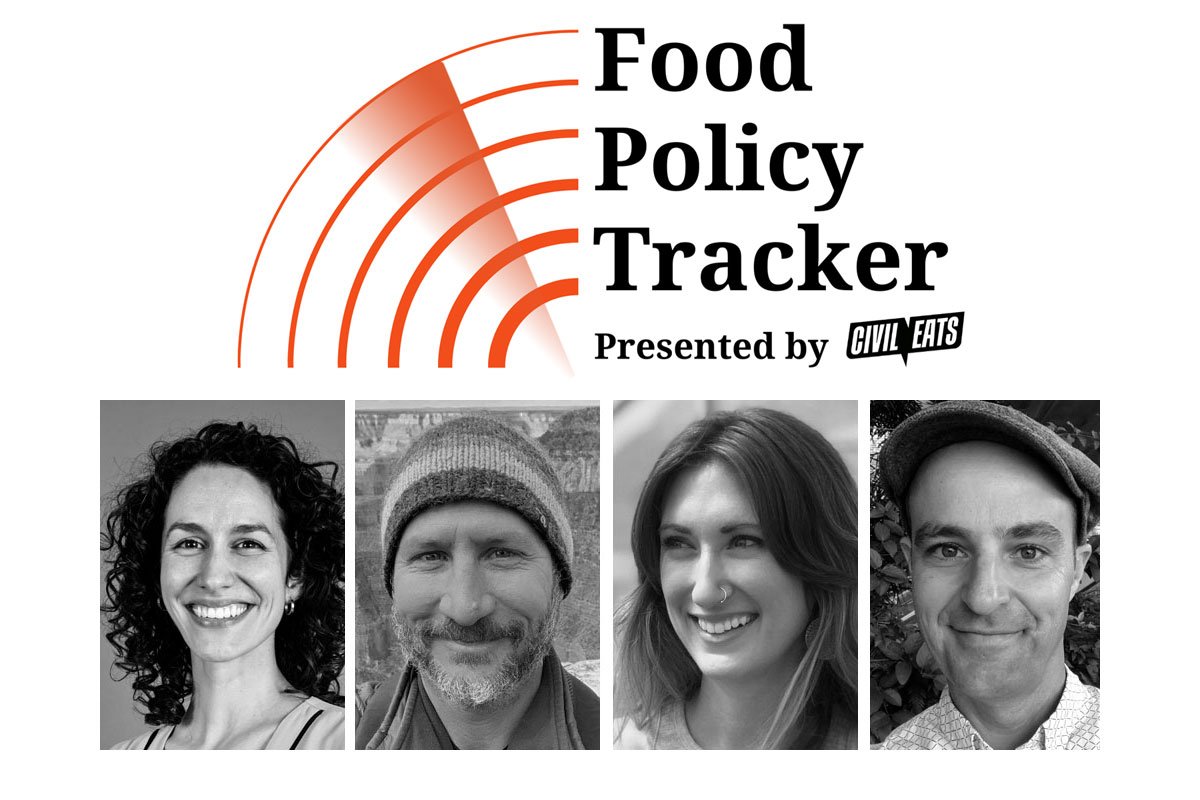
At our latest Civil Eats virtual salon, our team talked about the launch and evolution of the Tracker, a running report on federal actions that affect food and agriculture.
January 20, 2025
July 2, 2025
Like the story?
Join the conversation.
Warning: Undefined variable $aria_req in /srv/users/civileats/apps/civileats/public/wp-content/themes/CivilEats/comments.php on line 16
Warning: Undefined variable $aria_req in /srv/users/civileats/apps/civileats/public/wp-content/themes/CivilEats/comments.php on line 21