X
 [searchandfilter id="40551"]
[searchandfilter id="40551"]
[searchandfilter id="40551"] 
October 21, 2014



Last year, during the heat of our Kickstarter campaign, we called upon some of our favorite writers to spin their gold for us. Not only did they help us raise $100,000, they also wrote for us for free. Now, in a great honor, two of their stories have been included in the Best Food Writing 2014, which lands in bookstores today.
Expand your understanding of food systems as a Civil Eats member. Enjoy unlimited access to our groundbreaking reporting, engage with experts, and connect with a community of changemakers.
Already a member?
Login
The latest installment of editor Holly Hughes’ series continues the tradition of curating the finest in culinary prose from the previous year’s books, magazines, newspapers, and blogs. This year, Hughes calls out writers with their fingers on the pulse of the current food conversation.
In Kim O’Donnel’s piece, “Cooking as the Cornerstone of a Sustainable Food System,” she writes about teaching her mother how to cook. “I’m sure some of you are asking how this sweet little mother-daughter cooking story has any business appearing in a serious publication about the food system,” O’Donnel writes. “The thing is, home cooking is serious business. It is a conscious decision to turn raw ingredients into a meal to nourish ourselves and the people we love. The food system is more than crops and livestock; it’s what we humans do with them … Cooking is as fundamental as it gets–to our personal health and nourishment, and to the well-being and longevity of our communities, culture, and society. It can be the cornerstone of a sustainable food system, if we give it a chance.”
O’Donnel’s story also was awarded the second place prize in the Les Dames d’ Escoffier International’s 2014 M.F.K. Fisher Awards for Excellence in Culinary Writing.

Barry Estabrook asked us, hesitantly, whether he thought a listicle about what he wouldn’t eat would be of any interest to our readers. I jumped on it, not because I’m a fan of listicles, but because I knew Estabrook’s serious reporting and reputation would make it meaningful. His story “Five Things I Will Not Eat,” received 70,000 shares on Facebook alone and 90,000 pageviews. From supermarket ground beef to bluefin tuna and farmed salmon, Estabrook offered up valuable, easy-to-digest information for both food policy wonks and laymen alike.
When focusing on packaged greens, he writes: “In packing houses, crops from many fields are washed in the same water, which allows bacteria from one field to spread to greens from clean fields. E. coli and other bacteria can hide in cut edges, safe from wash water. Allowed to become warm for even a short time, the containers become perfect incubators for bacteria. The result is that bagged greens have sickened or killed consumers in dozens of outbreaks over the last several years.”
Best Food Writing 2014 includes some wonderful stories by some of the best food writers of our time, and many are friends and/or contributors to Civil Eats: Chef Dan Barber, John Birdsall, Jane Black, Sarah Henry, Anna Roth, Adam Sachs, Oliver Strand, Molly Watson, and many more. Stories like John Gravois’ “A Toast Story” and Kate Krader’s “Are Big Flavors Destroying America’s Palate?” take on the latest food trends without succumbing to hype. Meanwhile, others tackle food justice: Eli Saslow follows a family on food stamps in “Waiting for the 8th” and John T. Edge discusses working wages in “Debts of Pleasure.”
“Ultimately, though, good food writing boils down to the same things it always has: honest, real food, good ingredients, and the personal stories of the people behind it all,” says Hughes.
We’re thankful that Hughes and her team saw our work an important part of the conversation and grateful to our all of our writers, who continue to serve up some of the best food writing out there.

Stories change how we see food — and how we act on it.
From farmworkers to policymakers, Civil Eats lifts up the people building a better food system.
Your gift this season will be doubled through NewsMatch, fueling independent journalism that’s hopeful, honest, and free for all.
Together, we can keep these stories alive — and keep the movement growing.
Give Today.

June 26, 2025
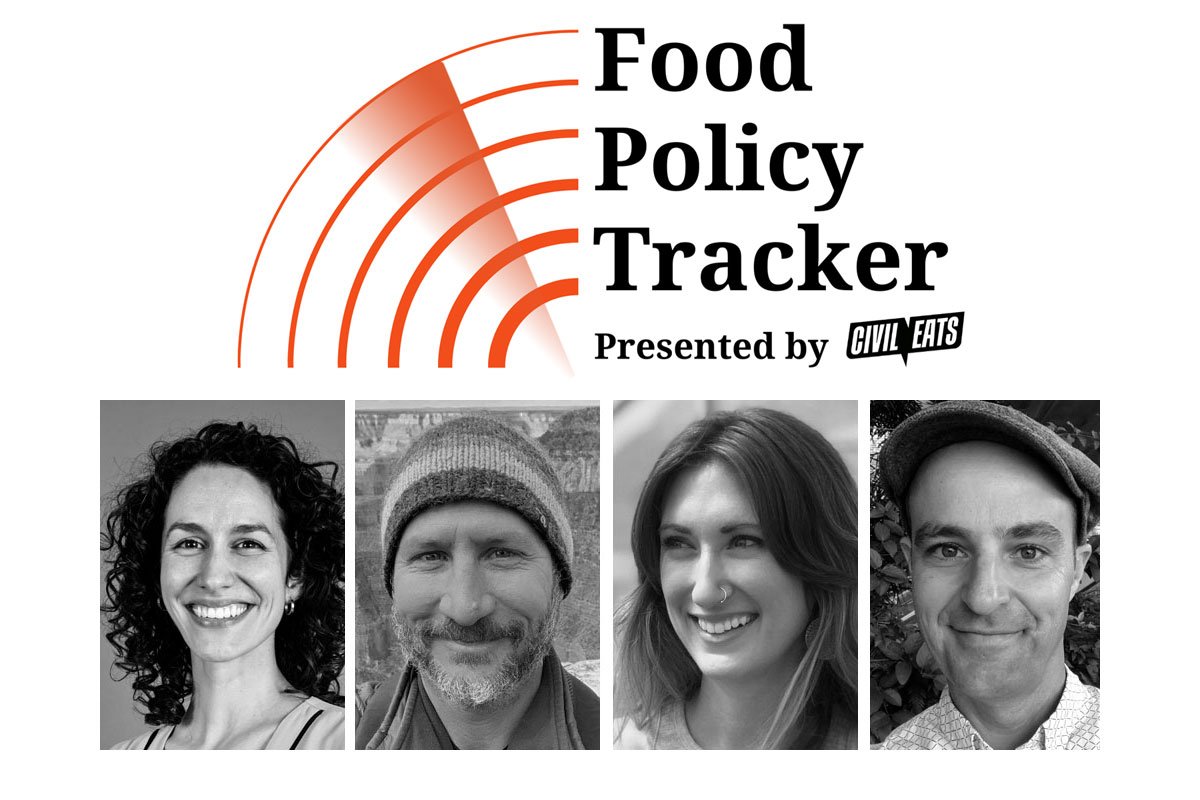
At our latest Civil Eats virtual salon, our team talked about the launch and evolution of the Tracker, a running report on federal actions that affect food and agriculture.
January 20, 2025
July 2, 2025
Like the story?
Join the conversation.
Warning: Undefined variable $aria_req in /srv/users/civileats/apps/civileats/public/wp-content/themes/CivilEats/comments.php on line 16
Warning: Undefined variable $aria_req in /srv/users/civileats/apps/civileats/public/wp-content/themes/CivilEats/comments.php on line 21