Nature's Path is going against the grain by investing in organic farmland.
X
 [searchandfilter id="40551"]
[searchandfilter id="40551"]
[searchandfilter id="40551"] 
Nature's Path is going against the grain by investing in organic farmland.
January 28, 2015



These days, consumers expect organic food manufacturers to pay close attention to how ingredients are sourced. But, one company has taken the process a step further. Nature’s Path, the British Columbia-based organic cereal manufacturer, has kicked off an innovative crop-sharing model with local farmers by purchasing 5,640 combined acres of farmland in Canada and northern Montana.
Expand your understanding of food systems as a Civil Eats member. Enjoy unlimited access to our groundbreaking reporting, engage with experts, and connect with a community of changemakers.
Already a member?
Login
Why would a company that sells over $300 million worth of boxed organic cereal in outlets like Whole Foods and Trader Joe’s dive into the organic farmland business?
Look to the market, says Dag Falck, organic farm manager at Nature’s Path Foods. Even as consumer demand for organic products is projected to grow 14 percent per year through 2018, organic farming in the U.S. isn’t nearly keeping up the pace. Organic agriculture increased worldwide 8.9 percent per year from 2001 to 2011, but the U.S. has lagged behind other countries in adopting sustainable farming methods.
“We wanted to be a helpful factor in transitioning more land to organic,” says Falck.
In a press statement, CEO and founder Arran Stephens put it this way: “By purchasing fertile land and working with organic family farmers, we ensure the purity of our foods, increase organic acreage to sustain growth, prevent poisoning the environment, and provide for future generations.”
In 2008, Nature’s Path bought two farms in Saskatchewan. Most of the wheat, oats, Kamut, and spelt cultivated on the farms is used in the company’s products. Anything left over, mainly lentils and peas, is sold on the commodity market. The farmers choose the grains and legumes they’ll grow each year, depending on rainfall patterns and other factors.
In lieu of charging rent, Nature’s Path agrees to a crop share with the farmers—meaning they give up a percentage of each year’s harvest when it’s time to sell their crops, rather than paying rent on land ahead of the season when they might not have the cash-flow. The risk is lessened for farmers, who get a nice cushion in bad years when their crops are plagued by pests, bad weather or natural disasters.
“On the other hand, if there is a bumper crop, we all share the bounty,” adds Falck.

Not all of the ingredients grown on the land they lease in Saskatchewan and Montana, actually end up in Nature’s Path products. In fact, the amount of grains its own farmers produce varies quite a lot each year. Without monoculture’s automation, tracking patterns and finding consistency in the output of diversified organic crops is a challenge.
“We’ve experienced hail storms where 200 acres of Kamut were decimated,” Falck says.
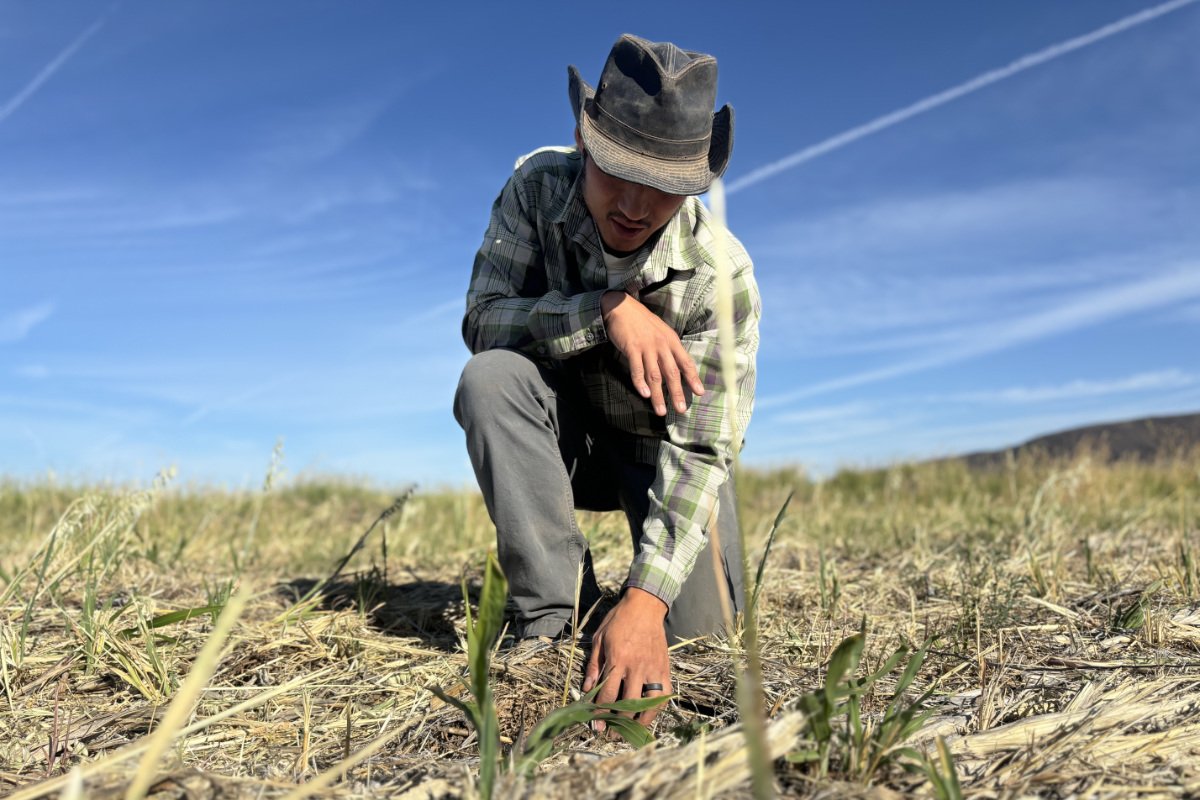
Doug Crabtree and Anna Jones-Crabtree own and operate Vilicus Farms, an organic operation in northern Montana. In 2009, they bought 1,280 acres, most of which was farmed conventionally before it was set aside and given a rest through the Conservation Reserve Program (CRP). Now, because it has been left to go wild, it won’t require a three-year transition period before it can be certified organic.
The Crabtrees entered into a partnership with Nature’s Path in 2014, after years of networking culminated in a face-to-face meeting with Stephens at Natural Products Expo West.
“We had a conversation about our farming philosophy and our desire to expand on it,” says Doug Crabtree. “We fit [with] their goals and they fit [with] ours; we signed the lease and it’s all going forward.”
The deal finalized in May 2014, when Nature’s Path bought 2,700 acres of land near the Crabtrees. The couple are considered the land’s stewards. They practice dryland farming, with an emphasis on soil-building, conservation strips, native pollinator habitats, and crop rotation. Last year, they harvested 15 different crops and seeded six additional covercrops for soil health. This year, they’ll grow spring peas, lentils, red winter wheat, oats and a few other grains as part of a six-year rotation. Since 80 percent of the cropland in northern Montana is wheat, and farmed on a fallow system, Vilicus Farms “looks a little different,” says Doug Crabtree.
To further their mission of expanding organic farming in the Northern Plains, the couple launched the Vilicus Farms Organic Farming Apprenticeship last year. The program trains young grain farmers, especially first-generation farmers, on the nuts and bolts of the business. They hope the program will inspire a new generation to embrace organic grain farming—and keep the supply chain strong in the U.S.
“Companies whose product line is dependent on organic grain may end up going overseas to import some of the supply if we don’t have adequate farmland to meet the growing demand,” says Jones-Crabtree.
Ultimately, the company’s leaders would like nothing less than to effect a “wholesale change in farming communities, where organic becomes known as a real opportunity,” says Falck. Take it one step further and they’d like to see non-organic farmers open to the financial, environmental, and health benefits of organic farming and make the switch.
For now, Nature’s Path is enjoying the ride. “Not only are we making cereal, we are seeing crops growing in the field,” says Falck. “It’s exciting to be involved in the process from the ground up.”
Nature’s Path founder Arran Stephens and his son Arjan Stephens will both be keynote speakers at next week’s Organicology conference in Portland, Oregon. Civil Eats is an official media sponsor of the conference.

Stories change how we see food — and how we act on it.
From farmworkers to policymakers, Civil Eats lifts up the people building a better food system.
Your gift this season will be doubled through NewsMatch, fueling independent journalism that’s hopeful, honest, and free for all.
Together, we can keep these stories alive — and keep the movement growing.
Give Today.

June 26, 2025
At our latest Civil Eats virtual salon, our team talked about the launch and evolution of the Tracker, a running report on federal actions that affect food and agriculture.
January 20, 2025
July 2, 2025
Like the story?
Join the conversation.
Warning: Undefined variable $aria_req in /srv/users/civileats/apps/civileats/public/wp-content/themes/CivilEats/comments.php on line 16
Warning: Undefined variable $aria_req in /srv/users/civileats/apps/civileats/public/wp-content/themes/CivilEats/comments.php on line 21