The Man Working to Bring Equality to the Food System | Civil Eats

The Man Working Behind the Scenes to Bring Racial Equality to the Food System

As the assistant secretary for civil rights for the USDA, Dr. Joe Leonard has spent the last 7 years doing what many thought was impossible: working for equality within a government agency that was built on institutional racism.

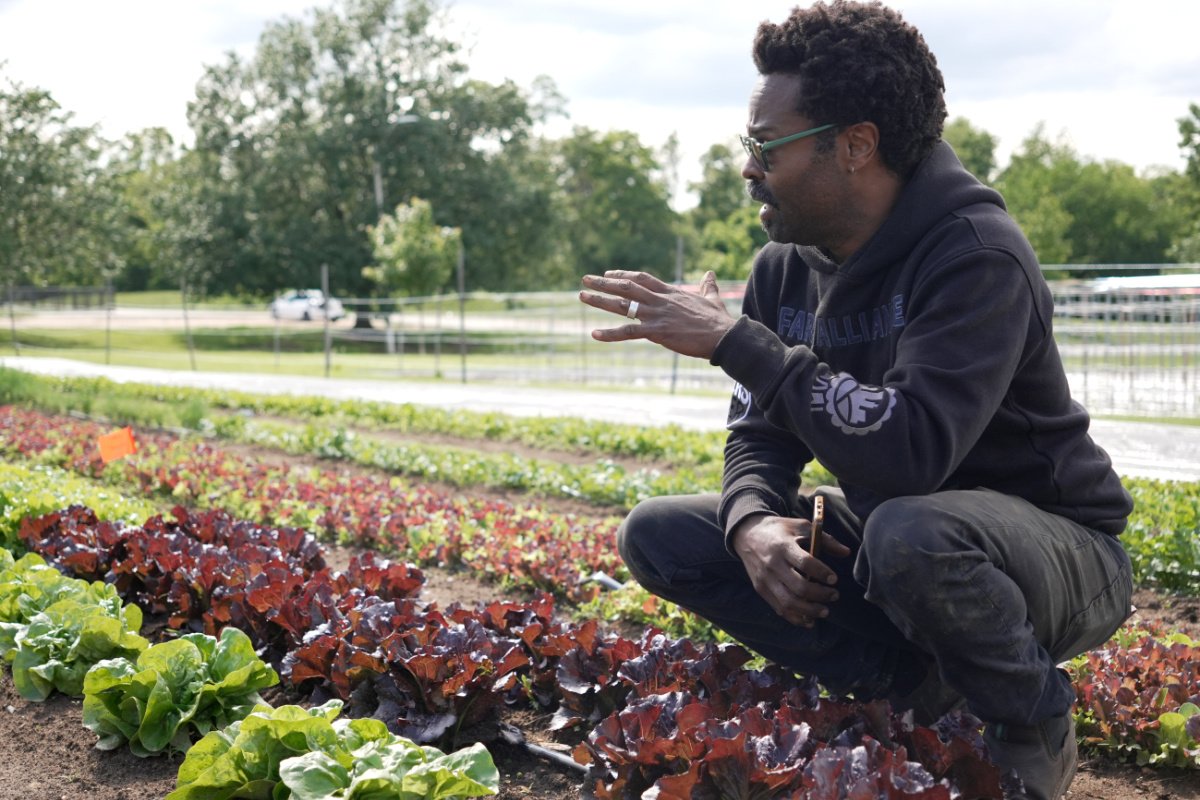
Dr. Joe Leonard, USDA Assistant Secretary for Civil Rights, Giving Speech

It’s not easy to change the culture of the institution you work for, but that’s precisely what Dr. Joe Leonard, assistant secretary for civil rights at the U.S. Department of Agriculture (USDA), hopes to do every day, a little bit at a time.

Unlock the Full Story with a Civil Eats Membership

Expand your understanding of food systems as a Civil Eats member. Enjoy unlimited access to our groundbreaking reporting, engage with experts, and connect with a community of changemakers.

Join today

If you didn’t know the USDA had a secretary of civil rights, you’re probably not alone. But at a time when Black farmers make up less than 2 percent of U.S. agriculture, and the sector is still recovering from generations of documented discrimination against Black and Native American farmers, the fact that few lay-people are aware of his work doesn’t appear to be slowing Leonard down.

Leonard is the third person to hold the post, created under the 2002 Farm Bill, and he has been in the role since President Obama appointed him in 2009 and agriculture secretary Tom Vilsack declared “a new era of civil rights” for the department.

“When Secretary Vilsack and I walked in seven years ago, we were aware of USDA’s imperfect history marked by denial of equal service, too often based solely on race. It was an admittedly terrible situation by any accord,” he told Civil Eats.

To start with, Leonard’s office settled several large class-action lawsuits with Native American and African American farmers and ranchers who had been systematically denied credit through the agency on the state and county levels. Because the ability to secure loans has always been so important to farmers growing their business, this lack of support from USDA has often led to sharp inequality between Black and white farmers, particularly in the South. By settling these lawsuits, and providing payments of more than $2.5 billion combined and over $118 million in debt forgiveness, the agency began on a path toward repairing what Leonard recognizes is a deeply broken relationship.

“My own grandfather couldn’t get a loan from USDA,” says Leonard, a sixth-generation Texan who grew up visiting his family’s farm. “I understand as well as anyone.”

Leonard attended the first generation of integrated schools in Austin in the 1960s, and his family received death threats at the time. The experience spurred a lifelong career in civil rights, including positions directing both the Black Leadership Forum and the Congressional Black Caucus before joining the USDA.Dr. Joe Leonard, USDA Assistant Secretary for Civil Rights

The agency has continued to receive complaints of race discrimination in recent decades, but Leonard says when he took office, they weren’t being taken seriously. According to a document created by Leonard’s office, “Secretary Vilsack learned that of the 14,000+ civil rights program complaints filed at USDA between 2001 and 2008, the Bush Administration [‘s Assistant Secretary of Civil Rights] found merit to only one complaint of program discrimination. Further, the 2-year statute of limitations had expired for the vast majority of the complaints.”

Now, Leonard says the agency takes all complaints on the basis of race very seriously, and investigates them within 18 months. And the number of complaints themselves have gone down by 90 percent—from around 250 a year when he started, to closer to 25 a year.

banner showing a radar tracking screen and the words

The USDA has also increased the number of micro-loans they make available in recent years, in part to reach farmers of color and socially disadvantages farmers. “Too often farmers of color were asking for loans and we were denying them because of their credit reports,” says Leonard. “But they were applying for $150,000 loans. And they could qualify for $35,000 or $50,000 loans.”

Leonard and his staff also created USDA’s first Minority Farmers Advisory Committee, a 15-member committee that will provide guidance to USDA on policies and strategies that impact minority farmers and ranchers.

The other important change Leonard stresses is a dramatic shift in the way the USDA’s Farm Service Agency structures its county-level farm committees. When the agency found what they called “a persistent lack of diversity” in several counties, Vilsack appointed members representing socially disadvantaged farmers and ranchers to over 100 county committees in 2012, 2013, and 2014.

“No secretary in the history of USDA had ever used those appointments and Secretary Vilsack used them 307 times,” says Leonard. “That is a huge shift. When you have done something for that long within the federal government, it is not easy to change.”

This is a theme in Leonard’s approach to his work: He believes that the most important change takes years to achieve. “[The USDA] is over 155 years old and we’ve been attempting to do generation-shifting work within a very short span of time,” he says.

Or, to put it another way: “Trust is lost in buckets and gained back in drops.”

As Obama’s second term begins to wrap up, Leonard is thinking a lot about what’s ahead, and he hopes the next administration will continue to prioritize civil rights and reach out to the next generation of farmers to offer them loans, training, and other forms of support and as many of the current farmers in the Black Belt hit retirement age.

Although the rise in large, consolidated farms, combined with the soaring cost of land make entry into farming next to impossible for many young people of color, Leonard says he believes that if the USDA continues to reach out to new farmers the way it’s doing today, there might be hope for a Black farm renaissance.

“I do believe you’ll begin to see an uptick in the number of acres owned by farmers of color,” adds Leonard. He points to what he calls a “re-migration,” wherein a generation of Southerners is beginning to leave Detroit, Cleveland, and other Rust Belt cities to return to their agrarian roots. Most will not be full-time farmers, Leonard says, and that’s not unusual. (On a national level, over half of all small farmers must hold down other jobs to pay the bills.) But the group he describes is interested in farming on a small-scale. “They’re going back, they’re acquiring property, and they’re utilizing that property to the fullest extent that they can,” says Leonard.


We’ll bring the news to you.

Get the weekly Civil Eats newsletter, delivered to your inbox.

Eight years is nowhere near enough time to address all the challenges caused by generations of institutional oppression, but Leonard is hopeful that he and Vilsack have laid some important groundwork for change—even if few people recognize it while it’s happening.

“In Harlem in the 1920s, no one was walking around saying, ‘We’re in the middle of a renaissance!’ So I believe that when the Obama Administration is over, people will look back on this period and recognize the changes we’re making,” Leonard says.


Photos courtesy of USDA.

Support Civil Eats during NewsMatch

Stories change how we see food — and how we act on it.

From farmworkers to policymakers, Civil Eats lifts up the people building a better food system.

Your gift this season will be doubled through NewsMatch, fueling independent journalism that’s hopeful, honest, and free for all.

Together, we can keep these stories alive — and keep the movement growing.

Give Today.

Civil Eats Supporting Membership $60/year $6/month
Give One, Get One Membership $100/year
Learn more about our membership program

Twilight Greenaway is the former managing editor and executive editor of Civil Eats. Her articles about food and farming have appeared in The New York Times, NPR.org, The Guardian, Food and Wine, Gastronomica, and Grist, among other. See more at TwilightGreenaway.com. Follow her on Twitter. Read more >

Like the story?
Join the conversation.


Warning: Undefined variable $aria_req in /srv/users/civileats/apps/civileats/public/wp-content/themes/CivilEats/comments.php on line 16

Warning: Undefined variable $aria_req in /srv/users/civileats/apps/civileats/public/wp-content/themes/CivilEats/comments.php on line 21
  1. Christopher Warner
    I really enjoyed this piece.

More from

Food Justice

Featured

Paulina Velasco from the Institute for Nonprofit News moderated a discussion with Brian Calvert, senior editor, Lisa Held, senior staff reporter and contributing editor, and Matt Wheeland, operations director.

Inside the Food Policy Tracker

At our latest Civil Eats virtual salon, our team talked about the launch and evolution of the Tracker, a running report on federal actions that affect food and agriculture.

Popular

Lorem Ipsum Post

EPA Hires Farm and Pesticide Lobbyist to Oversee Pesticide Regulation

A logo showing the Civil Eats Food Policy Tracker, looking like a radar following food policy proposals and actions

EPA Funds Projects to Help Farmers Reduce Runoff Into the Great Lakes

A logo showing the Civil Eats Food Policy Tracker, looking like a radar following food policy proposals and actions

Department of Labor Suspends Protections for H-2A Guest Workers and Announces Plan to Bring in More

A logo showing the Civil Eats Food Policy Tracker, looking like a radar following food policy proposals and actions