Op-ed: Food Workers are on the Frontlines of Coronavirus. They Need Our Support. | Civil Eats STAGING

Op-ed: Food Workers are on the Frontlines of Coronavirus. They Need Our Support.

From paid sick leave to free childcare, some states are stepping up for food chain workers at risk of COVID-19. Congress should follow and expand it nationwide.

A volunteer at the at the Houston Food Bank. (USDA photo by Lance Cheung)

On Sunday, Minnesota Governor Tim Walz signed an executive order providing free childcare for all workers deemed essential for the state’s response to the COVID-19 pandemic. This includes the grocery store clerks and shelf stockers helping keep grocery stores functioning as shoppers fill their pantries with food for potential quarantine. Vermont is developing a similar childcare reimbursement plan that could also include grocery workers.

Unlock the Full Story with a Civil Eats Membership

Expand your understanding of food systems as a Civil Eats member. Enjoy unlimited access to our groundbreaking reporting, engage with experts, and connect with a community of changemakers.

Join today

This is an important step that other states and Congress should follow and expand. To secure the nation’s food supply, the federal government should cover all the workers who help feed us, starting in the fields with farmworkers and moving along the supply chain to slaughterhouse and warehouse workers.

These workers will be on the front lines continuing to harvest crops and process products to feed the nation, risking exposure to the virus. But farmers and food processors still fear that possible labor shortages, due to illness or childcare demands, could leave food in the field or slow livestock slaughter, disrupting food supply chains.

The systemic shock of COVID-19 reveals the often-unseen essential services that food workers perform: cultivating, processing, driving, stocking, and delivering food to our tables. In our collective time of need, it is critical that lawmakers recognize and support these workers who have been systemically oppressed, disenfranchised, and underpaid for as long as there has been industrial food production in the United States.

Workers along the food supply chain generally have fewer protections, lower wages, and higher levels of food insecurity than almost all other workers. The food system employs more people than any other sector—roughly 14 percent of the U.S. workforce—but these workers have the lowest median wages of any industry at under $12 an hour.
banner showing a radar tracking screen and the words

Farmworkers still do not have the right to unionize under the National Labor Relations Act and less than 7 percent of all food workers are covered by a union contract. Most ironically, food workers rely on public food assistance at twice the rate of other workers, and more than 2.5 million households supported by food workers experienced food insecurity in 2014.

When it comes to responding to the COVID-19 pandemic, most food workers do not have benefits like paid sick leave or health insurance. A survey by the Food Chain Workers Alliance found that nearly 80 percent of all food workers did not have paid sick days and over half of workers had worked when sick. Of them, 43 percent said they feared losing their job for taking a sick day.

Leaders of the United Farm Workers (UFW) recently sent an open letter to agricultural employers urging paid leave for any workers infected with or exposed to COVID-19, eliminating waiting periods and doctor’s note requirements for sick pay, and extending state-required sick pay hours.

Workers have long gotten a raw deal, but in the face of the COVID-19 crisis, we have ample reasons to right these wrongs. As the crisis topples fragile supply chains, they must remain steady as an utmost matter of public health.

At a minimum, Congress should follow the lead of Minnesota and Vermont by providing free childcare for everyone working to keep communities fed. But lawmakers should go even farther and ensure that all critical food workers have access to free healthcare and paid sick leave, as they risk exposure to COVID-19.

We’ll bring the news to you.

Get the weekly Civil Eats newsletter, delivered to your inbox.

All food workers should also be entitled to a minimum wage to at least $15 an hour and have equal legal rights and labor protections, which includes lifting farmworkers exemption from the Fair Labor Standards Act. If we do the right thing in this time of emergency, we will recognize that our debt to food workers does not end when this pandemic does; they deserve dignity, fair wages, and a safe workplace at all times.

Top photo: A volunteer at the at the Houston Food Bank. (USDA photo by Lance Cheung)

Support Civil Eats during NewsMatch

Stories change how we see food — and how we act on it.

From farmworkers to policymakers, Civil Eats lifts up the people building a better food system.

Your gift this season will be doubled through NewsMatch, fueling independent journalism that’s hopeful, honest, and free for all.

Together, we can keep these stories alive — and keep the movement growing.

Give Today.

Civil Eats Supporting Membership $60/year $6/month
Give One, Get One Membership $100/year
Learn more about our membership program

Claire Kelloway is the primary reporter for Food and PowerFood & Power and a senior food and farming researcher at the Open Markets Institute, an anti-monopoly think tank based in Washington, D.C. Read more >

Like the story?
Join the conversation.


Warning: Undefined variable $aria_req in /srv/users/civileats/apps/civileats/public/wp-content/themes/CivilEats/comments.php on line 16

Warning: Undefined variable $aria_req in /srv/users/civileats/apps/civileats/public/wp-content/themes/CivilEats/comments.php on line 21
  1. I stand firm with you all cheers Chef Omar Mitchell

More from

Commentary

Featured

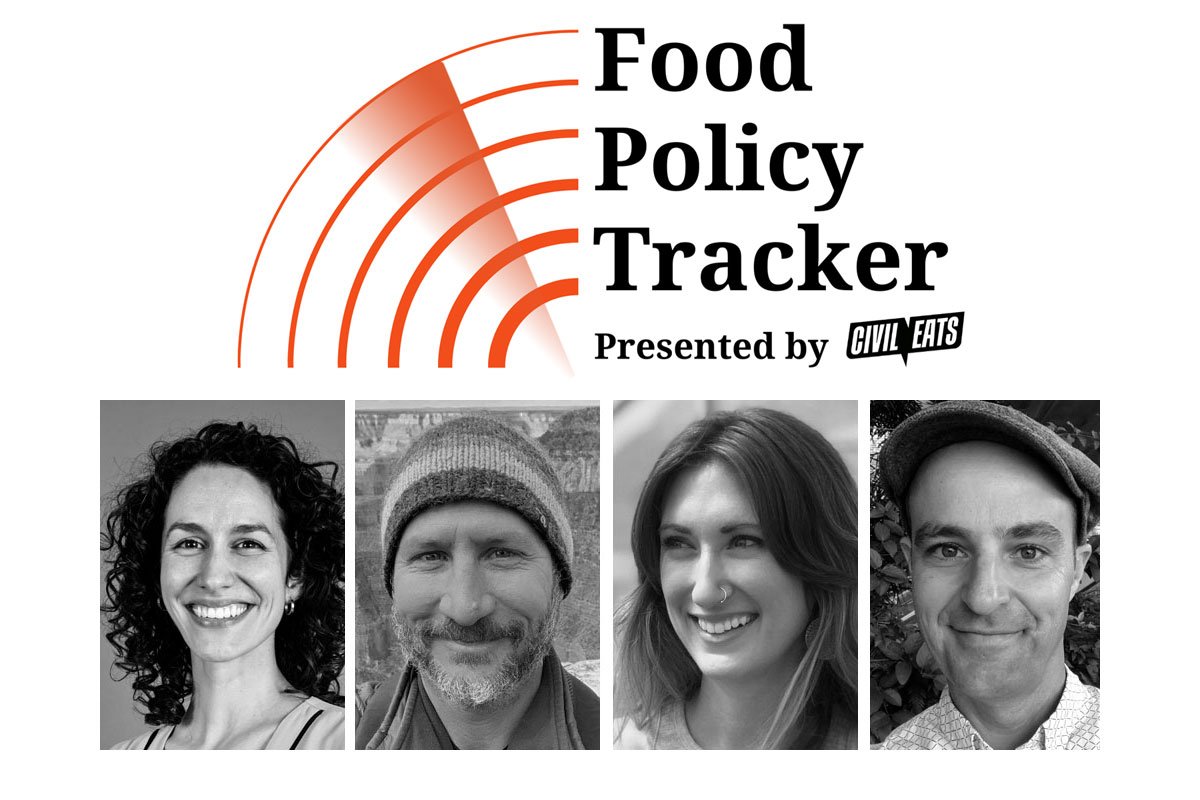
Paulina Velasco from the Institute for Nonprofit News moderated a discussion with Brian Calvert, senior editor, Lisa Held, senior staff reporter and contributing editor, and Matt Wheeland, operations director.

Inside the Food Policy Tracker

At our latest Civil Eats virtual salon, our team talked about the launch and evolution of the Tracker, a running report on federal actions that affect food and agriculture.

Popular

Lorem Ipsum Post

EPA Hires Farm and Pesticide Lobbyist to Oversee Pesticide Regulation

A logo showing the Civil Eats Food Policy Tracker, looking like a radar following food policy proposals and actions

Can This Baltimore Academy Continue to Train Urban Farmers?

Denzel Mitchell at Black Butterfly Teaching Farm. (Photo credit: Sam Delgado)

EPA Funds Projects to Help Farmers Reduce Runoff Into the Great Lakes

A logo showing the Civil Eats Food Policy Tracker, looking like a radar following food policy proposals and actions