A recent test determined that many products labelled '100 percent whole grain' don't contain anywhere near that amount.
X
 [searchandfilter id="40551"]
[searchandfilter id="40551"]
[searchandfilter id="40551"] 
A recent test determined that many products labelled '100 percent whole grain' don't contain anywhere near that amount.
August 28, 2020



Labels are key to navigating today’s grocery aisles. And yet, when it comes to finding whole grain foods, the current labels are failing us. In fact, there are no words, symbols, signs, or labels that can guarantee the food on the shelf is 100 percent whole grain, even if it says it is.
Expand your understanding of food systems as a Civil Eats member. Enjoy unlimited access to our groundbreaking reporting, engage with experts, and connect with a community of changemakers.
Already a member?
Login
Most of us bring a healthy amount of skepticism to our consumer decisions these days. When it comes to whole wheat, Dr. David Killilea of the Children’s Hospital Oakland Research Institute—along with a committee of farmers, scientists, journalists, bakers, and millers lead by Community Grains—wanted to bring hard science to the conversation.
So, he developed a new biochemical analysis to determine precisely how much whole grain flour is contained in a given food and then applied it to a handful of name-brand products. The results, published in The Journal of Food Science, showed that national brand “whole grain” pastas can contain as little as 9 percent whole grain and national brand flours labeled “whole grain” can contain as little as 60 percent.
Even the Nutrition Facts Panel, the place on the package where most consumers go to ascertain actual ingredients, won’t help you validate whole grain content in wheat products. The Harvard School of Public Health had used a fiber-to-carbohydrate ratio to approximate whether a product is whole grain, but that actually indicates the content of bran, which can be added separately from the germ. And the added fiber may be something other than wheat fiber.
This problem all started with the invention of the industrial roller mill in the 1850s. It made flour better—well, at least cheaper—and very, very white. It prolonged shelf life, allowing for the industrialization of wheat—our principal source of nutrition. But, unlike stone flour mills, which crushed the wheat but kept all the parts of the grain together, the roller mill removed the germ, bran, and pretty much all of the nutrients.
In the 1850s, there was a web of 22,000 stone flour mills providing the entire country with quality wheat flour. Today, there are 166 industrial roller mills. Along with the loss of nutrition came the loss of connection to agrarian ethics and knowledge. Those local flour mills didn’t need to advertise; they served their communities. But the products made in today’s massive flour mills rely heavily on marketing. That marketing may not be intending to obfuscate and disinform, but that is what it has done. And this shift was the first major breakdown in a now fully broken industrial food system.

Today, nearly all the flour Americans eat comes from these large roller mills, and most “whole wheat” flour is essentially white flour with some germ and bran mixed back in. And just how much germ and bran gets added back in by each company is an open question. But many companies sell it separately as a nutritional supplement or animal feed, adding a secondary revenue stream.
And no, you can’t trust the words “stone ground” on the package either. Within the industry, there are stories of “drive-by stone milling” where a stone hangs above the industrial roller mill as milled flour flows by. In 2003, the U.S. Food & Drug Administration (FDA) re-rejected the petition from Hodgson Mill of Effington, Illinois, requesting that the agency establish a standard of identity for stone ground. FDA’s reason for the rejection: There was “no evidence that it would promote honesty and fair dealing in the interest of consumers.”
Why does this matter? Scientists have shown that the greatest health synergy comes from the thousands of micronutrients found in whole grain, not just the fiber. Scores of studies say true whole grain consumption will help prevent heart disease, cancers, dementia, and diabetes. Not only do many people seek out whole grains at the advice of doctors and nutritionists, but they often do so at moments when diet is more than a lifestyle choice—it’s an essential part of staying healthy or fighting illness.
How did we get to a point where wheat—one of the most important, most nutrient rich food in the history of civilization—has essentially been trashed?
The lack of transparency and mass of misinformation isn’t new. And the food companies are far from solely at fault. Media outlets that don’t properly vet stories, opportunistic authors that go unchallenged, regulators that have long allowed for huge loopholes, and our own woefully short attention spans are all complicit. We can’t begin to fix the problem without laying a foundation of trust, and trust begins with transparency.
The pandemic—and the direct line that has been drawn between COVID-19 and diet-related diseases such as diabetes—has also shone a light on the need for radical change in the food system. As it becomes clear that eating better generally, and eating true whole grains specifically, really matters, I see an opportunity to demand transparency.
It’s simple, if a product label won’t tell you everything reliably, walk away. Food corporations like to talk about of “the importance of trade secrets,” but consumers have shown that they value the opposite: the kind of openness and clarity of information that has seen a comeback over the last decade with a focus on local food.
The problem will only be fixed when the market demands full information and a system of packaging and labeling that is clear, transparent, and complete. Let’s assume food companies are good guys, and that they just want to know what we want. We need to tell them.
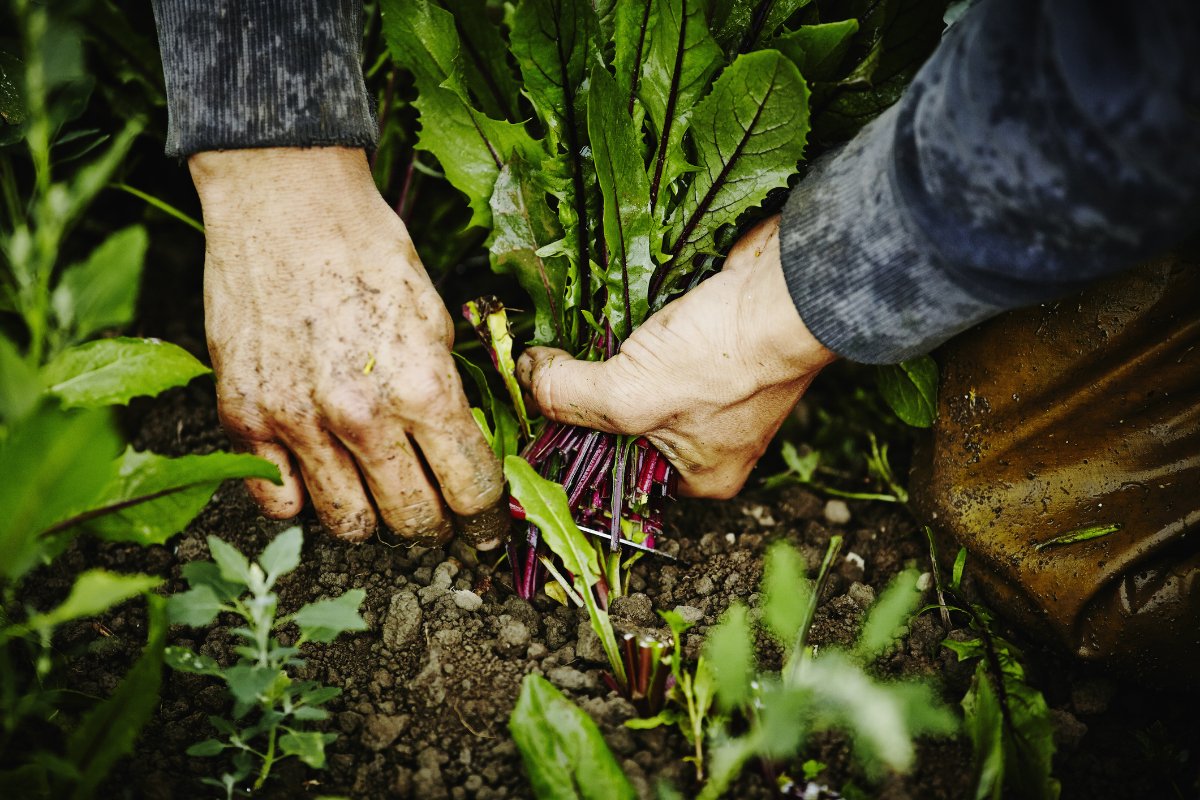
Top photo: Hand harvesting Senatori Cappelli durum wheat at Front Porch Farm, Healdsburg.

Stories change how we see food — and how we act on it.
From farmworkers to policymakers, Civil Eats lifts up the people building a better food system.
Your gift this season will be doubled through NewsMatch, fueling independent journalism that’s hopeful, honest, and free for all.
Together, we can keep these stories alive — and keep the movement growing.
Give Today.

June 26, 2025
At our latest Civil Eats virtual salon, our team talked about the launch and evolution of the Tracker, a running report on federal actions that affect food and agriculture.
January 20, 2025
July 2, 2025



Like the story?
Join the conversation.
Warning: Undefined variable $aria_req in /srv/users/civileats/apps/civileats/public/wp-content/themes/CivilEats/comments.php on line 16
Warning: Undefined variable $aria_req in /srv/users/civileats/apps/civileats/public/wp-content/themes/CivilEats/comments.php on line 21