
X
 [searchandfilter id="40551"]
[searchandfilter id="40551"]
[searchandfilter id="40551"] 
August 25, 2021



The nation’s anti-hunger organizations have done a phenomenal job of feeding kids and families throughout the pandemic, helping to avert what could have otherwise been a calamitous hunger crisis. The Biden Administration’s recent increase in SNAP benefits, and new flexibility in the policies surrounding school meals and summer feeding, have also played a major role. But if you were paying attention to the alarming rates of food insecurity in this country before the pandemic, you know that averting a crisis isn’t enough.
Expand your understanding of food systems as a Civil Eats member. Enjoy unlimited access to our groundbreaking reporting, engage with experts, and connect with a community of changemakers.
Already a member?
Login
This nation’s approach to hunger is at a crossroads. We have an important opportunity to prevent families from experiencing hunger in the first place. By mobilizing to extend the new Child Tax Credit beyond its December expiration date and increase access to the credit, our nation has the potential to lift more kids out of poverty and away from hunger, than it has at any other point in our lifetimes.
And this historic moment demands more than business as usual.
According to the latest Census Bureau Household Pulse Survey, the first payment of the new fully refundable Child Tax Credit—as much as $250 to $300 a month for many families—has meant that parents have had less trouble affording food. Just over 10 percent of households with children said they sometimes or often didn’t have enough to eat over the previous seven days.
“That’s the lowest estimate since the start of the coronavirus pandemic and a huge drop of 3.5 percentage points” from a month earlier, Diane Whitmore Schanzenbach of the Institute for Policy Research at Northwestern University told CNN recently.
Take a look at the websites of the nation’s leading food banks and you’ll see inspiring statistics about the millions of Americans fed, the thousands of community partners supported, and the countless pounds of food distributed. There’s a very sophisticated system in place designed to feed hungry children. It relies on individual and corporate generosity, and it also offers many companies sizable tax write-offs for donating unwanted and expired food.
Now, imagine if that help wasn’t needed.
That’s where bold programs like the Child Tax Credit enter the picture. With up to $300 more in their bank accounts every month, families can buy the healthful, culturally appropriate foods they need as well as other necessities, stabilizing them over time.

The pandemic has underscored the fact that it takes more than food to fight hunger—which is a symptom of poverty, racism, and inequity. In addition to the invaluable food assistance that anti-hunger organizations provide, there are at least three things every community’s hunger organization can do to have a more transformative impact on families:
1. Urge trusted community partners who connect directly with hungry Americans to help them access the Child Tax Credit. Like any new public benefit, awareness must be raised and technical assistance provided to ensure that the people who need it the most actually receive it.
2. Urge their supporters and beneficiaries to reach out to Congress to extend the Child Tax Credit, which will otherwise expire at the end of December.
3. Find other ways to address the root causes of hunger by supporting nutrition education, financial literacy, affordable housing, early childhood education, and a living wage.
Like many similar programs, Share Our Strength’s No Kid Hungry campaign and our work increasing school breakfast participation have been successful at feeding kids in need. And when we see success, it’s tempting to stop there.
But if anti-hunger advocates don’t make the case that it’s not enough just to feed people, who will?
We can’t think of anything more tragic than a child experiencing hunger when the resources exist to prevent it, but their parents don’t know how to—or feel like they have a right to—access them.
Our experience with the Women, Infant, and Children (WIC) supplemental feeding program, in which only 51 percent of eligible households participate, has taught us just how much work remains to be done even once an idea becomes law.
There are tens of thousands of brave and resourceful staff and volunteers working for organizations that provide emergency food assistance. They reach virtually every community across America and work in a commendably nonpartisan fashion. They amount to a virtual army that could make the idea of the Child Tax Credit a reality by advocating for its extension, raising awareness of its benefits, and steering eligible families to the assistance they need to enroll.
In the 35 years I’ve worked in this field there has never been an opportunity like this—and it may not come again.

Stories change how we see food — and how we act on it.
From farmworkers to policymakers, Civil Eats lifts up the people building a better food system.
Your gift this season will be doubled through NewsMatch, fueling independent journalism that’s hopeful, honest, and free for all.
Together, we can keep these stories alive — and keep the movement growing.
Give Today.

June 26, 2025
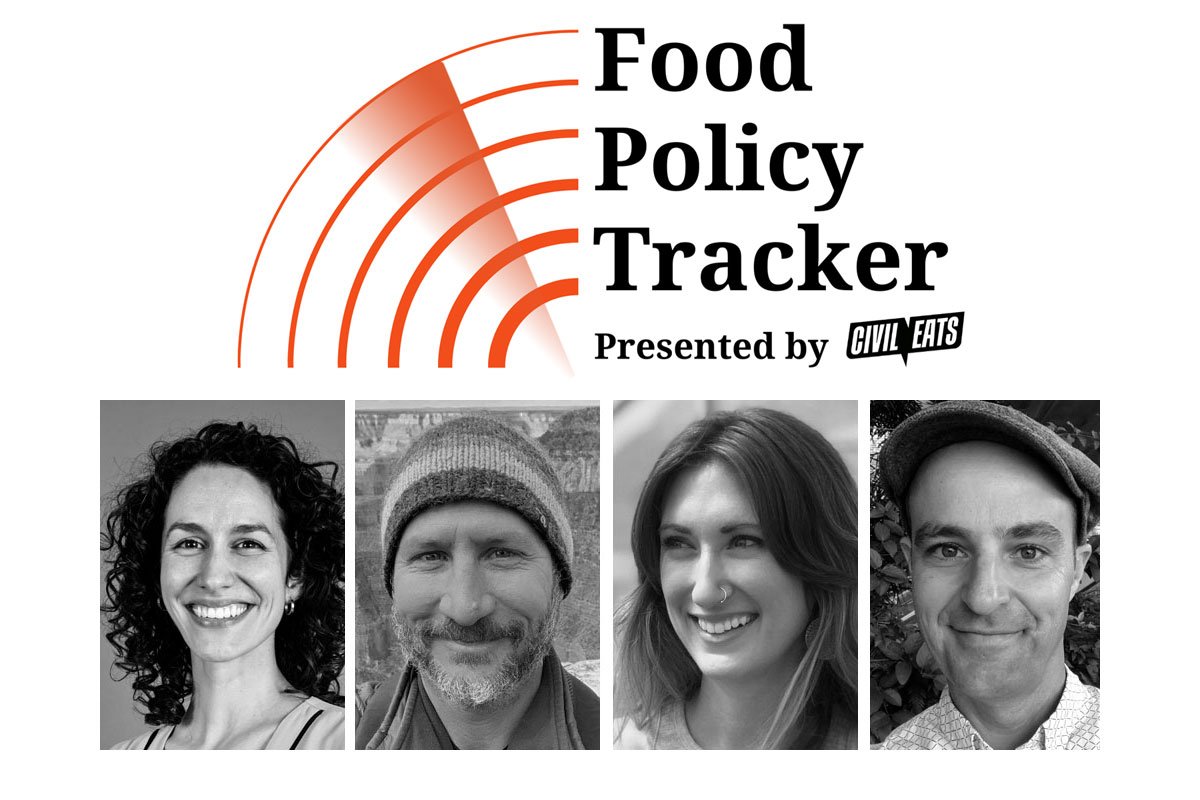
At our latest Civil Eats virtual salon, our team talked about the launch and evolution of the Tracker, a running report on federal actions that affect food and agriculture.
January 20, 2025
July 2, 2025





Like the story?
Join the conversation.
Warning: Undefined variable $aria_req in /srv/users/civileats/apps/civileats/public/wp-content/themes/CivilEats/comments.php on line 16
Warning: Undefined variable $aria_req in /srv/users/civileats/apps/civileats/public/wp-content/themes/CivilEats/comments.php on line 21