
X
 [searchandfilter id="40551"]
[searchandfilter id="40551"]
[searchandfilter id="40551"] 
June 14, 2022



Amidst rising food prices and record profit reports by many agribusiness corporations this year, a group of Democratic Senators and Representatives announced new legislation last week that would place an indefinite moratorium on acquisitions and mergers within agriculture and food industries.
Expand your understanding of food systems as a Civil Eats member. Enjoy unlimited access to our groundbreaking reporting, engage with experts, and connect with a community of changemakers.
Already a member?
Login
The “Food and Agribusiness Merger Moratorium and Antitrust Review Act of 2022,” is an attempt by policymakers in Washington, D.C. to halt growing corporate concentration in the sector.
“Corporate profiteering and out-of-control consolidation by big agricultural firms have led to increased prices at every point on the food chain, from the farm to the grocery store,” said Representative Mark Pocan (D., WI—2nd) in a statement announcing the legislation. “Congress must do more to help local farmers be competitive while providing greater market transparency to the American consumer.”
The legislation is welcomed by several farmers and ranchers contacted by the Daily Yonder for comment.
“The Agribusiness Merger Moratorium Act would give those of us trying to build a better food system hope that some in Congress have seen how corporate monopolies, from seed to grocery store, are making it impossible to keep family farmers on the land,” said Chelsea Davis, a Callaway County, Missouri, farmer and Chief Operating Officer of The Root Cellar, a Mid-Missouri local food hub.
Davis said that if we want our food system to be more sustainable and resilient, we have to make policy choices that would stop further monopolization at every stage of the supply chain.“These huge corporations don’t care about our rural or urban communities, our streams, and our rivers, or being good neighbors,” she said. “I just hope Congress and the President will act quickly because too many family farmers are running out of time.”
Greg Gunthorp, who farms and operates a meatpacking plant in LaGrange, Indiana, also supports the bill. “It’s a tragedy for our farming communities, but antitrust enforcement has been on vacation since the 1970s. Corporate agribusiness has been given a free rein from our political leaders in both parties to run over us with anti-competitive practices and predatory pricing,” he said.
“We need a merger moratorium right now because Congress and the Department haven’t done their jobs,” Gunthorp said. “It’s a new day for us now, it’s high time as a society that we do more than talk about the corporate takeover of agriculture. We’ve got to quit giving preferential treatment to big corporations and tilt the table toward us, local food farmers.”
The bill was also announced in response to a nationwide shortage of infant formula, according to the sponsors.

Four companies –Abbott, Reckitt Benckiser, Nestle, and Perrigo–account for nearly all infant formula sales in the U.S. Earlier this year, Abbott closed a factory and recalled several brands of formula causing the recent panic. The crisis is impacting low-income and working-class families the most, particularly those who rely on federal nutrition programs like the Special Supplemental Nutrition Program for Women, Infants, and Children (WIC).
“Today, too many middle-class families, farmers, and food workers struggle to make ends meet. Establishing a moratorium on agribusiness mergers will protect our farms and farmers while ensuring consumers continue to enjoy variety on supermarket shelves,” Representative Pocan said.
Addressing corporate power in agriculture has been a major focus for many Democrats since 2021. A White House analysis on concentration in the beef, pork, and chicken industry states that four firms control approximately 55-85 percent of the market for these food products.
“That reflects dramatic consolidation of the industry over the last five decades, as the large conglomerates have absorbed more and more smaller processors. In 1977, the largest four beef-packing firms controlled just 25 percent of the market, compared to 82 percent today,” according to the analysis. “In poultry, the top four processing firms controlled 35 percent of the market in 1986, compared to 54 percent today. And in pork, the top four hog-processing firms controlled 33 percent of the market in 1976, compared to 66 percent today.”
Some farmers and ranchers believe the corporate agricultural system is also a primary driver of environmental impacts, and that creating more open and competitive markets could help to deliver better practices.
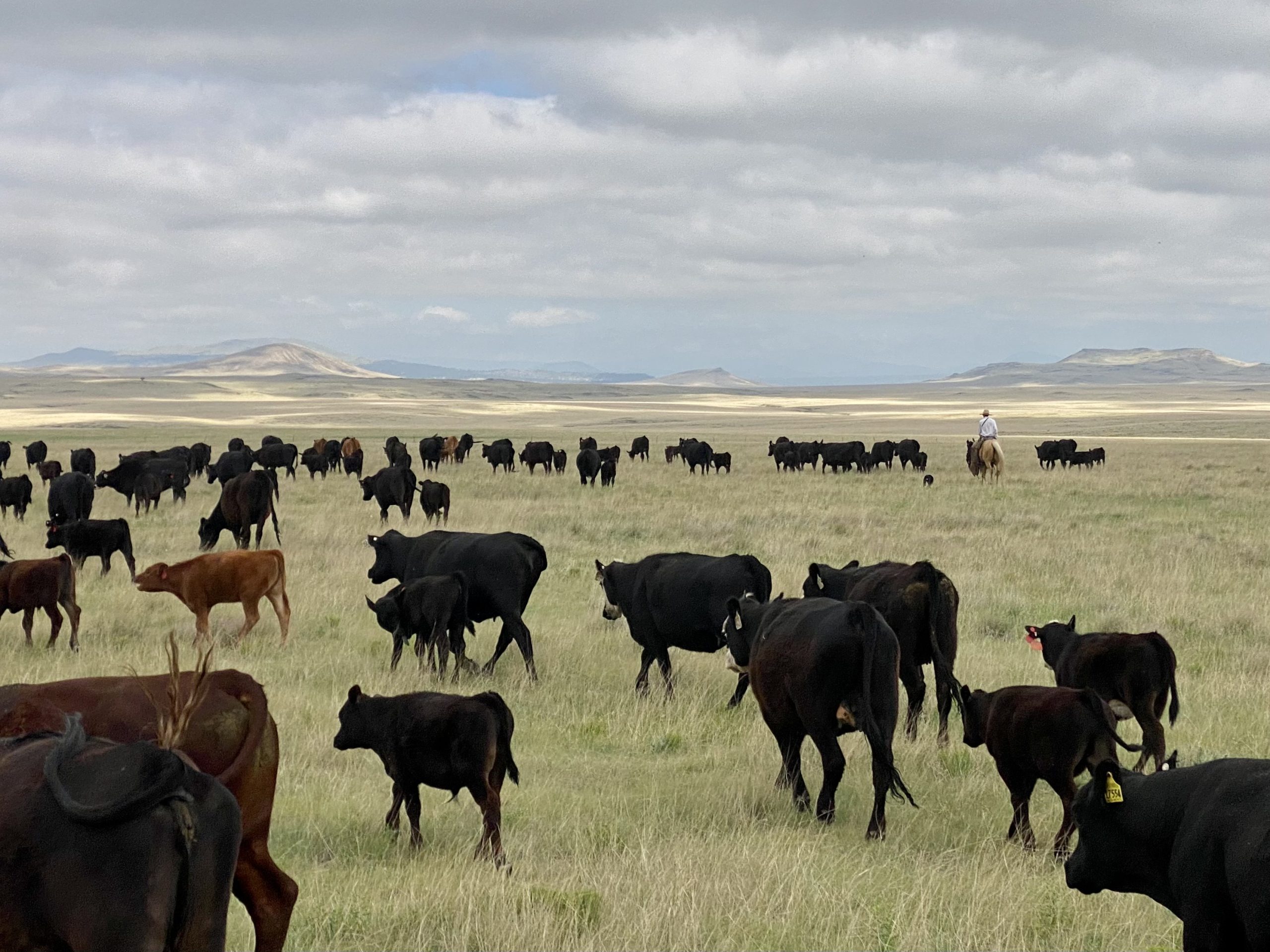
“A more competitive and regional market for beef cattle would not only pay fair prices but more directly reward ranchers for using their herds to enhance their land rather than degrade it,” said Ariel Greenwood, who manages thousands of cattle seasonally in New Mexico and Montana, “Multiply this positive impact across the millions of acres of grazed land in the U.S. and the implications for restoring declining plant and wildlife communities is tremendous.”
Greenwood said that while corporate-controlled beef markets do damage rural economies, the ecological impacts of corporate consolidation are sometimes not understood. “Simply put, ranchers who are strapped for cash have a much harder time making management decisions that support the long-term health of their land when the economic dragon is breathing down their neck,” she said. “This shows up in the quality of their forage—pastures tend to be either underutilized or overgrazed and grow less diverse,” with impacts being most significant in riparian areas along creeks, streams, and rivers.
Advocates for reforming corporate power in agriculture through legislation also emphasized the need for urgent action.
“Talk is cheap,” Gunthorp said. “I just think everyone now realizes that there are many essential industries in our lives. From lumber to protective/medical equipment to food and to baby formula, we’ve got real-world examples of corporate control taking their toll. We need to act now while there’s an understanding—an expectation, really—that our government should get to work for us people instead of looking out for the corporate CEOS and big money.”
The Senate companion legislation is co-sponsored by Cory Booker (D-New Jersey), Jon Tester (D-Montana), Jeff Merkley (D-Oregon), and Elizabeth Warren (D-Massachusetts). Both the Senate and House versions have been referred to the Agriculture and Judiciary Committees for consideration.
This article first appeared on The Daily Yonder and is republished here under a Creative Commons license.

Stories change how we see food — and how we act on it.
From farmworkers to policymakers, Civil Eats lifts up the people building a better food system.
Your gift this season will be doubled through NewsMatch, fueling independent journalism that’s hopeful, honest, and free for all.
Together, we can keep these stories alive — and keep the movement growing.
Give Today.

June 26, 2025
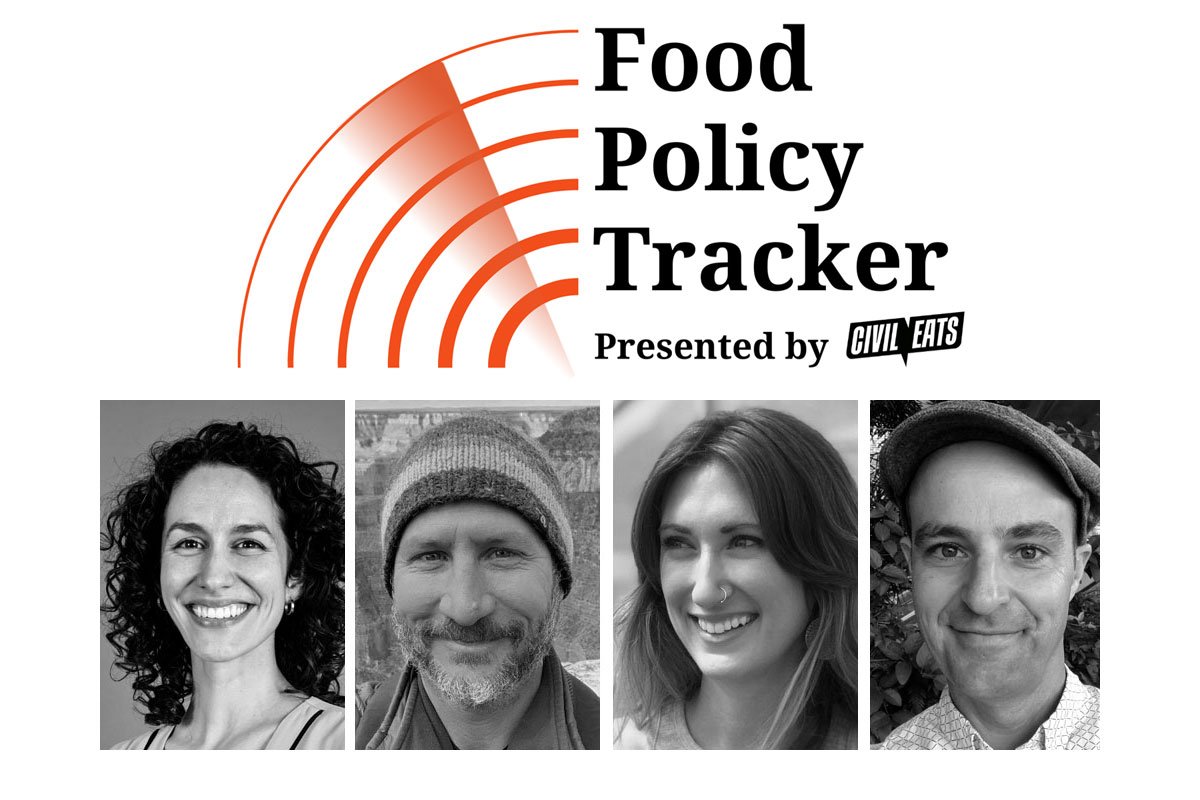
At our latest Civil Eats virtual salon, our team talked about the launch and evolution of the Tracker, a running report on federal actions that affect food and agriculture.
January 20, 2025
July 2, 2025



Like the story?
Join the conversation.
Warning: Undefined variable $aria_req in /srv/users/civileats/apps/civileats/public/wp-content/themes/CivilEats/comments.php on line 16
Warning: Undefined variable $aria_req in /srv/users/civileats/apps/civileats/public/wp-content/themes/CivilEats/comments.php on line 21