At Climate Dinners Hosted by Chefs Sam Kass and Andrew Zimmern, The Meal Is The Message | Civil Eats STAGING

At Climate Dinners Hosted by Chefs Sam Kass and Andrew Zimmern, The Meal Is The Message

To create awareness and inspire action, their carefully curated meals feature coffee, chocolate, and other foods that will become costlier and more difficult to produce due to climate change.

Photo credit: Jayme Halbritter

Photo credit: Jayme Halbritter

This article was produced as a radio story by our media partner Public News Service, reaching millions of listeners. Take a listen here.

Unlock the Full Story with a Civil Eats Membership

Expand your understanding of food systems as a Civil Eats member. Enjoy unlimited access to our groundbreaking reporting, engage with experts, and connect with a community of changemakers.

Join today

Adorned with rose-hued eyeglasses and tan plaid sweater, eclectic chef and restaurateur Andrew Zimmern addressed a rapt crowd of around 100 attendees at Minneapolis’ Scandinavian-inspired Tullibee Restaurant on a late January evening, which called for no more layers than Zimmern was wearing.

He explained that some our most beloved foods like coffee, chocolate, and wine “will become more and more expensive so that only a handful of people can actually give their kids a chocolate bar,” before recalling a scene from Charlie and the Chocolate Factory in which the titular character shares a chocolate bar with six family members. “That day, sadly, I believe is coming.”

Sam Kass—who served as an assistant chef in the Obama White House, Barack Obama’s senior policy advisor for nutrition, and executive director of Michelle Obama’s Let’s Move! campaign—followed Zimmern on the microphone. “The [Inter-American Development Bank] predicts that if we hit 2 degrees [in planetary warming above pre-industrial levels] by 2050, which is where we’re headed, that 50 percent of the regions currently growing coffee will no longer be suitable for coffee production,” he said.

“The purpose of the dinner is really to use food to tell the story about what’s actually at stake.”

Kass turned guests’ attention to the flutes of sparkling white Italian wine on their tables as he continued. “In France, one of the great Champagne producers, which started making Champagne in 1729, this year for the first time had to do a blend  because they could not produce a high-enough quantity and quality of grapes to produce their time-honored Champagne.”

The dinner was part of both the Great Northern, a Twin Cities winter festival, and a series of similar dinners Kass and Zimmern have held around the country. Expertly marketed as The Last Supper, the $285 per-person meal was billed as “a last-in-a-lifetime dining event exploring the intersection of food, place, agriculture, and climate” through “a regionally inspired menu with wine pairings and dishes crafted from what experts believe to be near-extinct ingredients.”

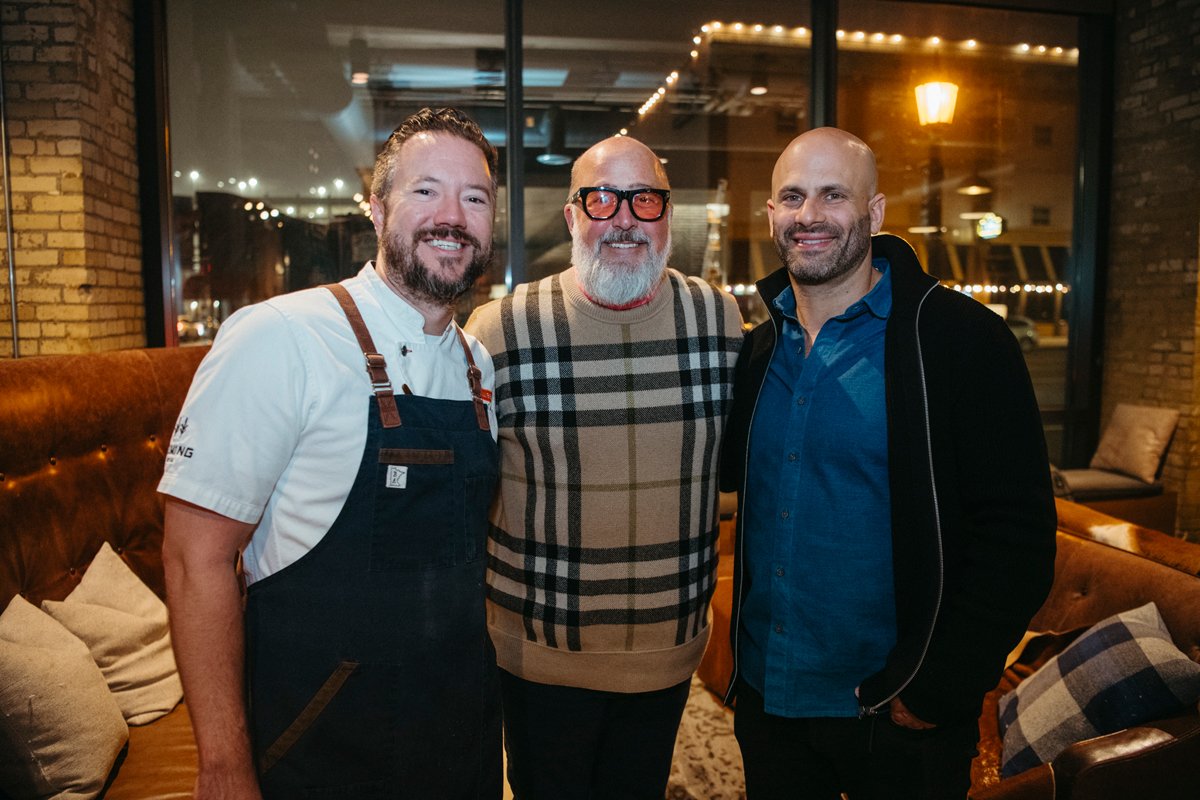
Chefs Sam Kass, Andrew Zimmern, and Marque Collins at The Last Supper (Photo credit: Jayme Halbritter)

Chefs Marque Collins, Andrew Zimmern, and Sam Kass at The Last Supper. (Photo credit: Jayme Halbritter)

While the description certainly gets diners’ attention, “the purpose of the dinner is really to use food to tell the story about what’s actually at stake [as the planet warms],” Kass told Civil Eats. The event’s theory of change, he said, “starts with people’s lack of awareness about what’s really at stake and connects that to things they care about . . . like not having coffee to drink or wine, chocolate, or oysters—the things that give us so much joy and pleasure.”

Kass hopes the dinner helps guests understand that their way of life is threatened by the climate crisis and inspires them to take steps to respond. Ideally, they would leave “willing to do more to try to shift these issues and make changes in their own lives—they’re willing to donate, they’re willing to vote. There’s a million different things that can come out of it,” he said.

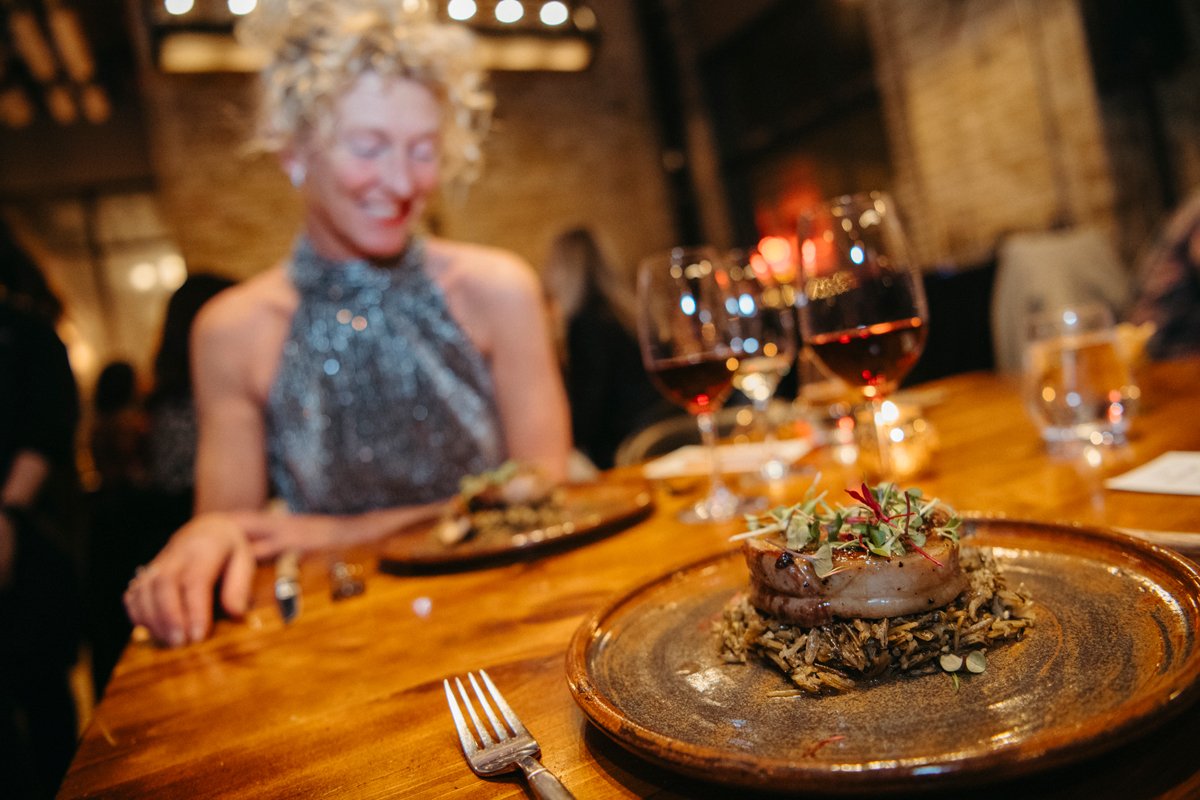
While Zimmern and Kass were the headliners, Tullibee’s chef Marque Collins collaborated with Kass to translate his list of threatened ingredients into a four-course dinner that included an amuse bouche of Old Bay spiced shrimp and salmon skin chips, an oyster and mussel course that gave way to Norwegian salmon, lamb with wild rice, and a coffee and chocolate sticky toffee pudding.

“As much as we might shake our fist at some big companies . . . they really need to be our allies, right?”

Where possible, ingredients were locally sourced. For example, the salmon’s romesco sauce was made with “fresh chilies from a local farm . . . called Sin Fronteras run by a Hispanic gentleman who grows traditional Mexican produce here in Minnesota—which is, in and of itself, a sign of changing climates,” Collins told Civil Eats. The wild rice that accompanied the lamb “is as Minnesota as it gets,” he added.

Kass has been hosting these meals-as-educational events since 2015 when he served a meal designed to draw attention to food waste to 40 heads of state at COP 21, the gathering that yielded the Paris Climate Agreement. Since then, he has hosted a handful of Last Suppers, including one in New York last year.

banner showing a radar tracking screen and the words

While the Great Northern event series sent out a survey conducted in partnership with a senior economic impact analyst with the University of Minnesota Extension, Kass himself doesn’t track outcomes. “I don’t have any way to track what people in that room would do. That would be nice, but I don’t have any capacity,” Kass said. He does, however, have anecdotes to share.

“I saw Christine Lagarde”—president of the European Central Bank—“a few times at different events following [the COP21 meal], and every time she would come up to me and say, ‘So good to see you. That lunch, I can’t get it out of my head,’” Kass recalls.

At the dinner, in a solutions-oriented talk earlier that day, and in an interview with Civil Eats, Kass and Zimmern said spurring culture change and cultivating economic support and prosperity for food-focused climate solutions is the driving force behind their efforts. But save for references to companies under the umbrella of Kass’ Acre Venture Partners investment fund, the night was more focused on headline-grabbing examples of foods that have been impacted recently, such as peaches in Georgia and wild oysters in Florida’s Apalachicola Bay.

Voting, talking to family members and co-workers who refute climate change, eating less meat, and a broader conscious-consumerism about the food we put on our plates were the main suggestions offered. To the extent that solutions were discussed, business and the market economy were the main levers.

“General Mills is putting [money], I think it’s up to about $500 million a year, into researching drought-resistant grain,” Zimmern said during the talk, mentioning the company’s profitable grain-reliant cereals division. “As much as we might shake our fist at some big companies . . . they really need to be our allies, right?”

Dr. Margaret Klein Salamon—a clinical psychologist, executive director of the Climate Emergency Fund that supports climate activists, and author of Facing the Climate Emergency: How to Transform Yourself With Climate Truth, who was not at the dinner—takes a different view.

“Luxury food is at risk and that’s one kind of loss, but rice production, wheat production, and the basic stables getting hurt by climate is a much greater risk to basic global stability.”

“What I steer people towards is the disruptive climate movement, where they throw soup on paintings or interrupt politicians’ speeches, sporting events, or whatever,” she says. “Things are not normal. We should not be limited to using normal political channels.”

The Last Supper’s less-than-disruptive messages seemed to resonate with the dinner’s guests, however, particularly during the Q&A session near the end. “Other than eating less red meat in our everyday lives, what can we do to help the situation?” one teen dining with her family inquired. Kass responded, “I would say, companies that are proclaiming to care about these issues and their supply chains, how their ingredients are being produced and with what practices—supporting anybody who’s making a claim is a good start.”

One of the co-founders of the Great Northern brought up induction cooking. “For a lot of the high-profile chefs we have in the room tonight, I would love to see you all make induction cooking cool,” he said. Praising induction as a cooking method, “some of us in the room are working with companies right now to make induction cooking cool,” Zimmern replied. “Gas creates a lot of problems, especially in low-income housing where the HVAC system can’t get all of the toxins and chemicals out of the house.” Plus, induction can be powered by renewable energy sources like solar.
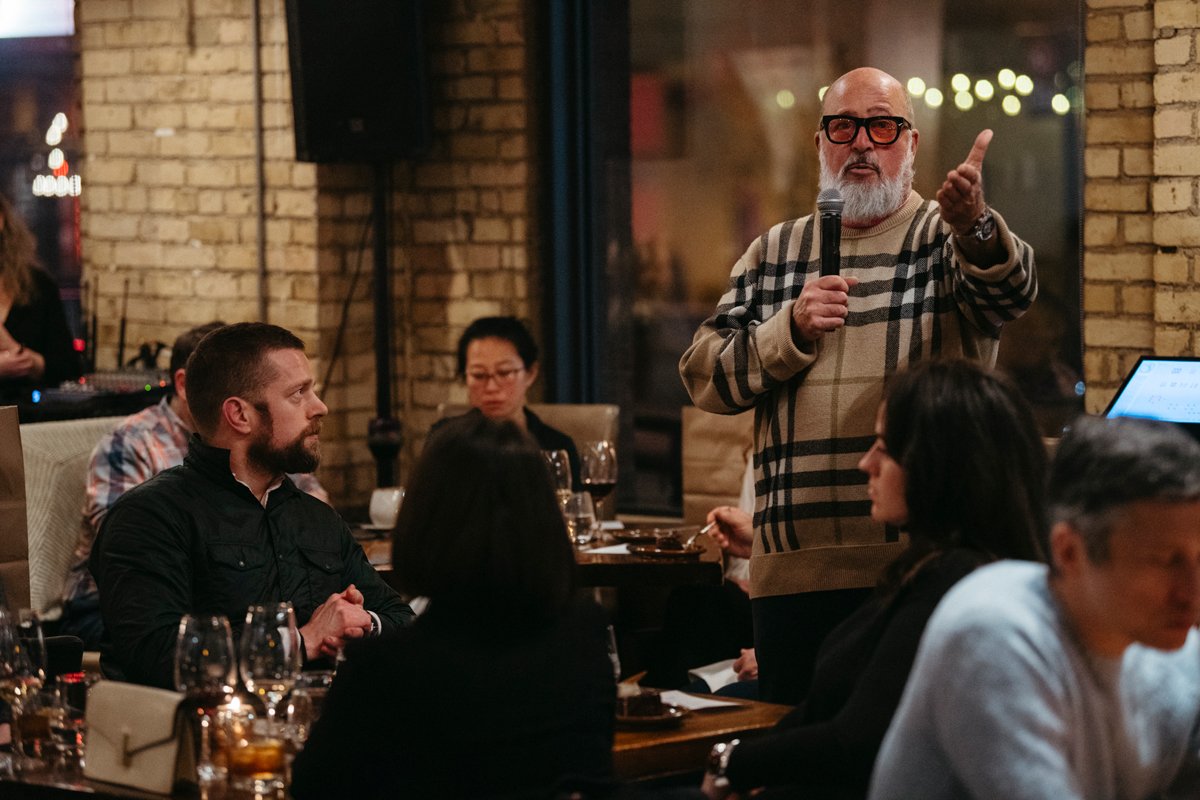
Andrew Zimmern at The Last Supper (Photo credit: Jayme Halbritter)

Andrew Zimmern at The Last Supper. (Photo credit: Jayme Halbritter)

Overall, Zimmern and Kass are certainly correct that coffee, wine, and chocolate are under threat from global warming. While costs will very likely increase, research suggests that we’ll see a shift in the regions capable of production and a change in flavor rather than a complete end in production—at least in the near term. But that loss might also be the least of our worries.


We’ll bring the news to you.

Get the weekly Civil Eats newsletter, delivered to your inbox.

“Luxury food is at risk and that’s one kind of loss, but rice production, wheat production, and the basic staples getting hurt by climate is a much greater risk to basic global stability,” Klein Salamon said. The chefs did mention diminishing staple crops and other repercussions of the crisis, like climate migration, briefly in passing.

The central difference between Klein Salamon’s approach to mitigating climate change and to that of Zimmerns and Kass is a clear pathway from emotion to action. Klein Salamon’s book outlines a five-step process that moves from facing the truth, confronting painful emotions, reimagining our lives, getting into an “emergency mode,” and ultimately joining the movement to disrupt the normalcy that’s gotten us here—all underpinned by an awareness of the cognitive devices like intellectualization that contribute to climate denial.

Klein Salamon said that she hoped The Last Supper would address climate change “from a systemic perspective.”

While the chefs did touch on systemic elements, it was in the form of retooling what the current system cares about, deems worthy of investment, and who its beneficiaries are.

“Companies working to solve these big problems have to work economically if we’re going to have impact,” Kass said. “How amazing would it be for the companies that are pushing better marine practices, regenerative agriculture, or whatever the case may be . . . [if] they were the ones getting IPOs and worth $200 billion? That’s what we should be pushing for.”

Support Civil Eats during NewsMatch

Stories change how we see food — and how we act on it.

From farmworkers to policymakers, Civil Eats lifts up the people building a better food system.

Your gift this season will be doubled through NewsMatch, fueling independent journalism that’s hopeful, honest, and free for all.

Together, we can keep these stories alive — and keep the movement growing.

Give Today.

Civil Eats Supporting Membership $60/year $6/month
Give One, Get One Membership $100/year
Learn more about our membership program

Cinnamon Janzer is a Minneapolis-based freelance journalist with a focus on lesser-told stories on a mission to change how the world sees the Midwest. Her work has appeared in the Guardian, National Geographic, New York magazine, the Washington Post, U.S. News & World Report, Rewire.news, Fast Company, Eater Twin Cities, USA Today's Go Escape magazine, and more. Read more >

Like the story?
Join the conversation.


Warning: Undefined variable $aria_req in /srv/users/civileats/apps/civileats/public/wp-content/themes/CivilEats/comments.php on line 16

Warning: Undefined variable $aria_req in /srv/users/civileats/apps/civileats/public/wp-content/themes/CivilEats/comments.php on line 21

More from

Climate

Featured

Paulina Velasco from the Institute for Nonprofit News moderated a discussion with Brian Calvert, senior editor, Lisa Held, senior staff reporter and contributing editor, and Matt Wheeland, operations director.

Inside the Food Policy Tracker

At our latest Civil Eats virtual salon, our team talked about the launch and evolution of the Tracker, a running report on federal actions that affect food and agriculture.

Popular

Lorem Ipsum Post

EPA Hires Farm and Pesticide Lobbyist to Oversee Pesticide Regulation

A logo showing the Civil Eats Food Policy Tracker, looking like a radar following food policy proposals and actions

EPA Funds Projects to Help Farmers Reduce Runoff Into the Great Lakes

A logo showing the Civil Eats Food Policy Tracker, looking like a radar following food policy proposals and actions

Department of Labor Suspends Protections for H-2A Guest Workers and Announces Plan to Bring in More

A logo showing the Civil Eats Food Policy Tracker, looking like a radar following food policy proposals and actions