
X
 [searchandfilter id="40551"]
[searchandfilter id="40551"]
[searchandfilter id="40551"] 
January 26, 2011



The national non-profit Meatless Monday campaign is proving to be “The Little Engine That Could” in the environmental public health world. In just the last two years national awareness of Meatless Monday more than doubled. According to a commissioned survey by FGI Research more than 30 percent of Americans are aware of the public health campaign, compared to 15 percent awareness in 2008. No doubt the announcement last week that Sodexo, a food service company which serves more than ten million North American customers a day, has adopted the campaign will only help to increase Meatless Monday’s popularity.
Expand your understanding of food systems as a Civil Eats member. Enjoy unlimited access to our groundbreaking reporting, engage with experts, and connect with a community of changemakers.
Already a member?
Login
A number of Sodexo facilities including the Johns Hopkins Hospital’s Cobblestone Café conducted their own Meatless Monday campaigns. However, starting this month Sodexo expanded the initiative to all of its more than 900 hospital clients, “as part of its ongoing effort to promote health and wellness.” In the spring, the company will offer menus and materials to all of its corporate and government clients and in the fall it will officially implement Meatless Monday at its “Sodexo-served” colleges and schools.
Sodexo joins a growing list of Meatless Monday supporters. Some of the most recent high-profile Meatless Monday converts include Sir Paul McCartney; Mario Batali, Celebrity Chef and restaurateur; Laurie David, An Inconvenient Truth producer; and dozens of municipalities, universities, colleges, and restaurants.
The Johns Hopkins Bloomberg School of Public Health and the Center for a Livable Future helped launch Meatless Monday back in 2003. The campaign’s primary focus is to reduce America’s saturated fat consumption by 15 percent, following the recommendations of the Healthy People 2010 report issued by then U.S. Surgeon General David Satcher in 2000.
The major source for saturated fat in the American diet comes from meat and high-fat dairy. “Cutting meat out one day week can help Americans reach the reduction goal with little effort,” says Dr. Robert S. Lawrence, Director, Johns Hopkins Center for a Livable Future (CLF).

While Meatless Monday awareness has increased, so has the need to reduce overall meat consumption. The 2010 Dietary Guidelines Advisory Committee has already called on Americans to “shift food intake patterns to a more plant-based diet.” Research shows that diets high in red or processed meat may increase the risk of mortality while diets high in vegetables, fruits and whole grains may reduce the risk of cardiovascular disease.
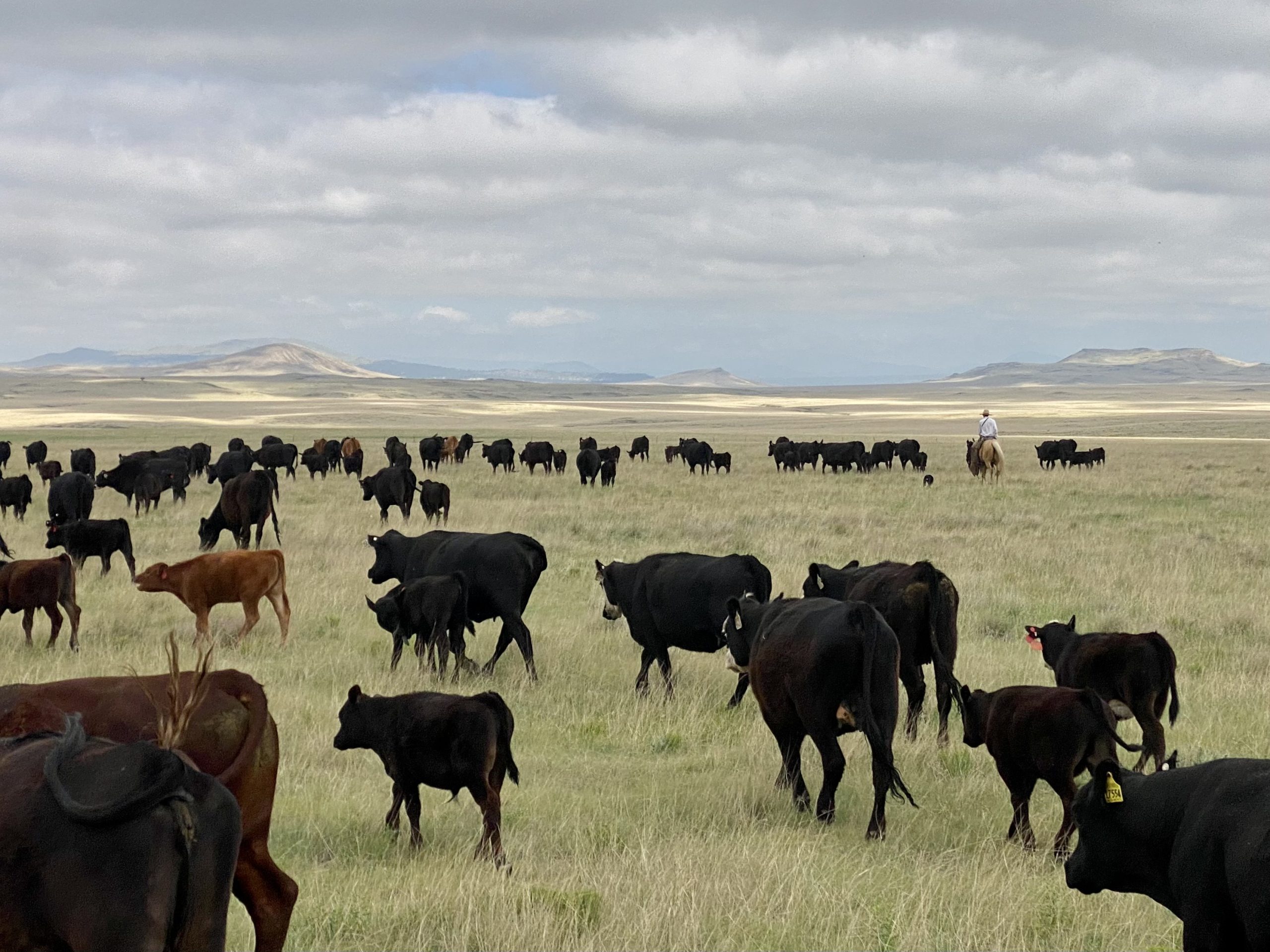
The majority of the meat we eat in America comes from intensive food animal production facilities, which are extremely resource intensive and pose major pollution risks. Dr. Lawrence says, “the impact on the environment can be substantial if we are successful in having a 15 percent reduction in meat consumption.”
To give you an idea of the environmental impacts Dr. Lawrence is talking about below is a short list of some sobering statistics:
The point of the Meatless Monday campaign is not to make people feel guilty about eating meat. Rather it is designed to encourage everyone to eat in moderation. Nicolette Hahn Niman, who, with her husband Bill, raises beef cattle on pasture and heritage turkeys, captured the concept well:
“We think that to really improve the way food is being produced and the way people are eating in this country people should eat less meat but eat better meat. All food from animals—meat, dairy, fish, eggs—should be treated as something special. Anyone who is raising food animals in the traditional healthy way, without relying on industrial methods, drugs and chemicals, is someone who will benefit from people embracing that approach. We think the Meatless Monday campaign is part of a shift in attitudes about meat, towards something that is precious not something that is consumed without thought or in enormous quantities.”

Stories change how we see food — and how we act on it.
From farmworkers to policymakers, Civil Eats lifts up the people building a better food system.
Your gift this season will be doubled through NewsMatch, fueling independent journalism that’s hopeful, honest, and free for all.
Together, we can keep these stories alive — and keep the movement growing.
Give Today.

June 26, 2025
At our latest Civil Eats virtual salon, our team talked about the launch and evolution of the Tracker, a running report on federal actions that affect food and agriculture.
January 20, 2025
July 2, 2025

Eating meat is healthy. The science, such as it is in matters nutritional is actually pretty settled on that fact and the fact that animal products more generally are very healthy to consume in large amounts. Animal products are more nutrient-dense and thus better vehicles for bioabsorption of key nutrients. Plants are the sidekick, not the superhero in the human diet. The science, and observed evidence, says as much.