
X
 [searchandfilter id="40551"]
[searchandfilter id="40551"]
[searchandfilter id="40551"] 
July 1, 2008




Expand your understanding of food systems as a Civil Eats member. Enjoy unlimited access to our groundbreaking reporting, engage with experts, and connect with a community of changemakers.
Already a member?
Login
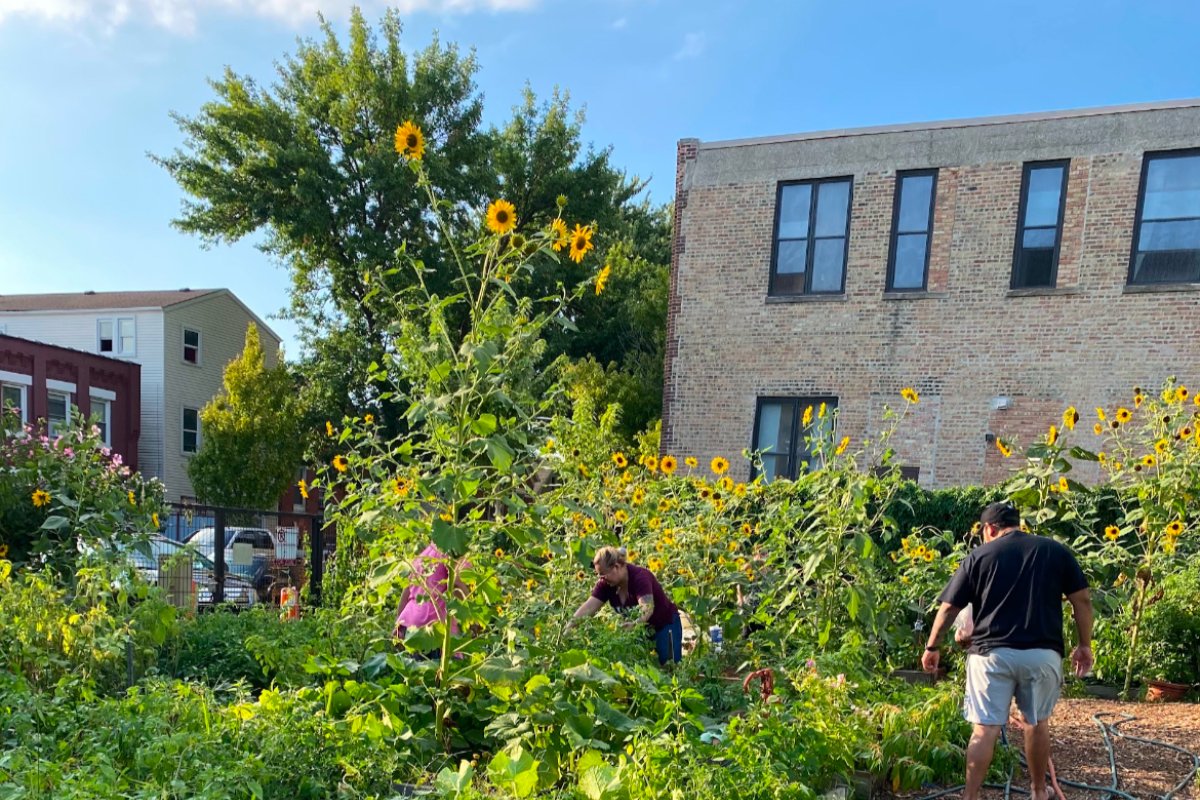
This morning in San Francisco, the Slow Food Nation Victory Garden broke ground, marking an important milestone in the city’s progress towards becoming a model for government-supported community projects and civic engagement.
My work as an historian of the Victory Garden movement during World War I and World War II is a small piece of my larger work as an historian of the American homefront during wartime. Without understanding the battlefront, one cannot truly understand the homefront. I am in the odd position of being a person adamantly opposed to war, but also its constant student.
When talking about the power Victory Gardens had on the American homefront in particular, it’s easy to focus on the positive, and I do. There’s the fact that Americans greatly increased food production and improved their diets during a period of challenge; the fact that they used gardening as a way to create common purpose among a diverse people; and the fact that gardens provided a means to re-introduce a producer ethic that had been increasingly lost in a nation that was becoming more consumer-oriented, and were used to educate a younger generation about their food system. Victory Gardens enabled us to accomplish much more of value during wars that were horrific and disruptive in ways that we can hardly perceive today.
I sometimes find my Victory Garden framework challenged by individuals who view them within the larger context of war and the unhealthy sort of nationalism that often parades as patriotism. They view the context of war as divisive. I appreciate their concern, because I struggle with the ambiguity and those concerns on a daily basis.
Recently, I was interviewed by Lisa Kivirist, a writer/innkeeper/ecopreneur/organic grower who is doing important work in the area of rural women and economy. Lisa is also a Food and Society Policy Fellow. The article appears under the title Planting Patriotism: Recreating The Victory Gardens For Modern Times. I include a quote from that article – and some of Lisa’s comments – here to clarify my philosophy about Victory Gardens, and why I think the term works today. Lisa herself defines our work as “mission based” gardening, and that’s a lovely term.


Lisa: “…Hayden-Smith isn’t a historian stuck in the past – she’s an advocate championing bringing the Victory Garden concept back to create a sustainable food system for future generations. Historically, World War II Victory Gardens were kitchen gardens planted to help relieve wartime food shortages. Hayden-Smith defines Victory Gardens more broadly:
Rose: A Victory Garden today can be any garden with a purpose that you define personally. That purpose can be a family project to raise food for your household or a community effort to grow produce for a local food bank or whatever else you see as a need.
Lisa: Such mission based gardening moves our food choices beyond our own personal plate and into the political realm: Make a statement with your garden, vote by example for self-sufficiency and independence. Why rekindle the Victory Garden concept today?
Rose: Victory Gardens showcase patriotism in its truest sense, with each of us taking personal responsibility for doing our individual part to create a healthy, fair and affordable food system.
I want to thank Lisa for encouraging me to articulate my philosophy. I hope you’ll learn more about her work and visit her website.
The American homefront today is far different than the homefronts of WWI or WWII. While Victory Gardens have little formal connection with our nation’s current military involvements, they have everything to do with purpose, personal mission and goals, and a sustainable food future.
“A Garden for Everyone. Everyone in a Garden.”
Rose Hayden-Smith’s work focuses on providing gardening and food systems education to youth, educators, and community audiences. She chairs UC’s Garden-Based Learning Workgroup, serves on California’s Instructional School Garden Committee, and is a 2008-2009 Food and Society Policy Fellow (FASP). Her personal website can be found at groups.ucanr.org/victorygrower/.
Photo by Scott Chernis

Stories change how we see food — and how we act on it.
From farmworkers to policymakers, Civil Eats lifts up the people building a better food system.
Your gift this season will be doubled through NewsMatch, fueling independent journalism that’s hopeful, honest, and free for all.
Together, we can keep these stories alive — and keep the movement growing.
Give Today.

June 26, 2025
At our latest Civil Eats virtual salon, our team talked about the launch and evolution of the Tracker, a running report on federal actions that affect food and agriculture.
January 20, 2025

July 2, 2025
Like the story?
Join the conversation.
Warning: Undefined variable $aria_req in /srv/users/civileats/apps/civileats/public/wp-content/themes/CivilEats/comments.php on line 16
Warning: Undefined variable $aria_req in /srv/users/civileats/apps/civileats/public/wp-content/themes/CivilEats/comments.php on line 21