X
 [searchandfilter id="40551"]
[searchandfilter id="40551"]
[searchandfilter id="40551"] 
December 5, 2011




Albert Straus is a dairy farmer and President of Straus Family Creamery located on the beautiful shores of Tomales Bay and the Point Reyes National Seashore, 60 miles north of San Francisco. He is an outspoken advocate for sustainable, non-GMO dairy production, farmland protection and environmental stewardship.
Expand your understanding of food systems as a Civil Eats member. Enjoy unlimited access to our groundbreaking reporting, engage with experts, and connect with a community of changemakers.
Already a member?
Login
Albert’s family farm, which has been operating for more than 65 years, began when his father, Bill Straus, began farming there 1941 with just 23 cows. Ellen Straus, Albert’s mother, read the book Silent Spring by Rachel Carson in the early 1960s and began the family’s strong commitment to environmental sustainability.
In 1993, the farm became the first certified organic dairy west of the Mississippi River, making Albert an industry innovator and organic pioneer. The creamery, which he founded in 1994, is a leading producer of the highest quality organic milk, yogurt, butter, sour cream, and ice cream. In 2004, Albert introduced methane-digester technology to convert dairy waste into energy, which today not only powers the farm but also powers his car. The extensive sustainability program that Albert implemented at the dairy and creamery also includes a closed-loop water reuse system; production of milk in reusable glass bottles; and an employee carpool program.
What issues have you been focused on?
Primarily it’s the financial viability of our family farm. Specifically, the lack of availability of certified organic, verified non-GMO feeds for cows. There’s pressure on farmers to grow GMO crops for fuel and not for food. I’m also focused on helping consumers and farmers keep GMOs out of our food supply.
What inspires you to do this work?
As a farmer, I’ve built the creamery with a vision to sustain local family farms. I enjoy challenges and taking on the innovations necessary to move farming forward toward sustainability. I also love making high-quality dairy products; making great ice cream is fun, too.
What’s your overall vision?
The vision for our company reflects my own vision to sustain local, family farms and produce the highest quality dairy products that are organic, non-GMO, minimally processed, and without additives. We’ll add more to our vision as we continue to look at the triple bottom line and how we can have a zero impact on our environment.
What books and/or blogs are you reading right now?
I don’t have much time to read, but when I do, I mainly read trade publications about the organic foods industry and alternative-energy technologies.
Who’s in your community?

Family farmers and local food producers, like Cowgirl Creamery and local bakeries. Our community is also environmentalists who are working together with ranchers to preserve our area, keep it as agrarian as possible and a local food source. My mother helped start MALT (the Marin Agricultural Land Trust), which was the first agricultural land trust in the country.
What are your commitments?
I’m committed to organic, sustainable family farming, and to keeping family farms economically viable.
What are your goals?
To produce food and be part of a community that looks at everything we do through a sustainable lens. To work with our land, treat our community and our employees well, and be profitable at the same time. And, to provide a source of food that is healthy and comes from a sustainably produced farming community.
What does change look like to you?
A positive change would be getting away from the conventional methods used since World War II, like pesticides, commercial fertilizers, and GMOs.
Regarding the practicalities of enacting change, what planning is involved? What kind of outreach?
We’re reaching out to consumers and students with information about the connection between what you eat and how it’s produced. We’re all very involved in the labeling of GMOs in foods movement. We are the first dairy to be verified by the Non-GMO Project.
What projects are affiliated with yours?
The Non-GMO Project and the Just Label It campaign; MALT and Marin Organic; Slow Food, Slow Money and Vandana Shiva’s organizations.
What projects and/or people are you inspired by?
I’ve been inspired by Dr. Vandana Shiva, who came by our farm and creamery. I’m inspired by what a great spokesperson and advocate she is for farmers, especially in India. She’s asked me to help produce an organic dairy there. She has a great heart and great vision. For me, it feels like a genuine opportunity and I hope to collaborate. It’s for a vision of sustaining land and people and making organic available and to make a difference in India. The motivations are right and are likely to succeed. Even though there are huge challenges.
What does the food movement need to do, be or have to be more effective?
It needs to have the foresight to be proactive to protect organic integrity and to develop the local food movement as well. As far as being more effective, I think we need to test and verify our products for GMOs so consumers don’t have to question whether products are tainted. We also need to work together more as a community to protect our food systems.
Where do you see the state of agriculture/food policy in the next 5-10 years? Is real policy change a real possibility?
I think consumers and the public can demand that we have labeling of GMOs and that would be essential to protecting what organic is about. We need to enact laws to prohibit companies from patenting life forms. And, get rid of a lot of the subsidy programs that allow a third of the corn grown in America to be put into ethanol and biodiesel and taken out of the food system.
Consumers have the power to make change in this country. A real possibility? I think that anything is possible. Since people are pretty fed up with what’s happening in this country, I think change is coming. When things get really extreme people react and make change. I think we’re about there. And, then it’s just educating the public so they know what the issues are and it’s not all hidden.
What would you want to be your last meal on earth?
Of course it’d have to be a bowl of ice cream. My latest favorite is our brown sugar banana with chocolate chips.

Stories change how we see food — and how we act on it.
From farmworkers to policymakers, Civil Eats lifts up the people building a better food system.
Your gift this season will be doubled through NewsMatch, fueling independent journalism that’s hopeful, honest, and free for all.
Together, we can keep these stories alive — and keep the movement growing.
Give Today.

June 26, 2025
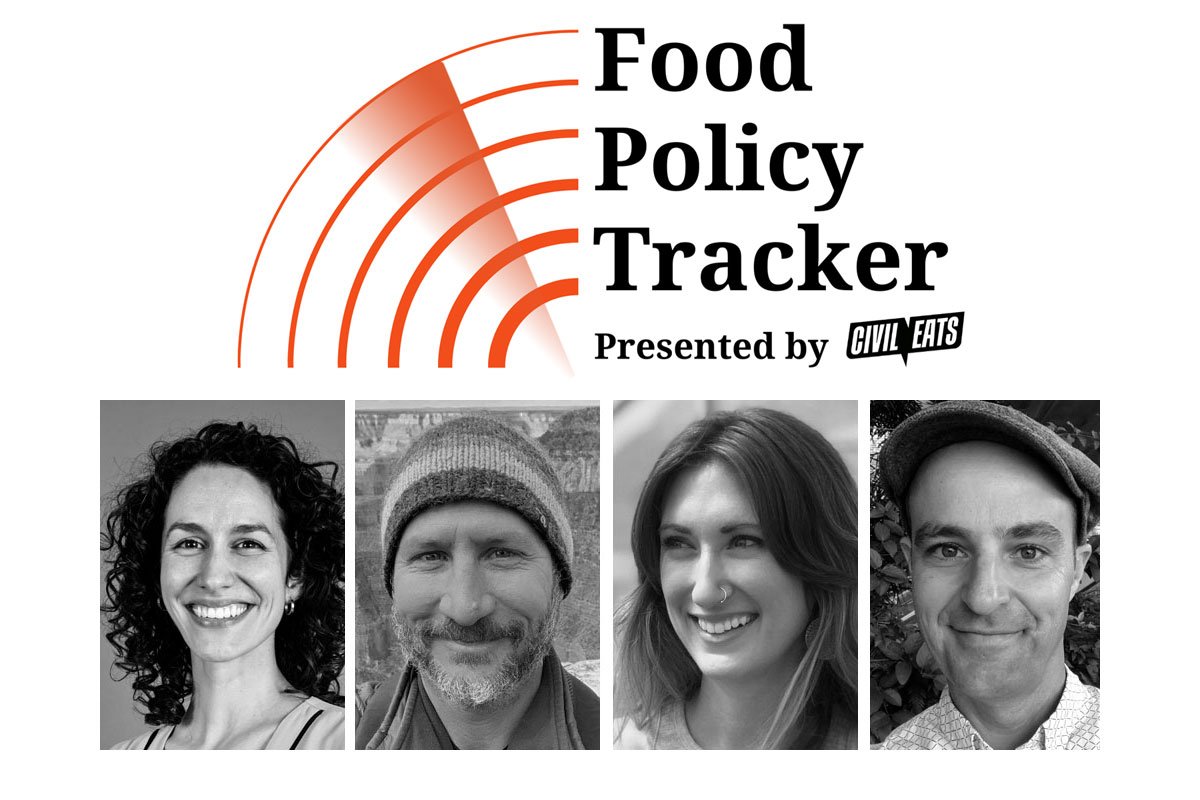
At our latest Civil Eats virtual salon, our team talked about the launch and evolution of the Tracker, a running report on federal actions that affect food and agriculture.
January 20, 2025
July 2, 2025


Like the story?
Join the conversation.
Warning: Undefined variable $aria_req in /srv/users/civileats/apps/civileats/public/wp-content/themes/CivilEats/comments.php on line 16
Warning: Undefined variable $aria_req in /srv/users/civileats/apps/civileats/public/wp-content/themes/CivilEats/comments.php on line 21