
X
 [searchandfilter id="40551"]
[searchandfilter id="40551"]
[searchandfilter id="40551"] 
April 26, 2013



The movement to label genetically engineered (GE) foods in the U.S. is gaining momentum by the day. Just this week, a federal bill to require labeling of GE foods was introduced in Washington D.C. with strong bipartisan support —including that of over 30 Congressional co-sponsors from House and Senate. And more states have introduced GE labeling bills this year than ever before. Whether or not these initiatives pass in 2013, this much seems clear: we will win labeling of GE foods. It’s just a matter of time.
Expand your understanding of food systems as a Civil Eats member. Enjoy unlimited access to our groundbreaking reporting, engage with experts, and connect with a community of changemakers.
Already a member?
Login
Naturally, the pesticide and biotech industry players have come out swinging with a host of dire but false predictions that food prices will rise and the sky will fall if people are allowed to know what’s in our food. The latest evidence of desperation comes from a long-time GE apologist, who now claims that labeling GE foods in the U.S. will exacerbate world hunger and poverty. Seriously?
GE’s broken promises
When I got to the end of Robert Paarlberg’s latest pro-GE article in the Wall Street Journal — where he makes the acrobatic leap from labeling GE foods in the U.S. to world hunger — I literally shook my head and said, “Really, Rob?” My tone mirrored that of my 12 year old when he says, “Really, Mom?” if I make a particularly inane or utterly ridiculous (to his mind) comment.
Paarlberg’s reasoning is pretty opaque, but it seems to go like this: if we adopt GE labeling here, then developing country governments (he hypothesizes) would follow our lead, enthusiasm for importing our GE seeds would drop, and (here’s the leap) therefore people will go hungry.
A few quick points to set the record straight:

Food democracy not GE dependency
Paarlberg claims that “the world needs genetically engineered foods.” It would be more accurate to say that the world’s pesticide companies need GE products. That’s why they created them. But the drivers of, and solutions to, world hunger are rather more complex than industry advocates like to acknowledge.
The reality is that people are often hungry because they are poor and cannot — for a variety of political, social and economic reasons — afford the price of food. In addition to establishing equitable economic and trade policies, real solutions to world hunger will arise out of investing in locally appropriate ecological farming practices that integrate grassroots science and farmers’ knowledge — practices that are productive, resilient and profitable.
Indeed, the weight of scientific evidence supports a global shift towards ecological farming. Numerous UN and independent academic reports have concluded that meeting the climate, water, energy and food challenges of the 21st century can be achieved by investing in agroecology. In contrast, the data show, GE technologies are unlikely to get us where we need to go.
Additionally, agroecological farming can double food production, save our soil, protect biodiversity, reduce dependence on fossil fuels and help farmers adapt to climate change. And organic farming and reliance on traditional seed systems are among the best options available for achieving food security across Africa.
Along with millions of others around the globe — family farmers, rural community leaders, sustainable development experts and scientists — I would argue that what the world actually needs is food democracy. We need ordinary people taking charge of our food systems, getting together to establish the rules, and develop and share creative farming practices. This will enable us to grow and distribute food sustainably, support the livelihoods and protect the health of current and future generations, and safeguard the soil, water and wildlife on which we all depend.

Stories change how we see food — and how we act on it.
From farmworkers to policymakers, Civil Eats lifts up the people building a better food system.
Your gift this season will be doubled through NewsMatch, fueling independent journalism that’s hopeful, honest, and free for all.
Together, we can keep these stories alive — and keep the movement growing.
Give Today.

June 26, 2025
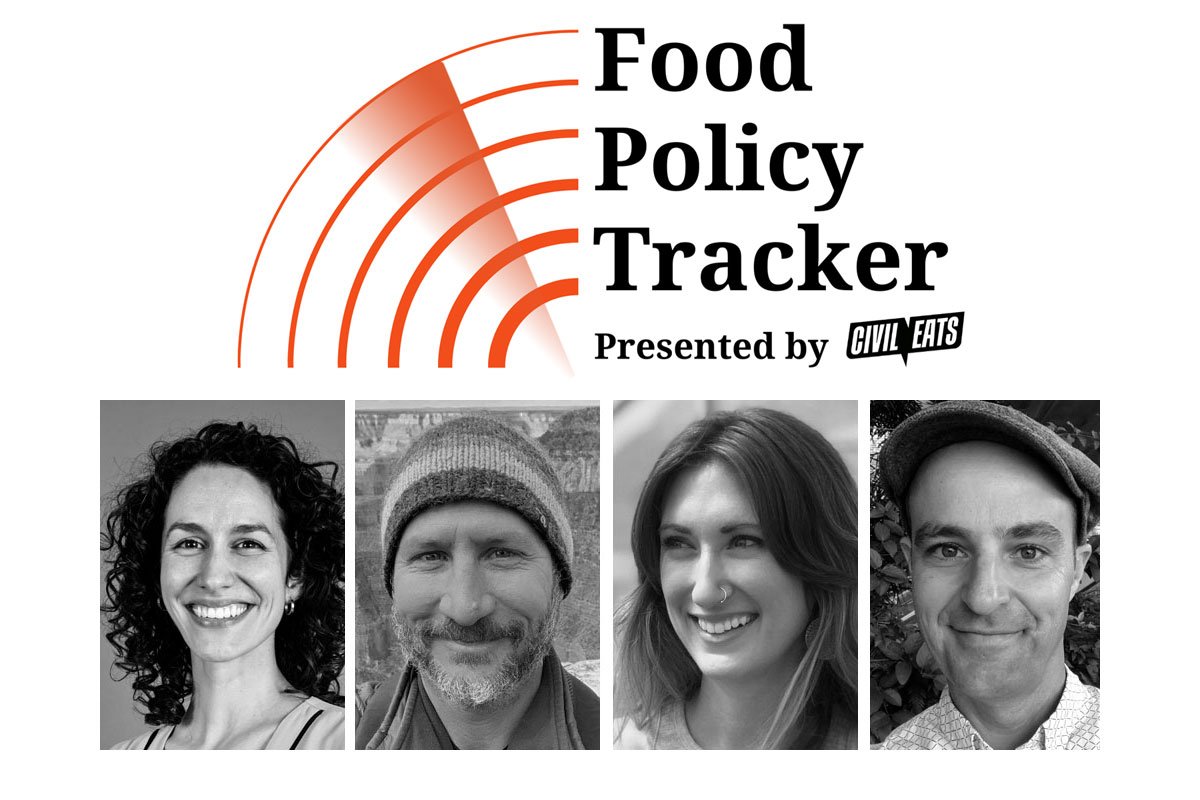
At our latest Civil Eats virtual salon, our team talked about the launch and evolution of the Tracker, a running report on federal actions that affect food and agriculture.
January 20, 2025
July 2, 2025


Like the story?
Join the conversation.
Warning: Undefined variable $aria_req in /srv/users/civileats/apps/civileats/public/wp-content/themes/CivilEats/comments.php on line 16
Warning: Undefined variable $aria_req in /srv/users/civileats/apps/civileats/public/wp-content/themes/CivilEats/comments.php on line 21