X
 [searchandfilter id="40551"]
[searchandfilter id="40551"]
[searchandfilter id="40551"] 
May 10, 2013



Join us June 12, 2013 in San Francisco for the latest installment of Kitchen Table Talks, which will focus on Food, Farms, and Fracking in California. More details about the event after the jump.
Expand your understanding of food systems as a Civil Eats member. Enjoy unlimited access to our groundbreaking reporting, engage with experts, and connect with a community of changemakers.
Already a member?
Login
Hydraulic fracturing or “fracking” is a highly controversial process for extracting oil and gas that has raised serious environmental and public health concerns across the country. Unknown to most, fracking has been happening in California, the nation’s leading farm state, for several decades without clear regulatory oversight. Now, the next generation of fracking—involving more chemicals injected at higher pressure and creating more pollution and risk—has come to California. Some of the biggest oil and gas companies are quickly buying up water and oil rights, with over 17,000 acres of oil leases on California public land auctioned off by federal land managers at the end of 2012.
Eyes are on the Monterey Shale, a 1,750-square-mile area believed to hold as much as 15 billion barrels of crude oil, which sits beneath some of the state’s most prized farmland. The stakes are high: the oil industry estimates that developing the Monterey Shale could add nearly three million jobs and close to $25 billion in tax revenues by 2020. But at what cost? California citizens are concerned about fracking’s potential impacts: air, water and land pollution, plummeting property values, and depletion of the state’s already scarce water resources.
In Pennsylvania, Colorado, and Ohio, grazing animals have gotten sick and died after drinking fracking runoff and water from farm wells near fracking operations. California’s 81,000 farms produce an annual $43 billion in crops that feed not only our state, but also the nation and the world. What will happen to the food supply if our farmland is fracked?

Date: Wednesday, June 12, 2013
Time: 6:00 PM to 8:00 PM
Location: Port Commission Hearing Room, Ferry Building, 2nd Floor at The Embarcadero at Market Street, San Francisco, CA 94111
Price: $5 donation requested at door
RSVP: Please register in advance because space is limited
Panelists:
Zeke Grader, Executive Director of the Pacific Coast Federation of Fishermen’s Associations and the Institute for Fisheries Resources
Jim Leap, organic farmer, former farm manager at the U.C. Santa Cruz Center for Agroecology and Sustainable Food Systems, and member of Aromas Cares for the Environment
Mark Nechodom, Director of California’s Department of Conservation
Kassie Siegel, Climate Law Institute Director, Center for Biological Diversity
Moderator: freelance journalist Twilight Greenaway, former food editor at Grist.org
Please join us after the panel for a reception and resource fair. Enjoy farmers market refreshments sponsored by CUESA and Bi-Rite Market, and connect with organizations working to educate the public about the risks associated with fracking.
Kitchen Table Talks is a joint venture of Civil Eats and 18 Reasons, a non-profit building a healthy community of cooks, gardeners and eaters of all ages empowered to create social change through food. Space is limited, so please RSVP ($5 requested donation). Seasonal snacks and refreshments generously provided by Bi-Rite Market and CUESA.
Photo Credit: RL Miller

Stories change how we see food — and how we act on it.
From farmworkers to policymakers, Civil Eats lifts up the people building a better food system.
Your gift this season will be doubled through NewsMatch, fueling independent journalism that’s hopeful, honest, and free for all.
Together, we can keep these stories alive — and keep the movement growing.
Give Today.

June 26, 2025
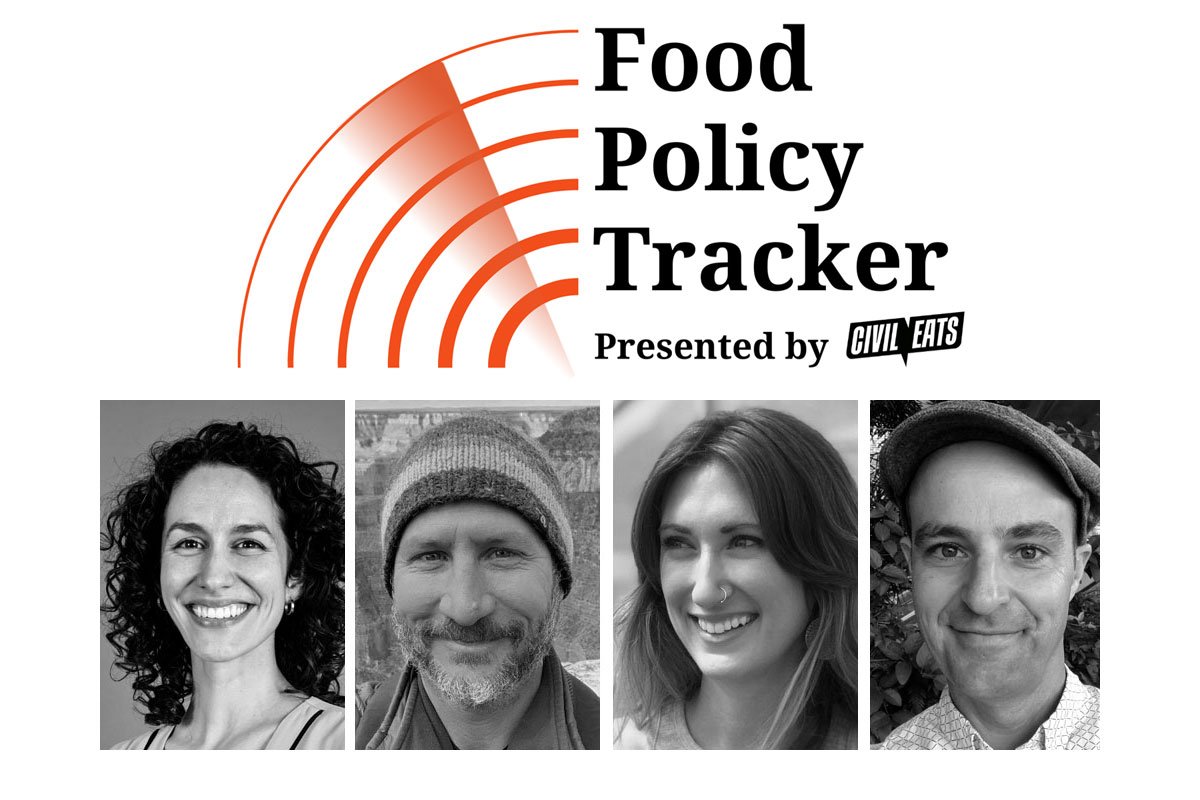
At our latest Civil Eats virtual salon, our team talked about the launch and evolution of the Tracker, a running report on federal actions that affect food and agriculture.
January 20, 2025
July 2, 2025


Like the story?
Join the conversation.
Warning: Undefined variable $aria_req in /srv/users/civileats/apps/civileats/public/wp-content/themes/CivilEats/comments.php on line 16
Warning: Undefined variable $aria_req in /srv/users/civileats/apps/civileats/public/wp-content/themes/CivilEats/comments.php on line 21