The Promise and Possible Pitfalls of American Kelp Farming | Civil Eats STAGING

The Promise and Possible Pitfalls of American Kelp Farming

An overview of our new in-depth series. Kelp can both reduce greenhouse gas emissions and remedy their impact on the environment. With very little regulatory oversight, and funding rushing in for seaweed farming, how will this industry evolve?

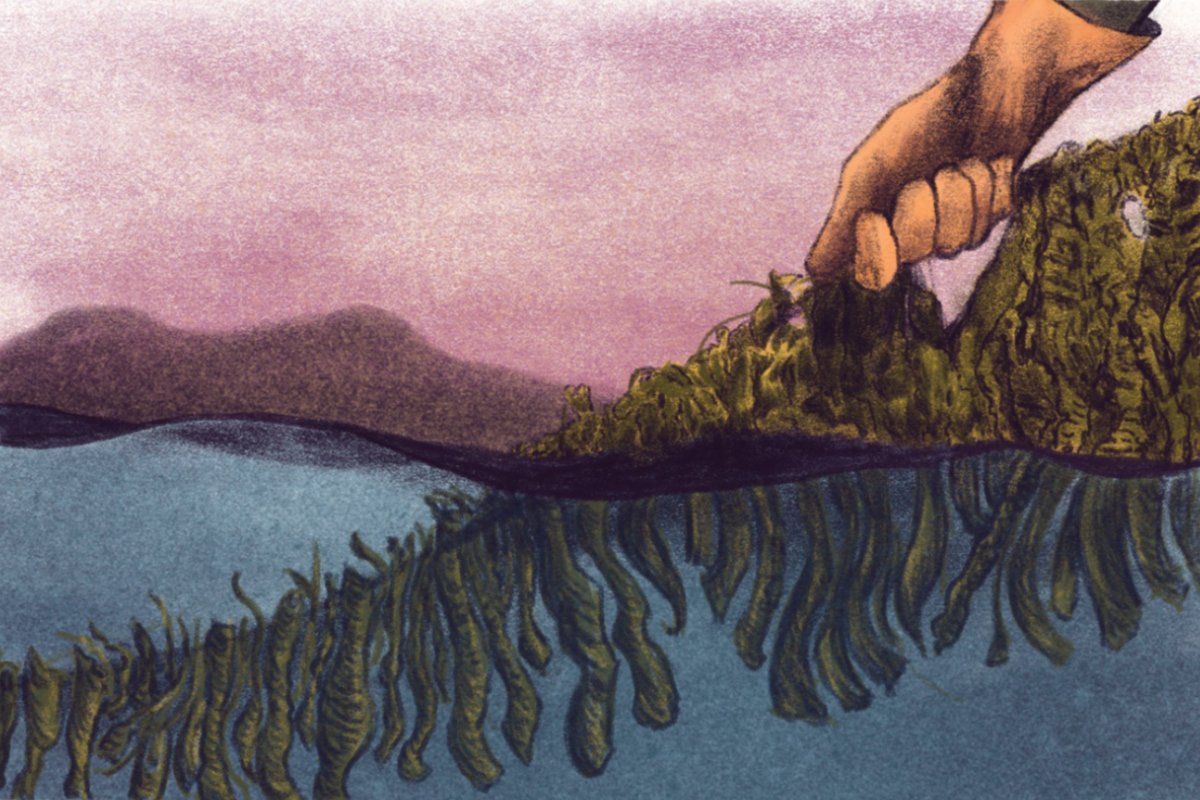
an illustration by nhatt nichols showing a hand pulling a kelp line out of the sea

Illustration by Nhatt Nichols.

Five years ago, the American farmed-seaweed industry barely existed. Wild seaweeds had been harvested for thousands of years by Indigenous peoples on both coasts, for a range of uses including insulation, medication, and fertilizer. Later, seaweeds were then harvested from the wild for agricultural fertilizers and the cosmetics industry. As for kelp farms, though, there were only a smattering of them in Maine, selling products to restaurants or natural-foods stores. Most farmed seaweed available in the U.S.—including the familiar sushi nori sheets—came from Asia.

Unlock the Full Story with a Civil Eats Membership

Expand your understanding of food systems as a Civil Eats member. Enjoy unlimited access to our groundbreaking reporting, engage with experts, and connect with a community of changemakers.

Join today

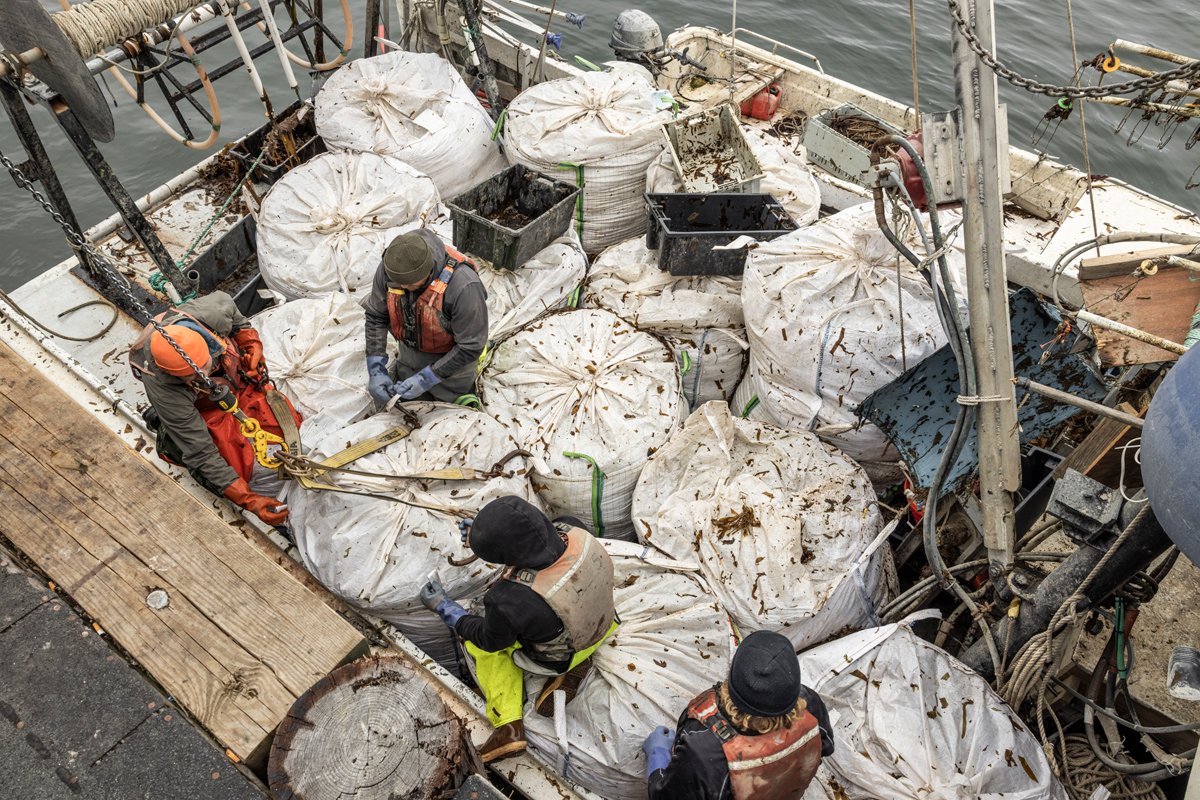
Today, consumers can find burgers, chips, and even a cannabis gummy made from domestic farmed seaweed, and a recent Nielsen report estimated the value of the edible seaweed industry  to be $1.87 billion in the U.S. One particular type of seaweed, kelp, has come to the fore: More than 2 million pounds were pulled from coastal U.S. waters during the 2022-2023 season, and experts predict that the 2023–2024 season will be even larger.

Kelp's Tangled Lines

Read all the stories in our series:

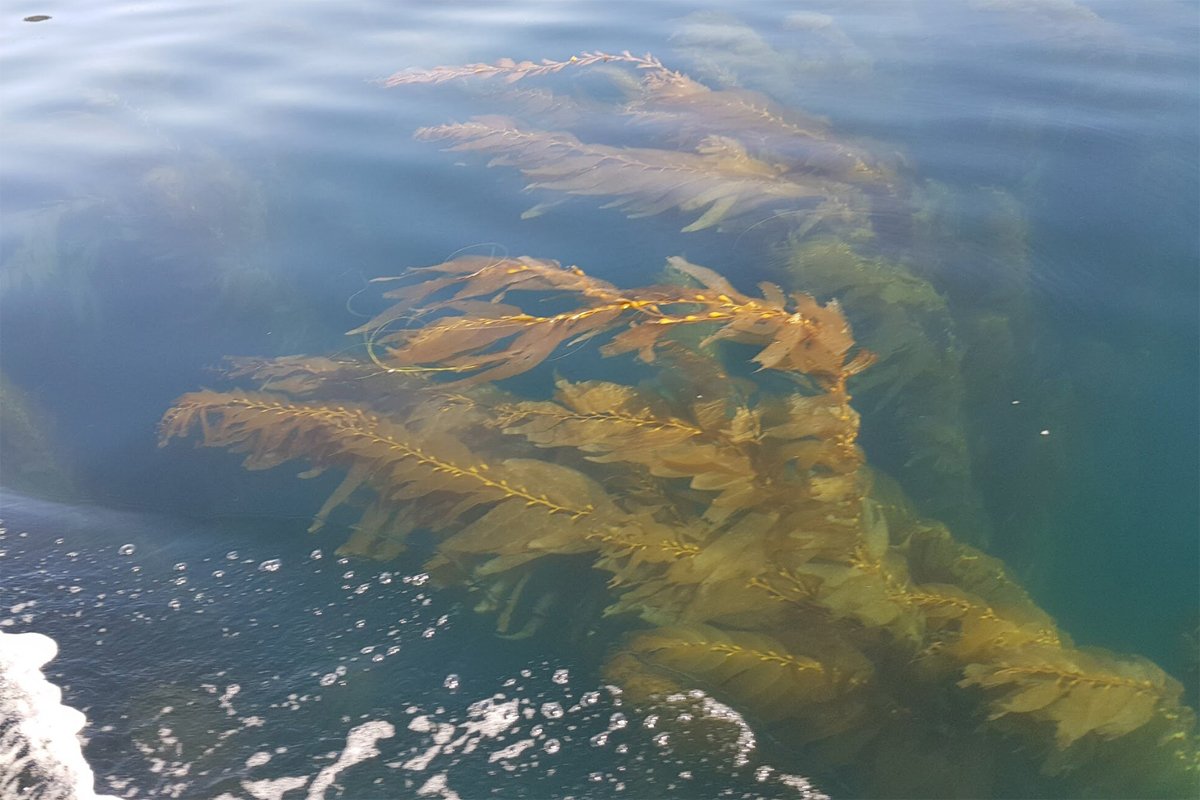
What’s driving this growth? The answer goes beyond seaweed’s industrial applications or the fact that Americans are developing a taste for kelp as a nutritious, low-calorie food. Scientists say this seaweed also offers a multitude of ecosystem benefits. Kelp can pull excess carbon out of the atmosphere—with some estimating that it sequesters at least 10 times more carbon than a terrestrial crop. It reduces ocean acidification, too, and removes the excess nitrogen that feeds massive algal blooms, a threat to other marine life.

This scientific proof of kelp as a regenerative crop that could save our seas has helped the industry attract rapid investment—according to our estimates, roughly $380 million since 2017, from sources including the federal government, corporations, venture capital funds, coastal state spending, and nonprofits. Kelp could also help climate efforts on land, in industries ranging from textiles to plastics to beef.

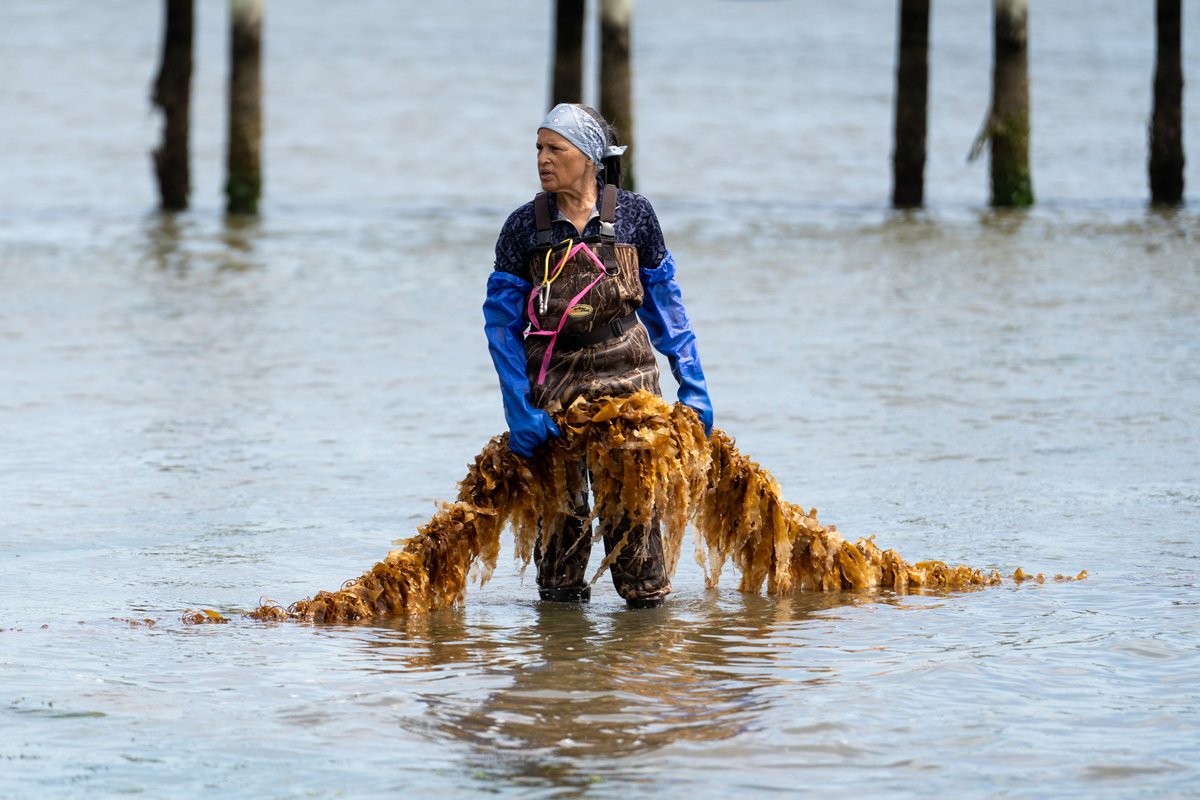
As Silicon Valley and others turn their sights to this remarkable seaweed, the time is ripe to ask critical questions about the future of an industry that could be rapidly expanding. Will smallholder farmers, whose work has been pivotal in setting up domestic seaweed production, reap the benefits of the industry’s growth? Or will multinationals move in, growing seaweed at scale—potentially boosting ecosystem benefits, but perhaps also introducing the environmental repercussions of monocropping? And will federal money flow to small farms as well as large?

banner showing a radar tracking screen and the words

Regulations are at issue as well. Small coastal growers now navigate a tangle of legislation, with no one entity claiming oversight. The country’s first seaweed bills now sit in Congress, with the potential to unleash a new round of investment in an industry that is still not tracked by the U.S. Department of Agriculture or the National Oceanic and Atmospheric Administration. Could large investors leapfrog to offshore farms, where the regulatory environment may be more permissible?

In this series, we’ll ask those questions and more. For context, we’ll trace the rise of seaweed farming in the U.S. and profile small farmers who are using kelp to both mitigate climate change and adapt to its impact. We’ll explore how scientists are creating more efficient ways of growing kelp while also protecting the future of wild kelp forests.

Tightening our focus, we’ll look at the main issue vexing kelp producers today—laborious processing—and a company that’s trying to solve that problem. Our final story will go macro, with a view of the venture-funded pilots that may shape a future of seaweed driven by corporate investment.

The stories in this series provide a framework for how we might guide the future of kelp, and how it may—or may not—fulfill its potential as a climate solution.

This series was produced in partnership with the Pulitzer Center’s Ocean Reporting Network.

We’ll bring the news to you.

Get the weekly Civil Eats newsletter, delivered to your inbox.

Support Civil Eats during NewsMatch

Stories change how we see food — and how we act on it.

From farmworkers to policymakers, Civil Eats lifts up the people building a better food system.

Your gift this season will be doubled through NewsMatch, fueling independent journalism that’s hopeful, honest, and free for all.

Together, we can keep these stories alive — and keep the movement growing.

Give Today.

Civil Eats Supporting Membership $60/year $6/month
Give One, Get One Membership $100/year
Learn more about our membership program

From Southampton, New York, Alexandra Talty is a 2023-24 Pulitzer Center Ocean Reporting Fellow covering American seaweed farming for Civil Eats. A multimedia journalist, her writing appears in The New York Times, The Guardian, and Outside Magazine; she is also the host of the Long Island TV show “South Fork Sea Farmers.” In her free time, she operates a hobby oyster farm. Read more >

Like the story?
Join the conversation.


Warning: Undefined variable $aria_req in /srv/users/civileats/apps/civileats/public/wp-content/themes/CivilEats/comments.php on line 16

Warning: Undefined variable $aria_req in /srv/users/civileats/apps/civileats/public/wp-content/themes/CivilEats/comments.php on line 21

More from

Kelp's Tangled Lines

Featured

Paulina Velasco from the Institute for Nonprofit News moderated a discussion with Brian Calvert, senior editor, Lisa Held, senior staff reporter and contributing editor, and Matt Wheeland, operations director.

Inside the Food Policy Tracker

At our latest Civil Eats virtual salon, our team talked about the launch and evolution of the Tracker, a running report on federal actions that affect food and agriculture.

Popular

Lorem Ipsum Post

EPA Hires Farm and Pesticide Lobbyist to Oversee Pesticide Regulation

A logo showing the Civil Eats Food Policy Tracker, looking like a radar following food policy proposals and actions

Can This Baltimore Academy Continue to Train Urban Farmers?

Denzel Mitchell at Black Butterfly Teaching Farm. (Photo credit: Sam Delgado)

EPA Funds Projects to Help Farmers Reduce Runoff Into the Great Lakes

A logo showing the Civil Eats Food Policy Tracker, looking like a radar following food policy proposals and actions