
X
 [searchandfilter id="40551"]
[searchandfilter id="40551"]
[searchandfilter id="40551"] 
October 9, 2009



On July 9, 2009, Mayor Gavin Newsome issued an Executive Directive for Healthy and Sustainable Food in San Francisco. Last week, Kitchen Table Talks focused its discussion on this new directive and how it will affect residences and businesses of San Francisco.
Expand your understanding of food systems as a Civil Eats member. Enjoy unlimited access to our groundbreaking reporting, engage with experts, and connect with a community of changemakers.
Already a member?
Login
Paula Jones, Director of Food Systems, S.F. Department of Public Health and lead drafter, discussed the background and development of Newsom’s directive. It set out to increase the amount of healthy and sustainable food in San Francisco, promote public health, social responsibility and environmental sustainability; eliminate hunger; reduce the environmental impact of the food system; encourage food production within the City and on City property. Jones explained that rather than write a new resolution, it was decided that an executive directive would be the best means of implementing this ambitious food policy. Typically a directive has the immediacy and power to garner implementation across all departments more efficiently than a resolution. A resolution has its role in city policy, but it cannot advance policy as quickly. Jones stated one final important point that no new funds were allocated for or used to create the Executive Directive. She researched existing policies and resolutions relating to food and combined them to draft the directive.
Our second speaker, Antonio Roman-Alcala, has been instrumental in reviving Alemany Farm. The recent interest in food systems and policy made it easy for Newsom to support such a distinctive food policy. Initially critical of the directive and Newsom’s connection to it, Roman-Alcala realized that it was the result of the combined hard work of Jones and community activists that made the directive a reality. However, he pointed out that an executive directive is only valid and enforceable during the course of that mayor’s term. Once the term has ended, so goes the directive. Roman-Alcala said that this is why it is critical for people to get involved now, especially since Newsom’s term could be coming to an end as he runs for California Governor. So, how do we ensure that parts and/or the entire directive become permanent policy?
A lively discussion with the audience began after our speakers finished. A point that came up several times is that local government is paralyzed by the number of issues facing the food system. A possible hope for institutionalizing sustainable food policy is to pick a few key issues that are likely to succeed; start with those and let the policy continue to grow and develop. Eventually, we will have a healthy and sustainable food system but it cannot happen overnight.
“How about those organic carrots?”

Roman-Alcala said the most important thing we can do is talk to our friends, neighbors, and community. Discuss organics, composting, or whichever component of the food system is most important to you.
“Democracy is a verb”
Jones told participants to pick up the phone and talk to your city supervisors. Find out who is in charge of the issues that concern you most and then contact them to discuss it. If enough of us call, they will take interest and start to listen.
San Francisco residents need to get involved and make their voices heard to help institutionalize sustainable food systems and policy which can ultimately be adopted in other cities and areas around the country.
To learn more about the steps San Francisco is taking towards a just, sustainable food system, visit: SFFood.org.
Kitchen Table Talks is a monthly conversation about the American food system. Its purpose is to build a coalition of stakeholders from all segments of society who come together to develop relationships, exchange knowledge and ideas and leave with specific actions they can implement to make meaningful improvements in our food system. To receive our newsletters, please email ktt@civileats.com.

Stories change how we see food — and how we act on it.
From farmworkers to policymakers, Civil Eats lifts up the people building a better food system.
Your gift this season will be doubled through NewsMatch, fueling independent journalism that’s hopeful, honest, and free for all.
Together, we can keep these stories alive — and keep the movement growing.
Give Today.

June 26, 2025
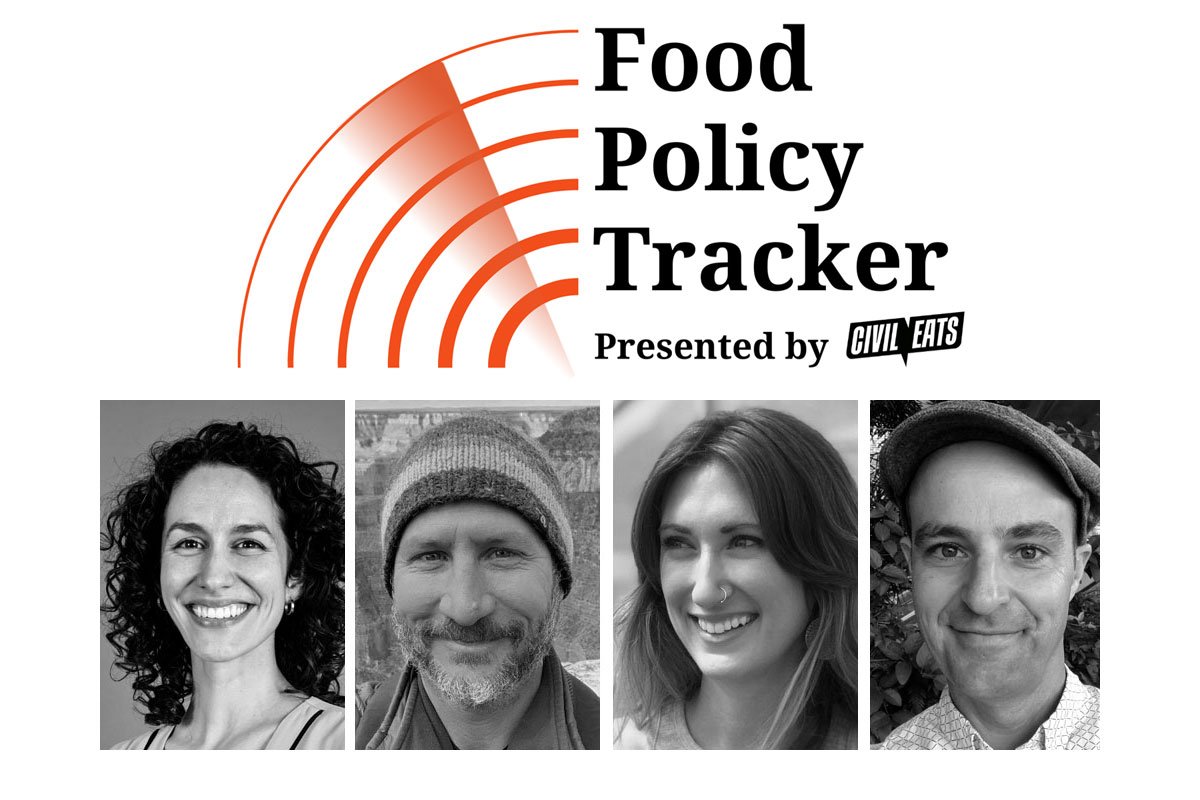
At our latest Civil Eats virtual salon, our team talked about the launch and evolution of the Tracker, a running report on federal actions that affect food and agriculture.
January 20, 2025
July 2, 2025



Like the story?
Join the conversation.
Warning: Undefined variable $aria_req in /srv/users/civileats/apps/civileats/public/wp-content/themes/CivilEats/comments.php on line 16
Warning: Undefined variable $aria_req in /srv/users/civileats/apps/civileats/public/wp-content/themes/CivilEats/comments.php on line 21