X
 [searchandfilter id="40551"]
[searchandfilter id="40551"]
[searchandfilter id="40551"] 
October 28, 2010




The USDA has a law on the books that levels the playing field between family farmers who raise cattle, hogs and poultry and the large meat packers who purchase their livestock and bring it to market. It’s called the Packers and Stockyard Act, and its overseen by the USDA’s Grain Inspection, Packers and Stockyard Administration or GIPSA. But don’t tussle with that mouthful because it doesn’t explain what you need to know about the complex livestock market system. Just keep reading. GIPSA makes sure small producers have equal access to market that larger producers do. It’s fair competition, which is, of course, the American way.
Expand your understanding of food systems as a Civil Eats member. Enjoy unlimited access to our groundbreaking reporting, engage with experts, and connect with a community of changemakers.
Already a member?
Login
Sounds great, right? And just in time for the good food revolution. But instead, this law has been gathering dust because the USDA hasn’t enforced it. New proposed rules (previously covered here on Civil Eats) amending the act would prevent large meat packers from artificially lowering the price of cattle, hogs and lamb. But four companies control over 80 percent of the U.S. meat market, and these “Big Four” are fighting an effort to strengthen the rule.
For all you urban food geeks who’ve never ridden the North Dakota range or shoveled chicken manure in central North Carolina, here’s some context. When you’re raising livestock, timely access to market is critical because a meat animal is a perishable product. When the animal has reached optimal weight, it must be sold in a narrow window of time, typically within two to three weeks. If it cannot be processed, it begins to degrade in quality, and a producer is subject to a significant price deflation. If a packer won’t purchase your animals for slaughter, you’re stuck selling your animal either too early or too late, competitive bidding isn’t possible, and the packer conspires to give you a ridiculously low price for your labors.
“The reason we’re fighting now for GIPSA’s new rules is simple,” said Rhonda Perry of the Missouri Rural Crisis Center. “We won’t have good quality, affordable food if we don’t have independent family farmers raising livestock. These farmers won’t survive if there’s no competition in the industry. Farmers just want a fair shake. They want the opportunity to compete, because we know we are the best food producers.”
“When your food system falls to corporate consolidation, you get disasters like the Iowa egg recall. One family farmer screwing up will not create a recall of 500 million eggs,” said Adam Warthesen from the Land Stewardship Project. He recalled the hard lesson North Carolina learned in 1999 when Hurricane Earl hit. “The hurricane caused serious flooding, with huge factory farm operations overtaken by flood waters and vast amounts of raw sewage from manure lagoons and dead hogs permeating into ground water and wells. It was a disaster.”
Holly Waddell, a third generation rancher in northwestern South Dakota and Vice Chair of Dakota Rural Action, told me that her priorities are caring for her land, for her animals and for the people who consume her product. She insisted that there is no way an industrial model can replicate that. “We are no longer in control when we’ve turned everything over to big corporations and government. They are not stewards of the land,” she said. “When we lose that family farming operation, all that’s out there looking after the animals is a hired laborer who makes barely minimum wage and who might not pay attention. To me this means the loss of pride and concern for our country’s resources.”

The Big Four packers view killing the GIPSA rules as their opportunity to capture the livestock industry from birth to plate. They’ve already succeeded with poultry and much of the hog supply chain. According to Perry, “Poultry is completely corporatized and has been since the 1970’s. Farmers still raise the birds, but they do not own their livestock. They are merely contractors working for the vertical integrators who own the livestock. They are not independent producers.”
“When we talk to poultry producers in the East, they tell us we need to fight like hell so our industry doesn’t end up like theirs,” said Warthesen.
As for the pork industry, Perry told me that since 1980, 90 percent of independent hog farmers have also stopped farming. Was efficient production the goal? No, it was profits for packers. Consumers saw a 71 percent increase in retail pork prices, while hog farmers suffered a 50 percent drop in their share of every dollar.
Independent cattle producers are still hanging on, but Bill Bullard, CEO of R-CALF USA, told me we’ve lost over 40 percent of our independent producers already. As a result of this consolidation, 1.2 million people who were farming and ranching 20 years ago no longer do so today. “The GIPSA battle is a once in a lifetime opportunity to prevent the destruction of the cattle industry,” said Bullard. “Cattle is a $50 billion dollar industry. It’s the largest segment of American agriculture, and an economic cornerstone for rural communities across America.”
“Farmers and supporters are feeling desperate, but also hopeful,” said Warthesen. “We need to make sure this administration hears from both farmers and consumers, because this is the first administration that has even attempted to take this on.”
He sees the move to quash these rules as the sign of a struggling meat industry. “Consumers don’t want what they’re selling anymore. So the industry is fighting back with everything they’ve got. Ironically, although consumers are demanding meat from family farmers, policy makers have been pretty slow to catch up in no small part because of industry money and lobbying power.”
Waddell sees hope in the fact that this administration has put more focus on these issues. “Secretary Vilsack visited with us in Ft. Collins. He talked about agriculture being vital to our nation’s well-being,” she said. “He says his administration wants to see a vital rural economy and communities of folks that can sustain themselves out in the countryside. If that is genuinely the feeling starting to surface at USDA, they [should] go forward with the rules to enforce GIPSA.”
What can the concerned consumer do? Buy your meat from your local small family farms. Contact your representatives and the USDA. And submit a comment. The comment period for the rule ends November 22.
Photo: BugMan50 via Flickr

Stories change how we see food — and how we act on it.
From farmworkers to policymakers, Civil Eats lifts up the people building a better food system.
Your gift this season will be doubled through NewsMatch, fueling independent journalism that’s hopeful, honest, and free for all.
Together, we can keep these stories alive — and keep the movement growing.
Give Today.

June 26, 2025
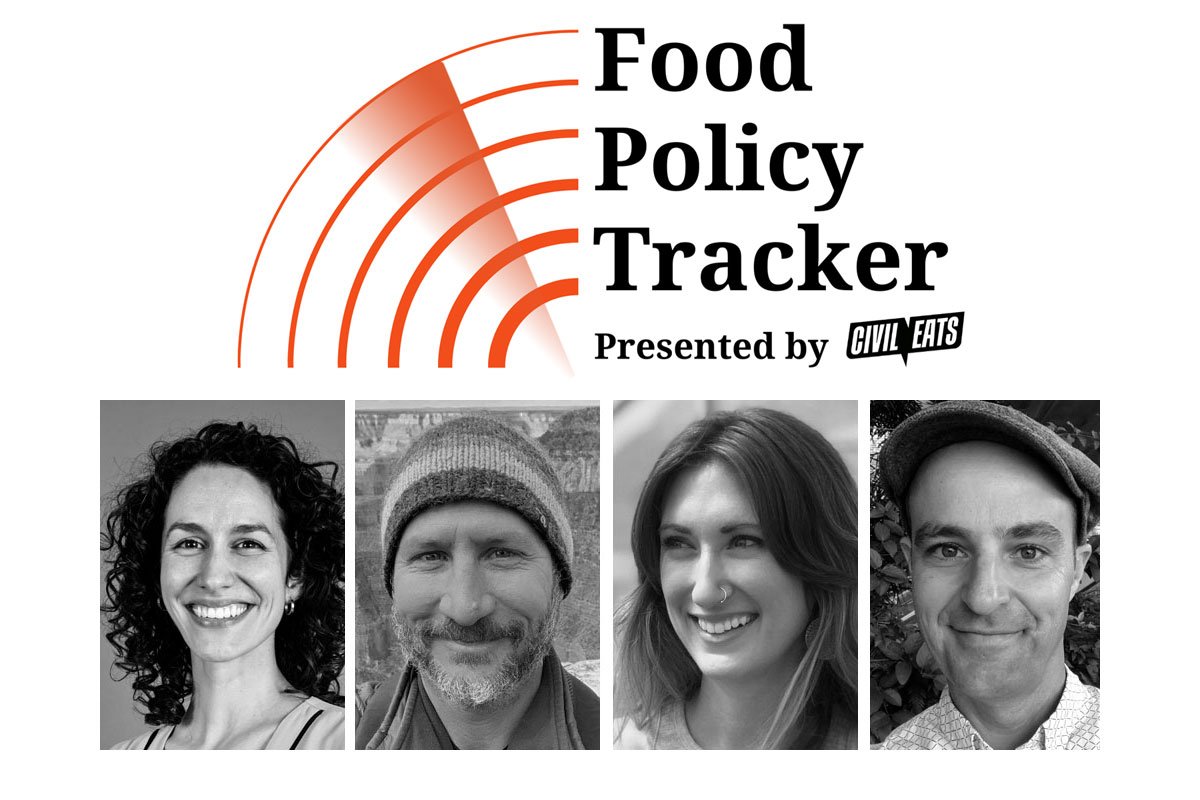
At our latest Civil Eats virtual salon, our team talked about the launch and evolution of the Tracker, a running report on federal actions that affect food and agriculture.
January 20, 2025
July 2, 2025

Like the story?
Join the conversation.
Warning: Undefined variable $aria_req in /srv/users/civileats/apps/civileats/public/wp-content/themes/CivilEats/comments.php on line 16
Warning: Undefined variable $aria_req in /srv/users/civileats/apps/civileats/public/wp-content/themes/CivilEats/comments.php on line 21