
X
 [searchandfilter id="40551"]
[searchandfilter id="40551"]
[searchandfilter id="40551"] 
March 28, 2011




More Americans are demanding higher quality meat–animals fed appropriate, antibiotic-free diets on small farms and slaughtered humanely–and they are choosing to eat less of it, too. Whether turned off by endless recalls, or turned on by the health and environmental benefits of eating less meat, growth in campaigns like Meatless Monday show a powerful shift in the Zeitgeist.
Expand your understanding of food systems as a Civil Eats member. Enjoy unlimited access to our groundbreaking reporting, engage with experts, and connect with a community of changemakers.
Already a member?
Login
Meanwhile Big Meat is taking on the Environmental Protection Agency to maintain its right to let manure run into our waterways, as it defends the excess antibiotic use (80 percent of antibiotics used in the U.S. are given to livestock), inhumane practices, and consolidation of the industry as the only way to feed the world. The beef industry has even invested in a communications degree that aims to revitalize the consumer image of industrial beef.
The conversation around how we bring meat to the table is multifaceted and is the subject of a lively discussion on April 14 at New York University entitled “What’s the Matter With Mass-Produced Meat?”
The conversation around how we bring meat to the table is multifaceted and is the subject of a lively discussion on April 14 at New York University entitled “What’s the Matter With Mass-Produced Meat?”
Co-sponsored by Kitchen Table Talks and Eating Liberally, the event will feature Daniel Imhoff, editor of CAFO: The Tragedy of Industrial Animal Factories, Michael Moss, the New York Times investigative reporter whose exposé on E. coli-tainted industrial beef, “The Burger That Shattered Her Life,” won a Pulitzer Prize; and Marion Nestle, NYU nutrition professor who served on the Pew Commission on Industrial Farm Animal Production, and author of Food Politics and What to Eat, among other books. I am honored to moderate the conversation and welcome your questions below in the comment section or send me a tweet @civileater in advance of the panel.

The discussion will take place at Fales Library at New York University, 70 Washington Square So, Third Floor from 6:30-8:30 p.m. Please RSVP to rsvp@library.nyu.edu or call 212.992.7050. This event is free and open to the public, but please be mindful when you reserve a space as seating is limited. Books will be available for sale and there will be a signing following the event. Sustainable food and refreshments will be provided by Northern Spy.
More about the team behind the event:
Eating Liberally is a social network whose aim is to swell the ranks of ecologically enlightened “food citizens” through spreading the word about books, films, and other projects that promote an alternative, plant-based food chain powered by the sun instead of Sunoco.
Kitchen Table Talks is a regular conversation series about the American food system. Its mission is to build community and exchange knowledge and ideas that lead to specific actions to make meaningful improvements in our food system.
Photo: Nourishing Our Children Photos via Flickr

Stories change how we see food — and how we act on it.
From farmworkers to policymakers, Civil Eats lifts up the people building a better food system.
Your gift this season will be doubled through NewsMatch, fueling independent journalism that’s hopeful, honest, and free for all.
Together, we can keep these stories alive — and keep the movement growing.
Give Today.

June 26, 2025
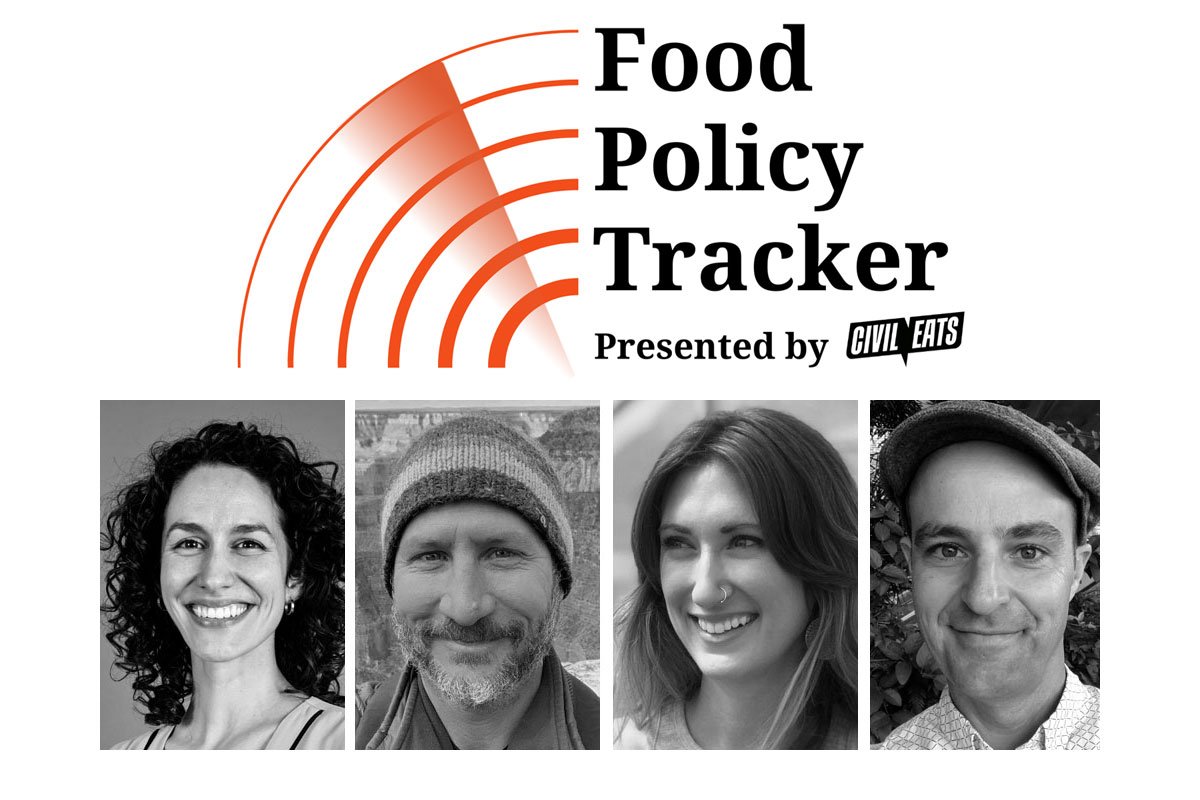
At our latest Civil Eats virtual salon, our team talked about the launch and evolution of the Tracker, a running report on federal actions that affect food and agriculture.
January 20, 2025
July 2, 2025


Thank you! (I certainly wish I could attend this event, but I am not close by. I hope that you will post something about the discussion!)
The fundamental issue with the American diet is your national fetish for the cheap. As long as you keep electing lawmakers that continue to subsidize certain crops and artificially suppress their price, while allowing the cost of healthy foods to rise, you will continue towards obesity.
You need to demand better, to elect better, and to be more active in the fight for better food!