X
 [searchandfilter id="40551"]
[searchandfilter id="40551"]
[searchandfilter id="40551"] 
March 18, 2016



Spring is in the air! And we’ve read the week’s food news so you don’t have to.
Expand your understanding of food systems as a Civil Eats member. Enjoy unlimited access to our groundbreaking reporting, engage with experts, and connect with a community of changemakers.
Already a member?
Login
Bill Blocking GMO Labels Stalls In Senate, But Battle Is Far From Over (NPR’s The Salt)
On Wednesday, the Senate rejected a bill sponsored by Kansas Republican Senator Pat Roberts that would have both created a voluntary national labeling standard for foods containing GMOs and prevented any state from requiring labeling (i.e., the “Dark Act”). Vermont’s mandatory GMO labeling law is currently set to take effect on July 1. Senator Debbie Stabenow (D-Michigan), the Senate agriculture committee’s ranking Democrat, told AgriPulse that she hoped a compromise could still be worked out before the end of the week. A proposal from Senator Jeff Merkley (D-Oregon) would give manufacturers a choice of four ways to label GMOs.
Why Didn’t An Illinois Professor Have To Disclose GMO Funding? (WBEZ)
A WBEZ Chicago investigation found that University of Illinois professor Bruce Chassy was given more than $57,000 over less than two years from Monsanto to travel, write, and speak about genetically engineered crops. The professor’s financial relationship with Monsanto was not disclosed on state or university forms aimed at detecting potential conflicts of interest. The investigation takes a close look at disclosure policies of the University of Illinois and asks how a land grant university professor could take money from one of the world’s largest seed and pesticide companies to do “outreach” about GMOs without telling the public, readers of his articles, or the graduate students taking his GMO safety course.
Coca-Cola a Local Food? Study Bashes University of Kentucky Dining (Courier-Journal)
According to a new report, Coca-Cola, along with coffee, donuts, chocolate, and ice, fell into the University of Kentucky Dining’s $2.4 million budget for “Kentucky Proud” or “local” food served in campus cafeterias in 2014. The report found that two-thirds of UK Dining’s Kentucky Proud purchases paid for coffee or hamburger patties made from globally- or nationally-sourced beef. Only about 5 percent of the $10.6 million campus food budget went to Kentucky farmers, while half of all purchases went to companies like Coca-Cola. Advocates of Kentucky farmers, who are striving to help them market goods to meet exploding consumer demand for local food, are calling the effort “greenwashing.”
Honey Nut Cheerios Removes Mascot to Spotlight Declining Bee Population (TIME)

In Canada, General Mills has temporarily removed its bee mascot, “Buzz,” from its Honey Nut Cheerios packaging and ads as part of a new “Bring Back the Bees” campaign to raise awareness about declining bee populations. The company has also asked people to help plant 35 million wildflowers, one for every person in Canada.
U.S. Needs to Do More to Protect Bees, GAO Says (Des Moines Register)
The Government Accountability Office (GOA), the independent investigative arm of Congress, says the Obama administration needs to do more to protect the health of the U.S. bee population. The agency added that efforts by the U.S. Environmental Protection Agency (EPA) and the U.S. Department of Agriculture (USDA) to address the wide range of factors affecting bee health—including pests, disease, and pesticide exposure—will be “a complex undertaking that may take many years and require advances in science and changes in agricultural land-use practices.” The GOA generally supported the efforts made by the USDA and the EPA so far, but encouraged both agencies to do more. In 2014, the Obama administration ordered both agencies to lead a government-wide effort to study more about why pollinators are dying off and look for ways to stem the declines.
Food Brands Move to Stave Off Decline, Outmaneuver Startups (CNBC)
As a number of sustainability-focused startups get in the game, big established food brands are being forced to innovate in new and unusual ways, and some are looking outside their own companies to boost growth. For example, Campbell Soup recently announced a $125 million venture capital fund for investing in “disruptive” food trends. As consumer tastes shift, alternative brands that embody both health and trust are finding success. Darren Seifer, a food and beverage industry analyst, says it will take time for legacy consumer brands to regain trust and rebrand themselves.
Italy Changes Law to Make All Supermarkets Give Unsold Food to Needy (The Independent)
Following France’s lead, Italy is set to become the second European country to require supermarkets to donate unsold food to charities. The bill, which has received widespread bipartisan support and is expected to pass the lower house of the parliament on Monday, takes a different approach than France’s anti-food waste legislation. Instead of fining supermarkets that waste food, Italy wants to give businesses incentives to donate the food.
Cash-Strapped Farmers Struggle to Pay Cropland Rents (Des Moines Register)
As U.S. farm income in 2016 is projected to fall for the third year in a row, and real estate debt across the United States is at its highest levels since the farm crisis years of the early 1980s, farmers are increasingly nervous about trying to turn a profit while paying sky-high rents. Experts say that even though tumbling corn and soybean prices mean land rents and other costs need to drop more, this downturn is unlike the previous farm crisis: “We still have solid demand. We’ve just had some big production years—back to back,” one farmer told the Des Moines Register.
Feds Probe Florida Handling of Pesticide Case (Associated Press)
After an Associated Press investigation last month showed that officials in Florida and other states rarely penalized farms for violating chemical-exposure limits, EPA inspectors are looking into whether the nation’s second largest agricultural state failed to investigate if farmworkers sickened in a crop-dusting accident were told not to report it to authorities. In many states, including Florida, enforcement of safety laws is often carried out by the same agencies that promote the farm industry.
The Great FLOTUS Food Fight (Politico)
Politico reporters Helena Bottemiller Evich and Daren Samuelsohn interviewed more than 60 sources familiar with first lady Michelle Obama’s work, including her current and former advisers, members of Congress, food industry officials, state agriculture leaders, nutrition and obesity experts, and first lady historians, in order to tell the complete inside story of how she has spent the last seven years working to transform the American food landscape. From the White House Kitchen Garden to Let’s Move, the Healthy, Hunger-Free School Kids Act, and the first food label changes in decades, the reporters argue that the first lady and her team achieved a remarkable series of changes in American nutrition policy.

Stories change how we see food — and how we act on it.
From farmworkers to policymakers, Civil Eats lifts up the people building a better food system.
Your gift this season will be doubled through NewsMatch, fueling independent journalism that’s hopeful, honest, and free for all.
Together, we can keep these stories alive — and keep the movement growing.
Give Today.

June 26, 2025
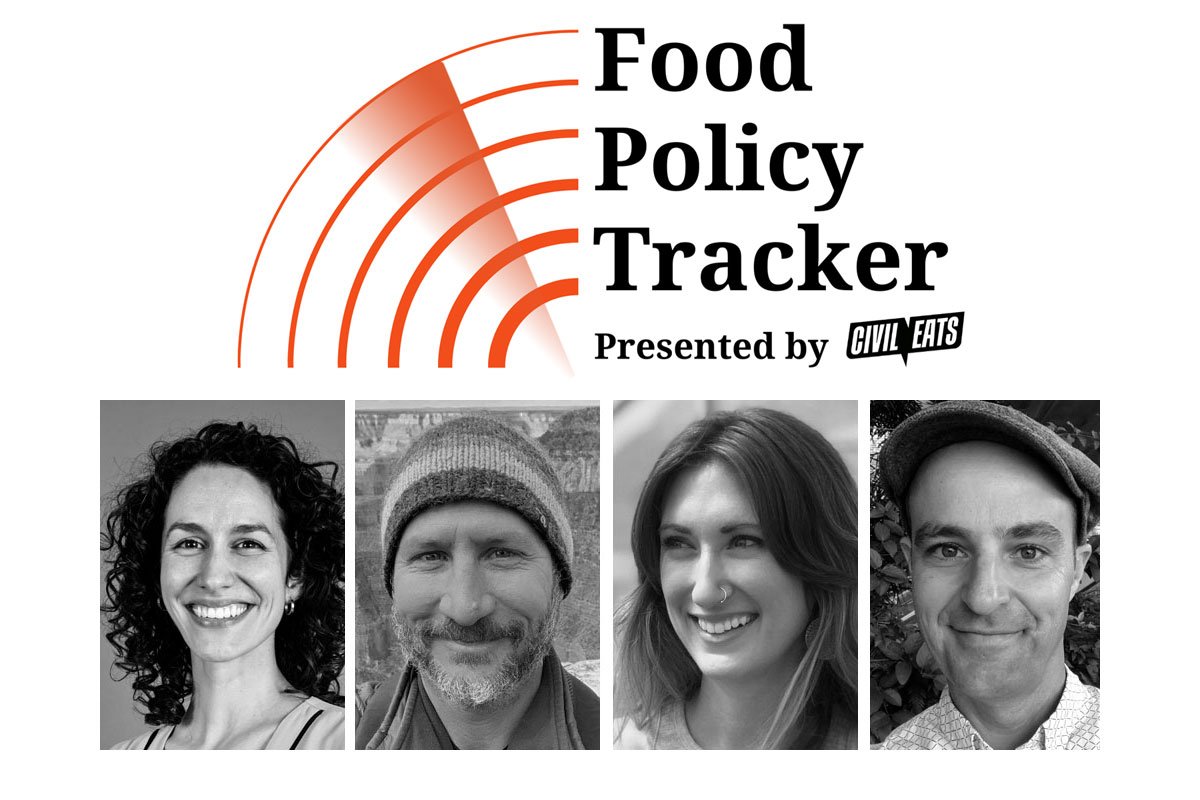
At our latest Civil Eats virtual salon, our team talked about the launch and evolution of the Tracker, a running report on federal actions that affect food and agriculture.
January 20, 2025
July 2, 2025



Like the story?
Join the conversation.
Warning: Undefined variable $aria_req in /srv/users/civileats/apps/civileats/public/wp-content/themes/CivilEats/comments.php on line 16
Warning: Undefined variable $aria_req in /srv/users/civileats/apps/civileats/public/wp-content/themes/CivilEats/comments.php on line 21