Activist and author Robin Greenfield offers his suggestions for strengthening your community through food.

X
 [searchandfilter id="40551"]
[searchandfilter id="40551"]
[searchandfilter id="40551"] 
Activist and author Robin Greenfield offers his suggestions for strengthening your community through food.
April 7, 2025
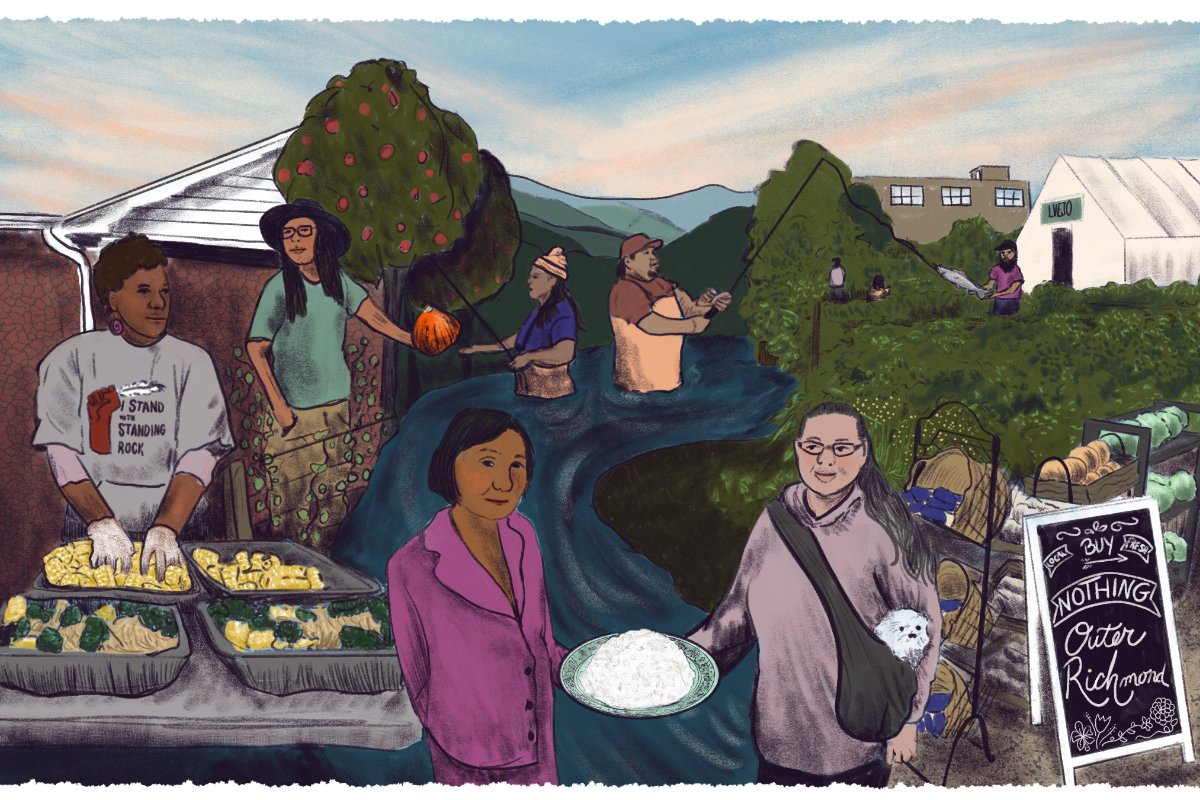
Illustration by Nhatt Nichols.



A version of this article originally appeared in The Deep Dish, our members-only newsletter. Become a member today and get the next issue directly in your inbox.
Expand your understanding of food systems as a Civil Eats member. Enjoy unlimited access to our groundbreaking reporting, engage with experts, and connect with a community of changemakers.
Already a member?
Login
Environmental activist and author Robin Greenfield is known for his fully committed experiments in ecological living. His most recent book, Food Freedom: A Year of Growing and Foraging 100% of My Food, covers his efforts to live entirely independently from the industrial food system. Greenfield succeeded only by relying on others who guided him in his gardening, fishing, and foraging, and came to understand the profound power of community and how naturally that flows through food.
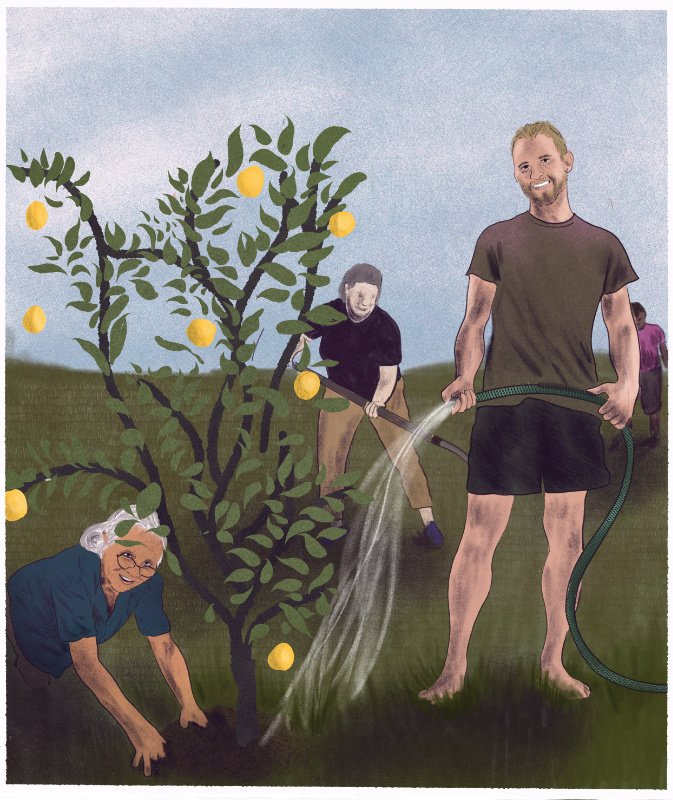
Robin Greenfield and friends, tending a community fruit tree. (Illustration by Nhatt Nichols)
Here are Greenfield’s suggestions for strengthening your own food community:
1. Live communally! Thousands of intentional communities and ecovillages are waiting for you to join them. Check out the Foundation for Intentional Community, the Global Ecovillage Network, and the Cohousing Association of the United States to find a community near you. Or use their resources to start a co-living space or community of your own.
2. Plant public trees in your community in collaboration with others. Community Fruit Trees can support you on this path.
3. Source your seeds and plants from small-scale community seed growers, seed libraries, and seed banks that are breeding diversity and resilience. Seed Savers Exchange, Southern Exposure Seed Exchange, Ujamaa Seeds, and Truelove Seeds are a few high-integrity organizations that distribute nationwide.

4. Start a seed library or a community seed network yourself. Community Seed Network and Seed Library Network are excellent resources to help you get started.
5. Join a community compost initiative or start one if there’s a need. Cycle the compost back into small-scale ecological gardening and farming. Find an initiative or learn how to start your own through the Community Compost Program.
6. Harvest food that’s already growing, but not getting utilized, and get this nourishing, local produce to the people who need it the most. Concrete Jungle and ProduceGood are beautiful examples to follow.
7. Join or start a community garden or school garden in your community. Community Gardens of America and Edible Schoolyard Project can help with this.
8. Seek out or start a Food is Free chapter and share your garden bounties freely with your community members.
9. Join a community-led ecological food initiative. A few that have inspired me include Soul Fire Farm, The BIPOC Community Garden, Bartlett Park Community Garden, and the Fonticello Food Forest. Support the initiatives that are already taking place. They are doing the work and they need our support to continue.
10. Take part in land reparations for Indigenous and Black communities, so that they can achieve food sovereignty. Find communities to support via the Northeast Farmers of Color Land Trust. Learn about and take part in the LANDBACK movement to return land to Indigenous people so they can build food sovereignty while stewarding our global resources.
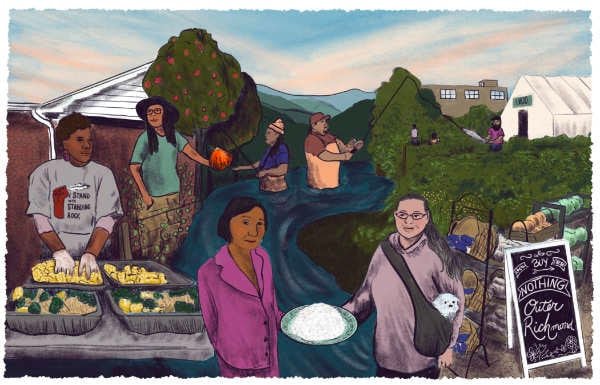
Illustration by Nhatt Nichols

Stories change how we see food — and how we act on it.
From farmworkers to policymakers, Civil Eats lifts up the people building a better food system.
Your gift this season will be doubled through NewsMatch, fueling independent journalism that’s hopeful, honest, and free for all.
Together, we can keep these stories alive — and keep the movement growing.
Give Today.

June 26, 2025
At our latest Civil Eats virtual salon, our team talked about the launch and evolution of the Tracker, a running report on federal actions that affect food and agriculture.
January 20, 2025
July 2, 2025
Like the story?
Join the conversation.
Warning: Undefined variable $aria_req in /srv/users/civileats/apps/civileats/public/wp-content/themes/CivilEats/comments.php on line 16
Warning: Undefined variable $aria_req in /srv/users/civileats/apps/civileats/public/wp-content/themes/CivilEats/comments.php on line 21